


Les Cretes
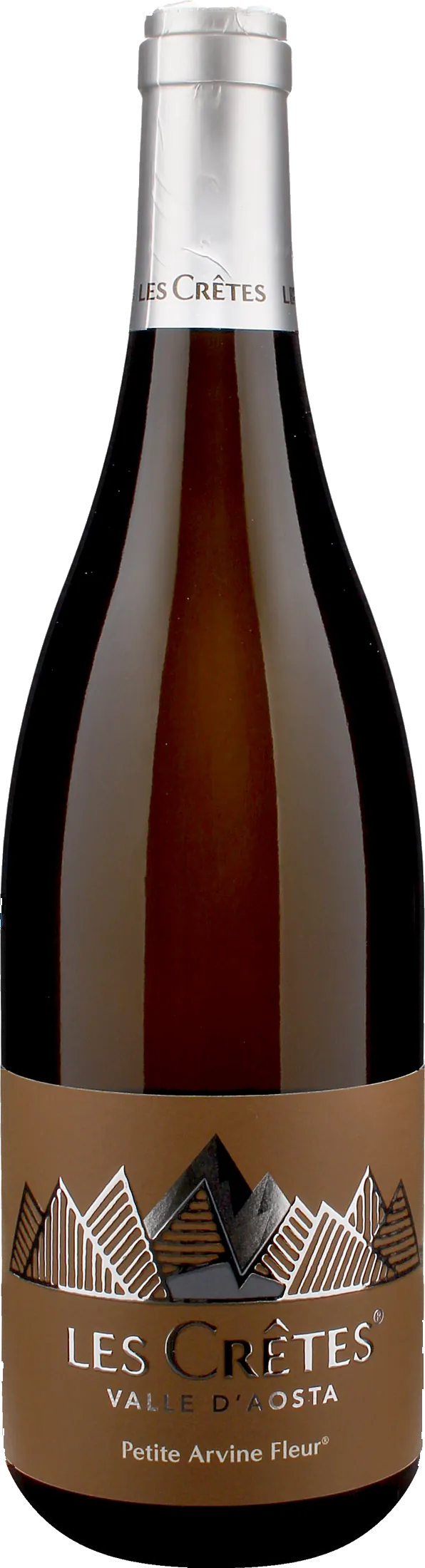
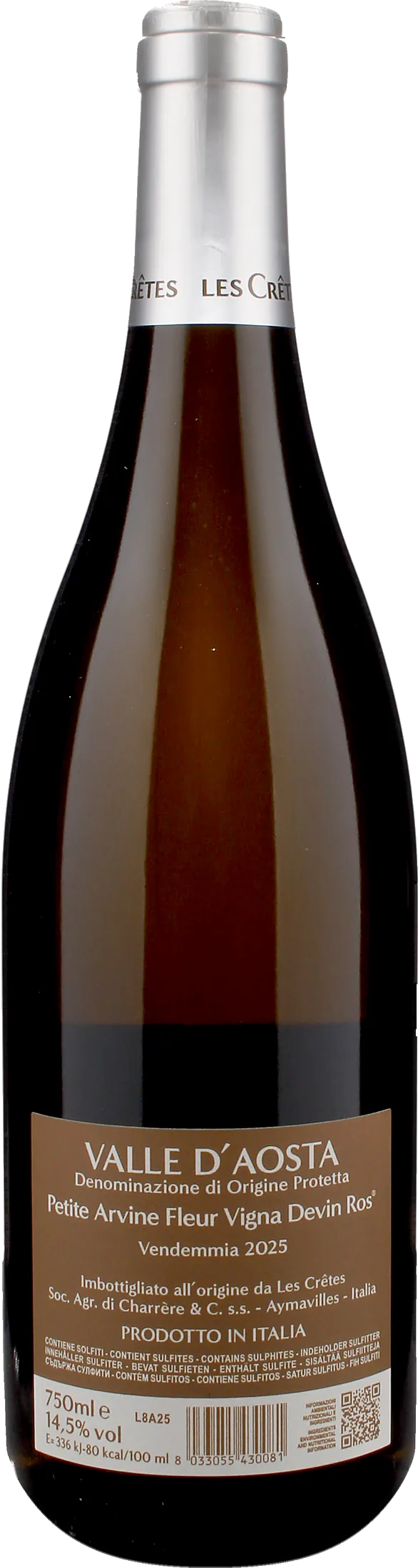
Petite Arvine Fleur 2025
| Denomination | DOC Valle d'Aosta Petite Arvine |
|---|---|
| Size | 0,75 l |
| Alcohol content | 14.5% by volume |
| Area | Aosta Valley (Italy) |
| Grape varieties | 100% Petite Arvine |
| Aging | Ageing for 1–2 months on the lees with continuous bâtonnage |
- Identity: still white wine Valle d’Aosta DOC 2025, 100% Petite Arvine, 14.5% vol
- Aroma: hints of white flowers, orange zest and citrus, apple, with notes of toasted bread
- Palate: full and creamy structure, intense minerality and a savoury, persistent finish
- Vineyards: heroic viticulture at 550-750m, south-facing terraces, morainic and sandy soils
- Serving suggestions: serve at 6-8 °C in a tulip glass; ideal with shellfish and white meats
Description
What type of wine it is
Petite Arvine Fleur is a still white wine produced by Les Crêtes using Petite Arvine grapes, belonging to the Valle d’Aosta Denominazione di Origine Controllata and fermented in stainless steel. On the nose, it offers elegant aromas of white flowers, combined with notes of apple, dried apricot and slight hints of toasted bread. On the palate, it stands out for its full structure, supported by a vivid minerality and a marked savoury trail. The tasting experience, with its creamy texture and persistent finish, makes it the ideal accompaniment for shellfish, salmon tataki, delicate white meats and soft cheeses.
Where it comes from
Petite Arvine grapes grow on the steep terraces of Aymavilles and Montjovet. In these south-facing plots, between 550 and 750 metres in altitude, Les Crêtes carries out rigorous heroic viticulture. The environment enjoys an endo-Alpine climate characterised by low rainfall, strong sunshine and marked temperature fluctuations. The roots delve into loose and sandy morainic soils, a natural combination that is decisive in giving the wine its clear aromatic signature and the vibrant mineral savouriness that distinguishes it.
How it is produced
Production begins at the end of September with a manual harvest and the careful selection of the bunches. After cooling the grapes, a soft pressing is carried out. Fermentation takes place in stainless steel at a controlled temperature, a key step to keep the varietal aromas intact. Ageing continues in steel through a period on the lees accompanied by continuous bâtonnage. This precise oenological technique gives volume and creaminess to the palate, balancing the pulpy richness of the fruit with a dynamic profile and a persistent finish.
History and interesting facts
The name Petite Arvine derives from the small size of the berries. For six generations, the Charrère family has been practising heroic viticulture on steep south-facing plots in the historic “de vin ros” vineyards of Montjovet. This dedication translates into a limited annual production of 6,600 bottles, started in 2014, which has received prestigious recognition from James Suckling and Wine Advocate.
Tasting notes

Perfume

Color

Taste
Serve at:
12 - 14 °C
Longevity:
05 - 10 years
- Start up year: 1989
- Oenologist: Raffaele Crotta, Eleonora Charrère
- Bottles produced: 250.000
- Hectares: 35


| Name | Les Cretes Petite Arvine Fleur 2025 |
|---|---|
| Type | White green still |
| Denomination | Valle d'Aosta DOC |
| Vintage | 2025 |
| Size | 0,75 l |
| Alcohol content | 14.5% by volume |
| Grape varieties | 100% Petite Arvine |
| Country | Italy |
| Region | Aosta Valley |
| Vendor | Les Cretes |
| Story | History and interesting facts The name Petite Arvine derives from the small size of the berries. For six generations, the Charrère family has been practising heroic viticulture on steep south-facing plots in the historic "de vin ros" vineyards of Montjovet. This dedication translates into a limited annual production of 6,600 bottles, started in 2014, which has received prestigious recognition from James Suckling and Wine Advocate. |
| Origin | Aymavilles and Montjovet, Aosta Valley, Italy |
| Climate | Endo-alpine climate (alpine), sheltered by the Alps, with low precipitation and high levels of sunshine. |
| Soil composition | Loose and sandy morainic soils on a slope |
| Cultivation system | Guyot |
| Plants per hectare | 7,500 plants per hectare |
| Yield per hectare | 6,000 kg/ha |
| Harvest | Late September (second half of September) |
| Fermentation temperature | 18 degrees Celsius |
| Fermentation | 12 days |
| Production technique | Manual harvesting; soft pressing; fermentation in stainless steel at a controlled temperature; ageing on the lees (sur lie) with continuous bâtonnage. |
| Wine making | Manual harvest in late September; gentle pressing; fermentation for 12 days in stainless steel at a controlled temperature (18 °C); ageing for 1–2 months on the lees (sur lie) with continuous bâtonnage. |
| Aging | Ageing for 1–2 months on the lees with continuous bâtonnage |
| Total acidity | 7.5 gr/L |
| PH | 3.1 |
| Year production | 6600 bottles |
| Allergens | Contains sulphites |