


Cantine Leonardo da Vinci
Vitruviano Vermentino Toscana 2023
| Denomination | IGT Toscana |
|---|---|
| Size | 0,75 l |
| Alcohol content | 12.5% by volume |
| Area | Tuscany (Italy) |
| Grape varieties | 100% Vermentino |
| Aging | Aged for several months in stainless steel tanks; continues until January/February in temperature-controlled containers. |
- Grape variety and vintage: Toscana IGT 2023, 100% Vermentino, 12.5% vol
- Aromas: Floral and herbal notes with citrus, melon and linden; mineral finish
- Taste: Dry, medium-bodied, fresh and savoury; broad, balanced and juicy palate
- Vinification: Gentle pressing, partial reduction; fermentation at 16–18 °C in stainless steel
- Pairings and serving: Fish, shellfish, fried foods and pizza; serving temperature 10–12 °C
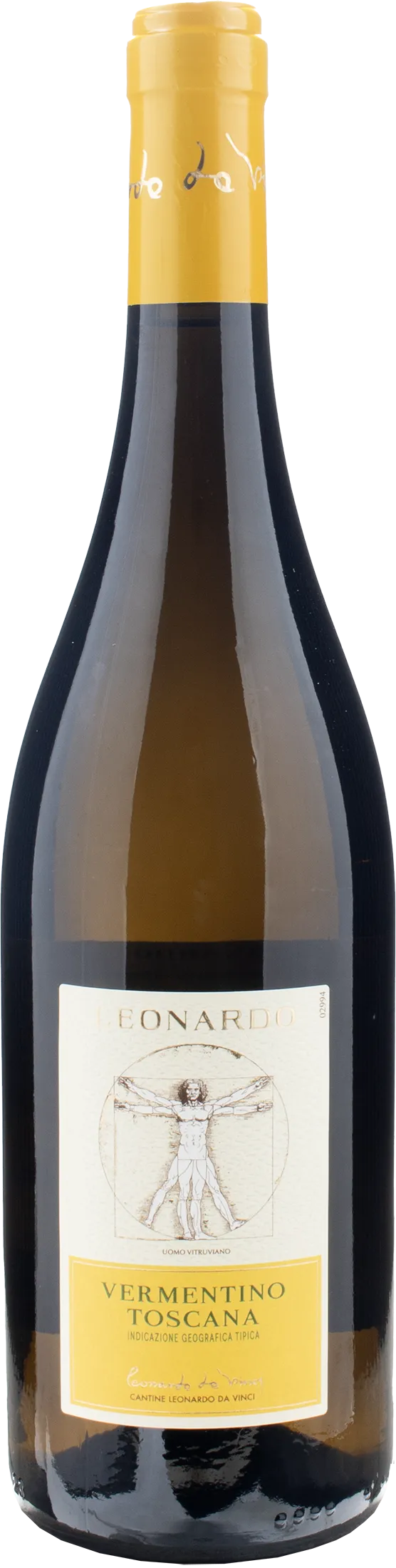
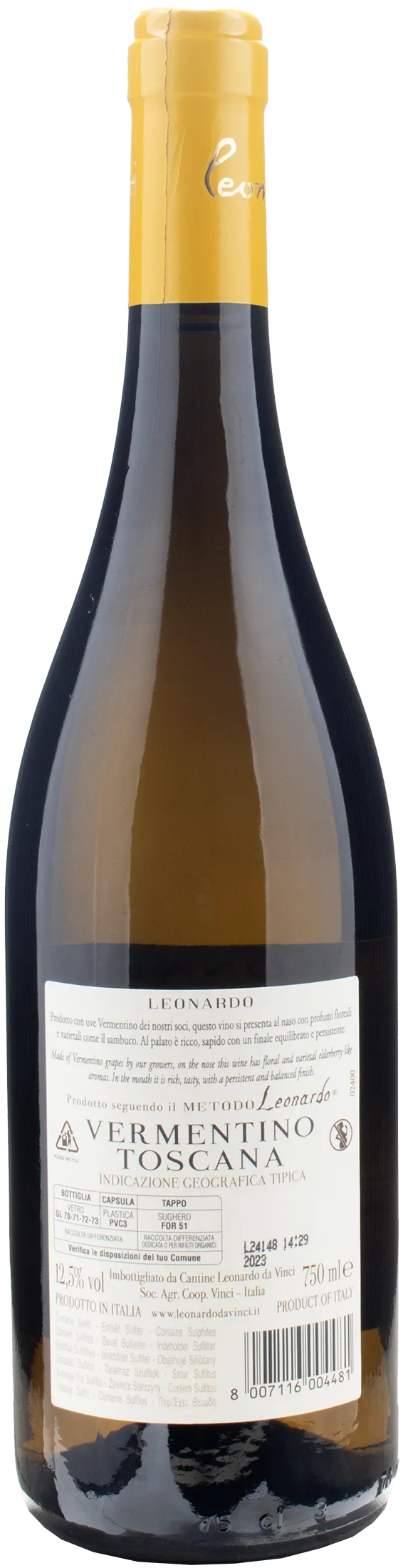
Description
What kind of wine it is
Leonardo Da Vinci Vermentino Toscana Vitruviano is a still white wine that clearly expresses the authenticity of the grape variety. The bouquet offers fragrant floral and herbal notes, intertwined with distinct hints of citrus, melon, and linden blossom. On the palate, it presents a dry, medium-bodied structure, supported by vibrant freshness and pronounced savouriness. This elegant balance ensures a juicy and inviting drink, which over time develops subtle mineral notes of flint. Its lively salinity makes it the ideal pairing for seafood dishes and shellfish.
Where it comes from
The Vermentino grapes ripen in the fertile soils of Vinci and the surrounding municipalities, at an altitude between thirty and one hundred and thirty metres. The roots delve into Pliocene alluvial soils, whose remarkable abundance of fossilised shells gives the wine its typical mineral nuance. In the vineyards, Guyot training systems and the spur-pruned cordon are preferred, while the Tuscan arch is preserved for the oldest vines. This careful agricultural management is overseen by the Leonardo Da Vinci winery, established in 1961 to support the Tuscan hill territory, enhancing local grapes with an essential style.
How it is produced
The bunches are harvested in the first half of September to ensure the perfect integrity of the fruit. White vinification uses gentle pressing and low-oxygen techniques to rigorously preserve every varietal aroma. After a static cold settling for twenty-four hours, the must begins fermentation at a controlled temperature. The wine then rests in stainless steel tanks and completes maturation in temperature-controlled vessels. This meticulous process enhances the fragrant profile of Vermentino, resulting in a dry sip with great gustatory clarity.
History and Curiosities
The Vitruviano Vermentino Toscana IGT from Cantine Leonardo da Vinci originates from the story of a company founded in 1961 by the union of thirty farms. The name pays tribute to the Vitruvian Man depicted on the label, combining oenological excellence with Renaissance perfection. The grapes ripen in the vineyards of Vinci on ancient Pliocene soils, composed of alluvial deposits rich in shells. This particular geological formation imparts a refined mineral vivacity and savouriness to the palate.
Tasting notes

Perfume

Color

Taste
Serve at:
08 - 10 °C
Longevity:
03 - 05 years

- Start up year: 1961
- Oenologist: Riccardo Pucci
- Bottles produced: 5.000.000
- Hectares: 750
The original headquarters, restructured and enlarged, are still the operative centre today. The winery is situated in the borough of Vinci, just 5 kilometres from the birthplace of the world famous artist and inventor Leonardo.
The co-operative takes its name from the great man, paying homage to the mind of the man who was universally recognised as a genius and to emphasise its deep-rooted bond with the territory, the same bond which Leonardo felt and whose surname is specifically associated with the village where he was born on 15 April 1452.
Today, Cantine Leonardo da Vinci is a pioneering co-operative, innovative and modern, which relies on the work and grape production of its 160 members. Read more


| Name | Leonardo da Vinci Vitruviano Vermentino Toscana 2023 |
|---|---|
| Type | White still |
| Denomination | Toscana IGT |
| Vintage | 2023 |
| Size | 0,75 l |
| Alcohol content | 12.5% by volume |
| Grape varieties | 100% Vermentino |
| Country | Italy |
| Region | Tuscany |
| Vendor | Cantine Leonardo da Vinci |
| Story | History and Curiosities The Vitruviano Vermentino Toscana IGT from Cantine Leonardo da Vinci originates from the story of a company founded in 1961 by the union of thirty farms. The name pays tribute to the Vitruvian Man depicted on the label, combining oenological excellence with Renaissance perfection. The grapes ripen in the vineyards of Vinci on ancient Pliocene soils, composed of alluvial deposits rich in shells. This particular geological formation imparts a refined mineral vivacity and savouriness to the palate. |
| Origin | Vineyards of Vinci and neighbouring municipalities |
| Soil composition | Depositi alluvionali del Pliocene ricchi di conchiglie |
| Cultivation system | Mainly Guyot, also spurred cordon and, for older vineyards, Tuscan arch |
| Harvest | 8 5 September |
| Fermentation temperature | 16–18 °C |
| Production technique | White vinification with gentle crushing and pressing; semi-reduction technique (absence and/or low oxygen); clarification of the must by static cold settling; fermentation at controlled temperature (16–18 °C). |
| Wine making | White vinification with gentle crushing and pressing; clarification of the must by static cold settling for 24 hours; fermentation at a controlled temperature of 16–18 °C (semi-reductive technique with low or no oxygen); maturation for several months in stainless steel tanks and continued ageing until January/February in temperature-controlled containers. |
| Aging | Aged for several months in stainless steel tanks; continues until January/February in temperature-controlled containers. |
| Allergens | Contains sulphites |