


Cantine Leonardo da Vinci
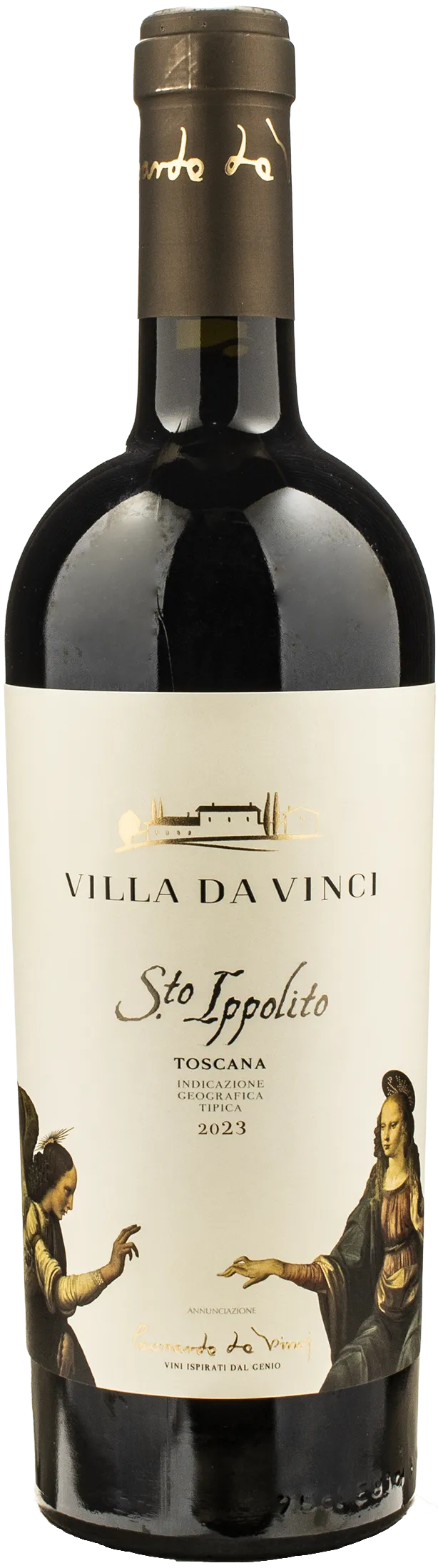
Villa da Vinci Santo Ippolito 2023
| Denomination | IGT Toscana |
|---|---|
| Size | 0,75 l |
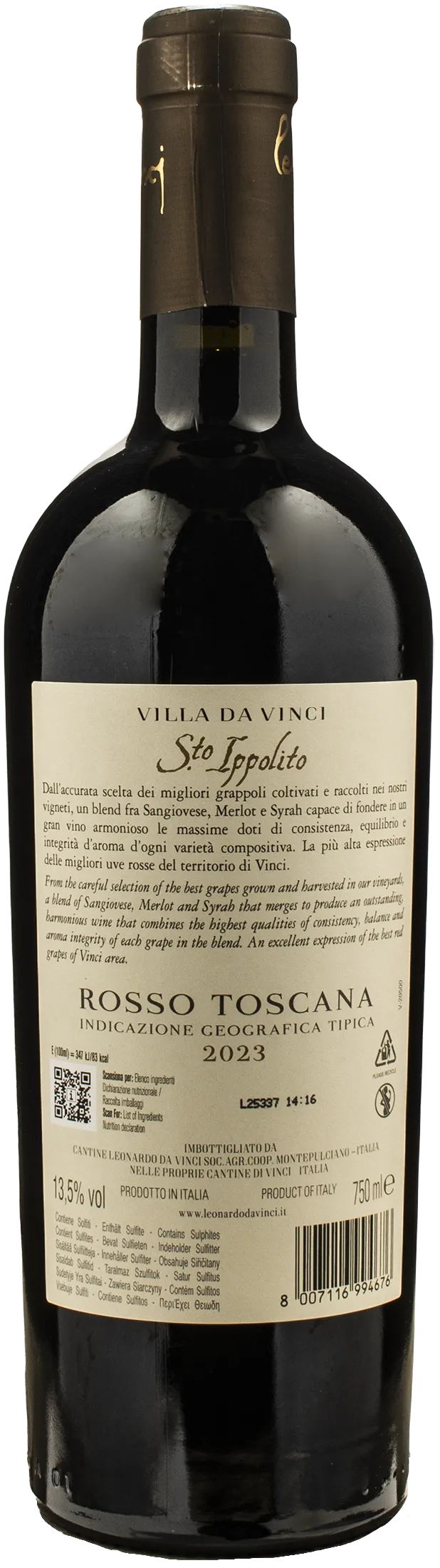
| Alcohol content | 13.5% by volume |
| Area | Tuscany (Italy) |
| Grape varieties | Merlot, Sangiovese, Syrah |
| Aging | In mainly new oak barriques for a period of 12/18 months. |
- Tuscan blend: Merlot, Sangiovese and Syrah; still red wine Toscana IGT, 2023 harvest
- Aged in oak: 12–18 months in predominantly new barriques, with a soft and enveloping character
- Aromatic profile: intense red, violet reflections, hints of spices, balsamic notes and blackberry
- Ideal serving: decant for 1 hour and serve at 14–16 °C to enhance its impressive structure
- Awards and pairings: 90/100 James Suckling; ideal with cured meats, cheeses and roasts
Description
What kind of wine it is
Villa da Vinci Santo Ippolito is a red wine from Tuscany created from a blend of Merlot, Sangiovese and Syrah. Characterised by an intense red colour with violet hues, it releases spicy aromas and balsamic notes, accompanied by hints of blackberry jam. On the palate, it reveals a full-bodied yet smooth structure, with a balanced and enveloping flavour development. If left to decant for an hour and served at a temperature of 14–16 °C, it is the ideal pairing for cured meats, mature cheeses, game, roasts and the typical peposo, ensuring excellent cellaring potential for up to a decade.
Where it comes from
This wine originates from the vineyards of Villa da Vinci, located in the Florentine area. The vines grow at an altitude between thirty and forty metres, with a predominantly southern exposure. The terroir is distinguished by Pliocene alluvial deposits, with geologically unique soils that are very rich in shells. Cantine Leonardo da Vinci has safeguarded this precious agricultural heritage since 1961, managing 750 hectares of vineyards daily to express in the glass the authentic character of one of Italy’s most renowned winegrowing areas.
How it is produced
The harvest is carried out respecting the physiological ripening of the grapes, picking the Merlot and Syrah at the beginning of September and the Sangiovese at the start of October. The vines are cultivated using the Guyot and spur cordon systems. Vinification involves separate fermentation for each grape variety at temperatures between 28 and 30 °C, with twelve days of maceration on the skins, constant pumping over, délestage and a light bleeding. The process is completed with ageing for twelve to eighteen months in mainly new oak barrels, which are essential for defining the wine’s elegant aromatic structure.
History and Curiosities
The Villa da Vinci Santo Ippolito originates from the renowned vineyards of Vinci, where the Leonardo da Vinci Wineries have been enhancing Tuscan winemaking excellence since 1961. This refined Toscana IGT has its roots in soils rich in shells dating back to the Pliocene, benefiting from excellent southern exposure and the expert care of oenologist Riccardo Pucci. The 2023 vintage celebrates this prestigious territorial heritage with outstanding quality, awarded 90 points by James Suckling.
Awards
-
2023
 90
90/100
James Suckling is an influential American wine critic and journalist who worked at Wine Spectator for 30 years. He left the magazine in 2010 to start his own website and guidebook (JamesSuckling.com). He specialises in Italian and Bordeaux wines.
Tasting notes

Perfume

Color

Taste
Serve at:
14 -16 °C
Longevity:
05 - 10 years
Decanting time:
1 hour

- Start up year: 1961
- Oenologist: Riccardo Pucci
- Bottles produced: 5.000.000
- Hectares: 750
The original headquarters, restructured and enlarged, are still the operative centre today. The winery is situated in the borough of Vinci, just 5 kilometres from the birthplace of the world famous artist and inventor Leonardo.
The co-operative takes its name from the great man, paying homage to the mind of the man who was universally recognised as a genius and to emphasise its deep-rooted bond with the territory, the same bond which Leonardo felt and whose surname is specifically associated with the village where he was born on 15 April 1452.
Today, Cantine Leonardo da Vinci is a pioneering co-operative, innovative and modern, which relies on the work and grape production of its 160 members. Read more


| Name | Leonardo da Vinci Villa da Vinci Santo Ippolito 2023 |
|---|---|
| Type | Red still |
| Denomination | Toscana IGT |
| Vintage | 2023 |
| Size | 0,75 l |
| Alcohol content | 13.5% by volume |
| Grape varieties | Merlot, Sangiovese, Syrah |
| Country | Italy |
| Region | Tuscany |
| Vendor | Cantine Leonardo da Vinci |
| Story | History and Curiosities The Villa da Vinci Santo Ippolito originates from the renowned vineyards of Vinci, where the Leonardo da Vinci Wineries have been enhancing Tuscan winemaking excellence since 1961. This refined Toscana IGT has its roots in soils rich in shells dating back to the Pliocene, benefiting from excellent southern exposure and the expert care of oenologist Riccardo Pucci. The 2023 vintage celebrates this prestigious territorial heritage with outstanding quality, awarded 90 points by James Suckling. |
| Origin | Villa Da Vinci Vineyards, in Vinci (Florence) |
| Soil composition | Pliocene alluvial deposits, rich in shells |
| Cultivation system | Mainly Guyot, but also spurred cordon; for older vineyards modified Guyot |
| Harvest | Merlot and Syrah: 8–15 September; Sangiovese: 22 September–5 October |
| Fermentation temperature | 28–30 °C |
| Production technique | Skin maceration for about 12 days; separate fermentation for each grape variety at 28–30 °C with frequent pumping over and delestage; light bleeding; ageing in mainly new oak barriques for 12–18 months |
| Wine making | Maceration of the skins for about 12 days. Fermentation at 28-30 °C, carried out separately for each grape variety. Frequent pumping over and délestage. Light bleeding. |
| Aging | In mainly new oak barriques for a period of 12/18 months. |
| Year production | 5000000 bottles |
| Allergens | Contains sulphites |