


Le Mortelle (Antinori)
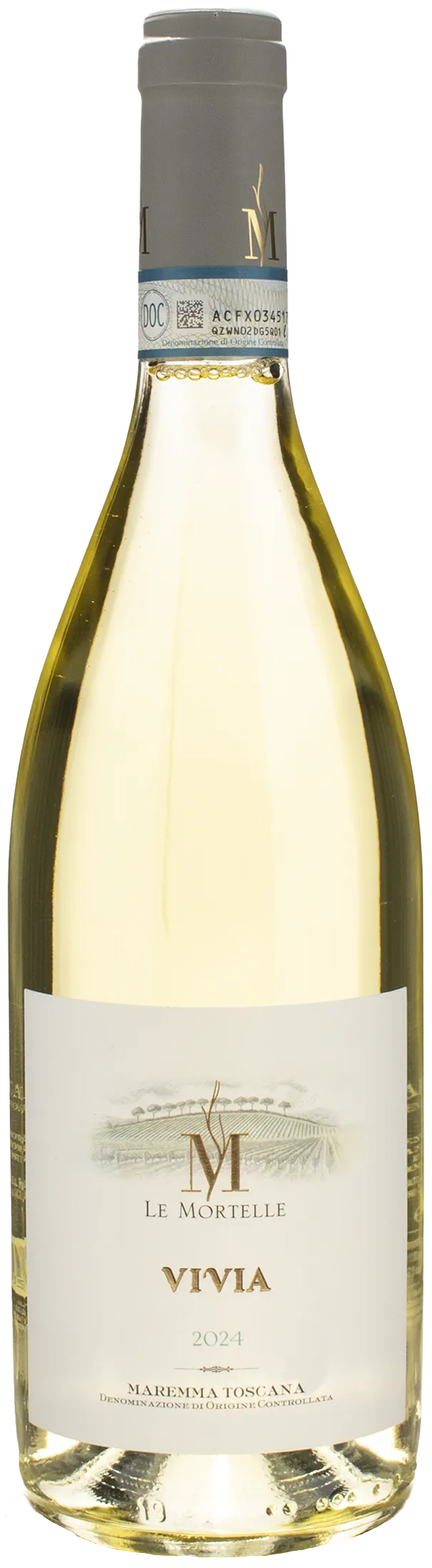
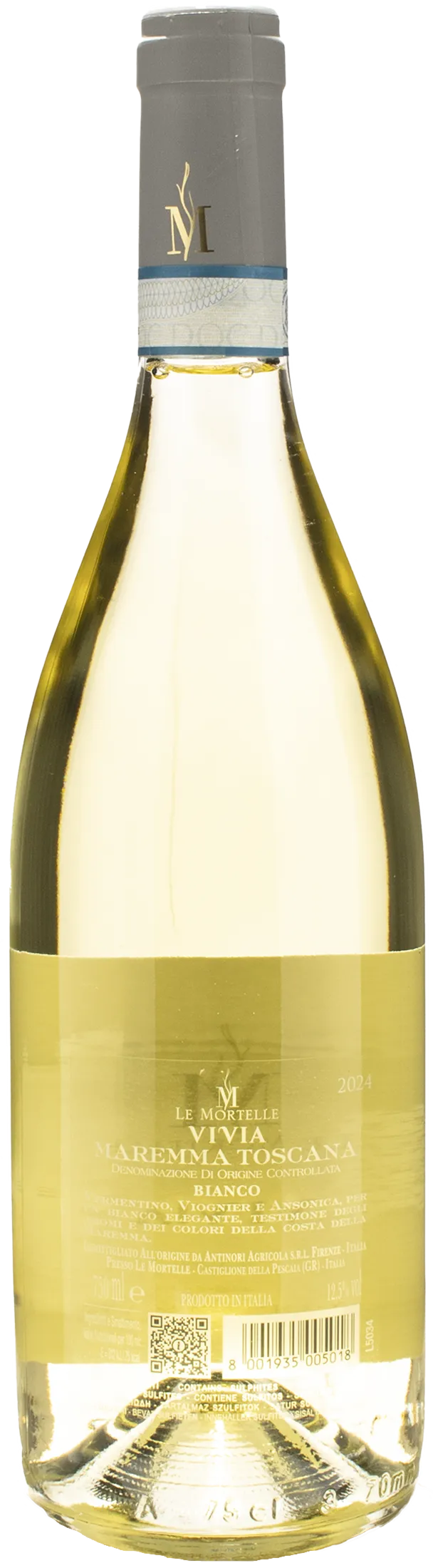
Maremma Toscana Vivia 2024
| Denomination | DOC Maremma Toscana Bianco |
|---|---|
| Size | 0,75 l |
| Alcohol content | 12.5% by volume |
| Area | Tuscany (Italy) |
| Grape varieties | Ansonica/Inzolia, Vermentino, Viognier |
| Aging | A short period in steel in contact with its own lees for about 3 months before being bottled. |
- Coastal grape varieties: Vermentino, Ansonica and Viognier combined in a refined blend
- Aroma and taste: notes of white peach, pineapple and linden with a fresh, citrusy finish
- Vinification in steel: gentle pressing, cold clarification and fermentation at 16 °C
- Ageing on the lees: about 3 months in steel to enhance creaminess and minerality
- Details and serving: Maremma Toscana DOC 2024, 12.5% vol; serving temperature 10–12 °C
Description
What kind of wine it is
Maremma Toscana Vivia by Antinori is an elegant still white wine, the result of a blend of coastal grapes. The combination of Vermentino, Ansonica and Viognier gives it a bright yellow colour with lively greenish highlights. On the nose, it reveals an intense bouquet, characterised by notes of white peach, hints of pineapple and linden blossom. On the palate, it offers a creamy texture balanced by a distinct mineral streak. The sip finishes with a fresh, citrusy finish, precisely recalling the aromas of Mediterranean herbs.
Where it comes from
This wine is produced at the Le Mortelle estate, in the heart of the Maremma, near Castiglione della Pescaia. The vineyards are rooted in sandy and silty soil, ideal for imparting a clear character deeply connected to the coastal territory. The winery, designed to minimise environmental impact, is partially underground and built with natural materials. The structure takes advantage of the effective thermal regulation of the rocks and adopts a gravity-fed production process, designed to handle the grapes with the utmost delicacy.
How it is produced
Harvesting takes place from early September for the Viognier to early October for the Ansonica. The grapes undergo a gentle pressing and are vinified separately to preserve their varietal identity. The must is cooled for twenty-four hours to encourage natural clarification, then moves on to fermentation in stainless steel at a controlled temperature. The wine gains structure thanks to a brief ageing on the lees of about three months in the same tanks, completing its production journey in the months following the harvest.
History and Curiosities
Acquired by the Antinori family in 1999, the enchanting Le Mortelle estate is located in the heart of the Maremma, near Castiglione della Pescaia. Here, wines of great elegance are produced in an underground cellar perfectly integrated into the landscape and built with natural materials to take advantage of the thermal regulation of the rocks. The innovative gravity-flow winemaking process gently guides the grapes to the underground ageing phase. Vivia enhances the coastal varieties, masterfully blended with Viognier, introduced after years of careful experimentation.
Tasting notes
Perfume

Color

Taste
Serve at:
10 - 12 °C
Longevity:
03 - 05 years
- Start up year: 1999
- Oenologist: Renzo Cotarella
- Hectares: 160
Varieties grown in this area can fully express their own characteristics as well as the exceptional qualities of the terroir. The property extends over an area of 270 hectares (667 acres) 170 of which (420 acres) are planted with vineyards. Read more


| Name | Le Mortelle Maremma Toscana Vivia 2024 |
|---|---|
| Type | White still |
| Denomination | Maremma Toscana DOC |
| Vintage | 2024 |
| Size | 0,75 l |
| Alcohol content | 12.5% by volume |
| Grape varieties | Ansonica/Inzolia, Vermentino, Viognier |
| Country | Italy |
| Region | Tuscany |
| Vendor | Le Mortelle (Antinori) |
| Story | History and Curiosities Acquired by the Antinori family in 1999, the enchanting Le Mortelle estate is located in the heart of the Maremma, near Castiglione della Pescaia. Here, wines of great elegance are produced in an underground cellar perfectly integrated into the landscape and built with natural materials to take advantage of the thermal regulation of the rocks. The innovative gravity-flow winemaking process gently guides the grapes to the underground ageing phase. Vivia enhances the coastal varieties, masterfully blended with Viognier, introduced after years of careful experimentation. |
| Origin | Maremma (Tuscany), near Castiglione della Pescaia |
| Soil composition | Medium-textured soil, primarily sandy and silty |
| Harvest | From early September to the early days of October |
| Fermentation temperature | 16 °C |
| Production technique | Soft pressing; separate vinification for each variety; natural cold clarification (10 °C for 24 hours); alcoholic fermentation in stainless steel tanks at controlled temperature (16 °C); brief maturation in steel on its own lees (sur lie) for about 3 months |
| Wine making | Upon arrival at the winery, the grapes were gently pressed and vinified separately by variety; the must was cooled to 10°C for about 24 hours to encourage natural clarification, then transferred to stainless steel tanks for alcoholic fermentation at a controlled temperature of 16°C; brief maturation in steel on its own lees for about 3 months and bottling in January of the year following the harvest. |
| Aging | A short period in steel in contact with its own lees for about 3 months before being bottled. |
| Allergens | Contains sulphites |