


Lamole di Lamole
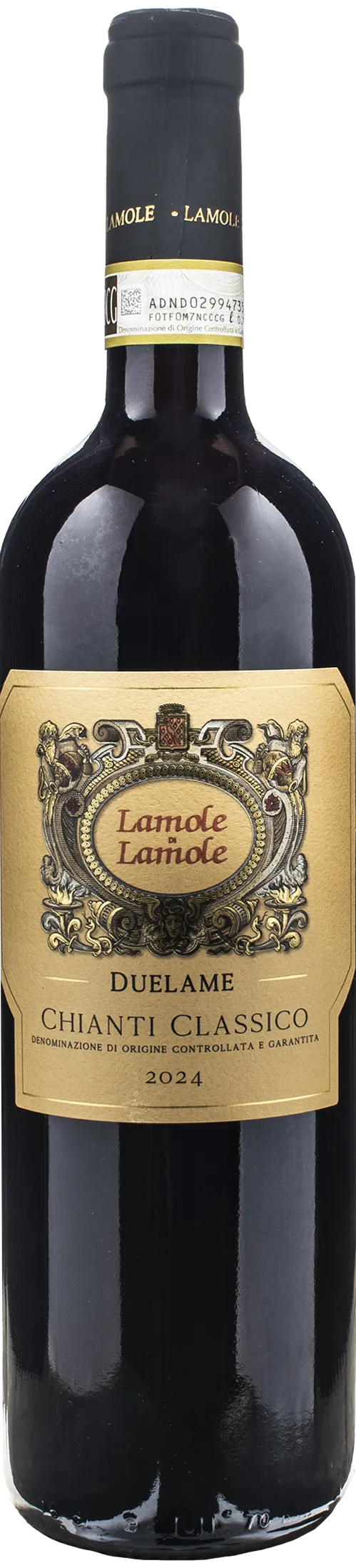
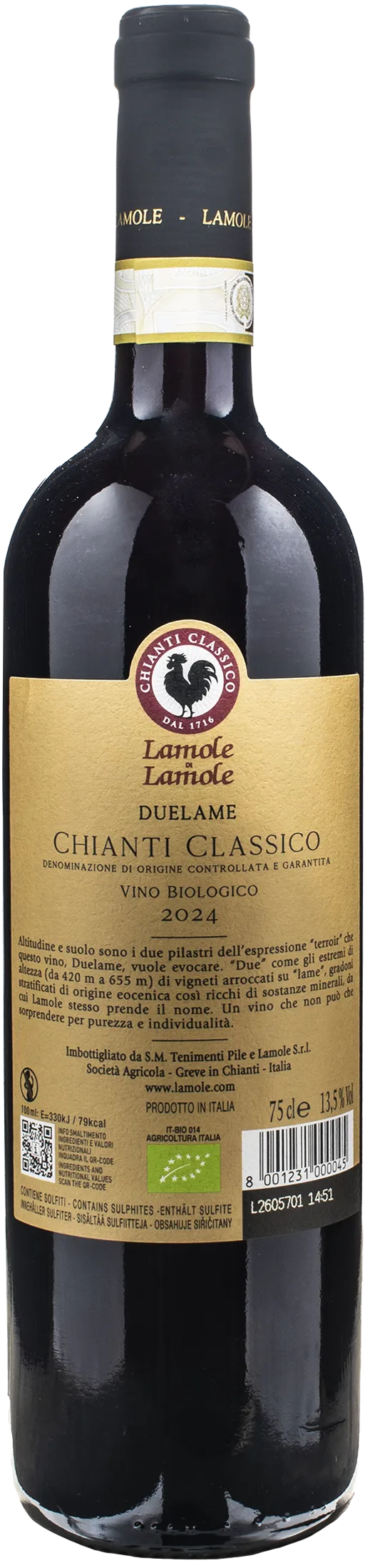
Chianti Classico Duelame 2024
Other years:
2023| Denomination | DOCG Chianti Classico |
|---|---|
| Size | 0,75 l |
| Alcohol content | 13.5% by volume |
| Area | Tuscany (Italy) |
| Grape varieties | Canaiolo Nero, Sangiovese |
| Aging | Aged for 6 months in stainless steel, then for over a year in large 50 and 70 hl casks. |
| Other years | 2023 |
- Origin: Lamole hills, Greve in Chianti, mineral terraces at 420–655 metres altitude
- Grape varieties and alcohol: Organically grown Sangiovese and Canaiolo; alcohol content 13.5%
- Aromas and flavour: Iris, violet and red fruits; delicate tannins, balsamic and savoury finish
- Winemaking: Fermentation in steel, long maceration, ageing in 50–70 hl barrels
- Pairings: Decant for one hour; ideal with traditional Tuscan dishes and duck breast
Description
What type of wine it is
Lamole di Lamole Chianti Classico Duelame is an organic red wine with Denomination of Controlled and Guaranteed Origin (DOCG) produced in Tuscany. Obtained from a blend of Sangiovese and Canaiolo grapes, it is vinified in steel tanks and aged in large oak barrels. On the palate, it reveals itself to be fresh and generous with an excellent structure, fine tannins and a persistent balsamic finish that follows a bouquet of iris, violet and red fruits.
Where it comes from
This wine originates in Tuscany, in the Lamole area in the heart of Chianti Classico. The name pays homage to the 'lame', or the mineral-rich terraces on which the vineyards stand, characterised by soils composed of galestro, clay, sand and alberese rock. The wine's identity is shaped by vineyards cultivated at two extreme altitudes, located at four hundred and twenty and six hundred and fifty-five metres above sea level. This position guarantees a cool and airy climate, with significant temperature fluctuations favoured by the proximity to the Northern Apennines—ideal conditions to enhance the aromas and preserve the natural acidity of the grapes.
How it is produced
After a manual harvest involving historic vines over seventy years old, the de-stemmed bunches undergo rigorous optical selection. Fermentation takes place in steel tanks, followed by a long maceration on the skins that lasts until the end of winter to elegantly extract colour and aromas. Ageing continues by dividing the wine between steel and large oak barrels, concluding with a resting period. This careful production process gives the wine structural harmony and an excellent ageing potential, estimated at around five or six years.
History and curiosities
Chianti Classico Duelame originates on the “lame”, the mineral terraces that give the village of Lamole its name. This excellent organic wine combines the soul of two different altitudes, situated at 420 and 655 metres, and is enhanced by historic vineyards over seventy years old.
Awards
-
2024
 89
89/100
Decanter is a wine and lifestyle magazine, published monthly in around 90 countries. The magazine includes industry news, classic guides and advice on wine and spirits.
Tasting notes

Perfume

Color

Taste
Serve at:
14 -16 °C
Longevity:
05 - 10 years
Decanting time:
1 hour

- Start up year: 1974
- Oenologist: Andrea Daldin
- Bottles produced: 222.000
- Hectares: 37


| Name | Lamole di Lamole Chianti Classico Duelame 2024 |
|---|---|
| Type | Red organic still |
| Denomination | Chianti Classico DOCG |
| Vintage | 2024 |
| Size | 0,75 l |
| Alcohol content | 13.5% by volume |
| Grape varieties | Canaiolo Nero, Sangiovese |
| Country | Italy |
| Region | Tuscany |
| Vendor | Lamole di Lamole |
| Story | History and curiosities Chianti Classico Duelame originates on the "lame", the mineral terraces that give the village of Lamole its name. This excellent organic wine combines the soul of two different altitudes, situated at 420 and 655 metres, and is enhanced by historic vineyards over seventy years old. |
| Origin | Lamole, in the municipality of Greve in Chianti |
| Climate | Cool, well-ventilated climate with a marked temperature variation. |
| Soil composition | Galestro and Tuscan Macigno sandstones, with inclusions of Alberese. |
| Cultivation system | Spurred cordon and Chianti arched cane training |
| Plants per hectare | 3,300–5,200 |
| Harvest | From the first to the third week of October |
| Fermentation | Until the end of winter |
| Production technique | Destemming and selection with an optical sorting machine; crushing and fermentation on the skins in stainless steel tanks (maceration until late winter); ageing in steel and large oak casks (50–70 hl) followed by bottle ageing. |
| Wine making | Grapes are destemmed and selected using an optical sorting machine, then crushed and fermented with the skins in stainless steel tanks; short maceration on the skins (until the end of winter). |
| Aging | Aged for 6 months in stainless steel, then for over a year in large 50 and 70 hl casks. |
| Allergens | Contains sulphites |