


La Vis
Lagrein 2025
| Denomination | DOC Trentino Lagrein |
|---|---|
| Size | 0,75 l |
| Alcohol content | 13.0% by volume |
| Area | Trentino Alto Adige (Italy) |
| Grape varieties | 100% Lagrein |
| Aging | On the fine lees in concrete vats and a small part in oak barrels for approximately 5–6 months before bottling. |
- Grape variety and style: Lagrein Trentino DOC, dry still red, 13% vol
- Origin: Avisiane Hills of Pressano and Sorni (Lavis), 250–400 m, west-facing exposure
- Winemaking: manual harvesting, fermentation in steel, 5–6 months on lees in concrete and small barrels
- Aromas and taste: blackberry, raspberry, violet and spices; full-bodied, soft tannins, persistent finish
- Serving and pairings: 16–18°C, decant for 1 hour; red meats, goulash, cheeses
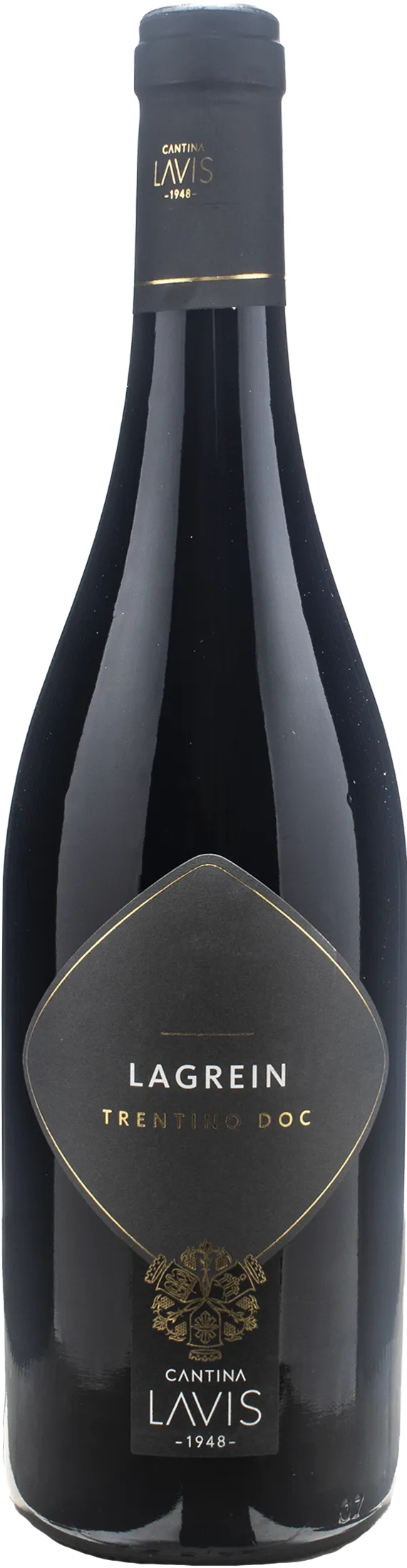
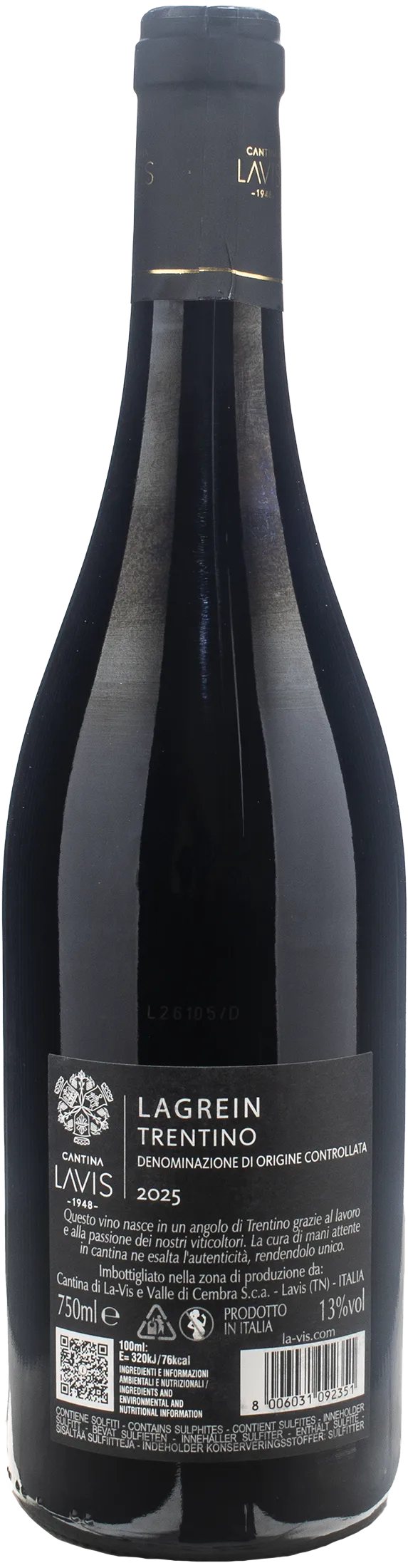
Description
What type of wine it is
Lagrein La Vis is a still red wine with the Trentino Denominazione di Origine Controllata (DOC) status. This full-bodied and structured wine is distinguished by its soft tannins and a persistent finish. Its vinification involves fermentation in steel and ageing on the fine lees in concrete vats and oak barrels.
Where it comes from
The Lagrein grapes grow on the Avisian Hills, on the sunny slopes of Pressano and Sorni between 250 and 400 metres above sea level. The westward exposure ensures ideal ripening of the bunches. The soils, originating from landslide materials and rich in clay and sandy sediments, define the intensity of the wine. Cultivation employs sustainable viticultural practices, limiting the use of synthetic substances to preserve the surrounding environment.
How it is produced
Production begins with manual harvesting in the first ten days of October. This is followed by temperature-controlled fermentation in steel and static clarification. The wine matures for about six months on the fine lees between concrete vats and small oak barrels. This ageing on the lees consolidates the tactile texture and enhances the bouquet, giving the sip great harmony and a delicate softness before being bottled.
History and curiosities
Founded in 1850 by the Cembran family, Cantina La Vis is today a cooperative led by Francesco Polastri. The Lagrein grape variety, although originally from the nearby Alto Adige, has been present in the winery's valleys for over seventy years and has now become naturalised in the Trentino territory, where it is cultivated following ecological principles and sustainable viticulture.
Tasting notes

Perfume

Color

Taste
Serve at:
14 -16 °C
Longevity:
05 - 10 years
Decanting time:
1 hour

- Start up year: 1948
- Oenologist: Ezio Dallagiacoma, Marco Sartori
- Bottles produced: 2.000.000
- Hectares: 400
The logo takes inspiration from a decorative element that has always been present in the company and bears a highly symbolic value: a wooden bas-relief celebrating the founding of the winery in 1948 which represents the coats of arms of the municipalities of Lavis, Giovo and Meano, the very first protagonists in the association’s establishment. A timeless brand of great strength that puts the Winery and its founding values at the centre: cooperation, history and the bond with the territory.
The Lavis wine-makers cooperative traces its origins to 1850, when the Cembran family built the initial core of the current production unit. It was officially formed in 1948 by 14 independent wine-makers and grew in the years that followed, due partly to acquisitions of other producers, including mergers with the Salorno Cooperative of South Tyrol in 1969 and Cantina Sociale di Cembra in 2003. Read more


| Name | La Vis Lagrein 2025 |
|---|---|
| Type | Red still |
| Denomination | Trentino DOC |
| Vintage | 2025 |
| Size | 0,75 l |
| Alcohol content | 13.0% by volume |
| Grape varieties | 100% Lagrein |
| Country | Italy |
| Region | Trentino Alto Adige |
| Vendor | La Vis |
| Story | History and curiosities Founded in 1850 by the Cembran family, Cantina La Vis is today a cooperative led by Francesco Polastri. The Lagrein grape variety, although originally from the nearby Alto Adige, has been present in the winery's valleys for over seventy years and has now become naturalised in the Trentino territory, where it is cultivated following ecological principles and sustainable viticulture. |
| Origin | Hills of Pressano and Sorni in the municipality of Lavis (Trento) |
| Soil composition | Loam soil derived from landslide materials with a silty composition, containing clayey and sandy sediments; deep and moderately fertile. |
| Cultivation system | Simple pergola |
| Plants per hectare | Five thousand |
| Harvest | Hand-harvested during the first ten days of October |
| Production technique | Hand-harvested; temperature-controlled fermentation in stainless steel tanks; static clarification; ageing on the fine lees in concrete tanks and a small proportion in oak barrels for 5–6 months. |
| Wine making | Temperature-controlled fermentation in stainless steel tanks; static clarification; ageing on the fine lees in concrete vats and a small portion in oak barrels for approximately 5–6 months before bottling. |
| Aging | On the fine lees in concrete vats and a small part in oak barrels for approximately 5–6 months before bottling. |
| Allergens | Contains sulphites |