


La Vis
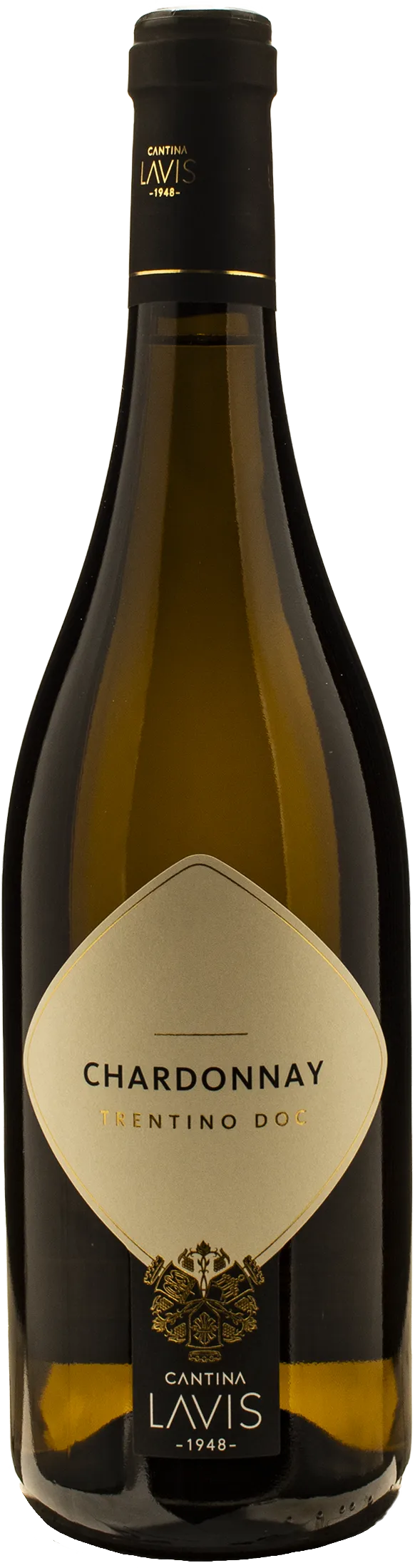
Chardonnay 2025
| Denomination | DOC Trentino Chardonnay |
|---|---|
| Size | 0,75 l |
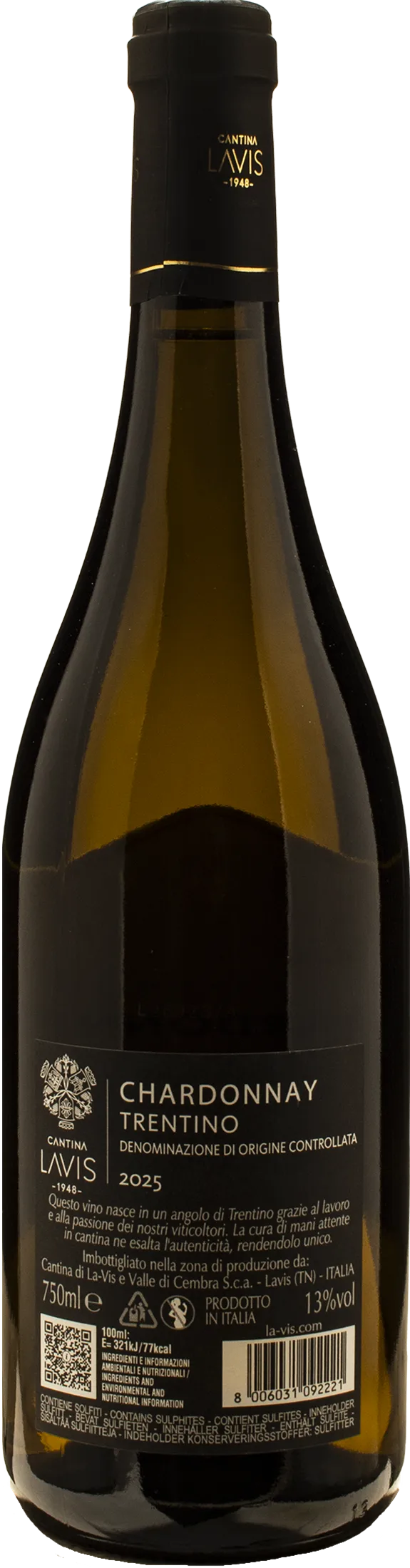
| Alcohol content | 13.0% by volume |
| Area | Trentino Alto Adige (Italy) |
| Grape varieties | 100% Chardonnay |
| Aging | Aged on fine lees for about 5–6 months before bottling. |
- Grape variety and style: 100% Chardonnay, dry, fresh and fruity, 13% vol
- Origin: Trentino DOC, vineyards located between Lavis, Meano and the Cembra Valley, near the Avisio
- Vinification: hand-picked, fermented in stainless steel at 20°C, static decantation
- Ageing: 5–6 months on fine lees for greater body, complexity and harmony
- Aromas and pairings: notes of Golden apple, pineapple and walnut; excellent with fish and poultry dishes
Description
What kind of wine it is
Produced by La-Vis, Chardonnay is the authentic expression of Trentino. In the glass, it appears a bright straw yellow with delicate greenish highlights. On the palate, it reveals a fresh and fruity profile, with notes of Golden apple and pineapple enriched by a subtle hint of walnut. The full structure is balanced by a lively acidity that enhances its harmony. Served at 10–12 °C, it pairs well with seafood risottos, shellfish and stuffed ravioli, and is also ideal with white meats and vegetarian dishes.
Where it comes from
The grapes come from a zoning project aimed at identifying the sandy-loam soil ideal for each variety. The vineyards stretch between Lavis, Meano, Pressano and the Cembra Valley, on fluvioglacial porphyry deposits near the Avisio river. The significant temperature variations between daytime warmth and night-time coolness, typical of these altitudes, favour excellent aromatic development. This ecosystem gives the wine a natural elegance and a pleasant liveliness.
How it is produced
Vinification begins in September with manual harvesting, ensuring rigorous selection. Gentle pressing precedes the static decantation of the must. Fermentation takes place in stainless steel tanks at a controlled temperature to preserve maximum aromatic purity. Before bottling, the wine undergoes ageing on fine lees for about five or six months. This period of rest imparts greater taste complexity, rounding out the body and enhancing drinkability.
History and Curiosities
The La-Vis winery, rooted in the Trentino region since 1850, celebrates the municipalities of Lavis, Giovo and Meano in its logo. This refined Chardonnay Trentino DOC is the result of a rigorous zoning project, aimed at cultivating the grapes in their ideal soil. Grown along the Avisio on sandy-loam soils, the clusters give the wine exceptional freshness. Thanks to careful ageing on fine lees, the wine develops a harmonious and full structure, revealing elegant notes of Golden apple and pineapple.
Tasting notes

Perfume

Color

Taste
Serve at:
10 - 12 °C
Longevity:
03 - 05 years
- Start up year: 1948
- Oenologist: Ezio Dallagiacoma, Marco Sartori
- Bottles produced: 2.000.000
- Hectares: 400
The logo takes inspiration from a decorative element that has always been present in the company and bears a highly symbolic value: a wooden bas-relief celebrating the founding of the winery in 1948 which represents the coats of arms of the municipalities of Lavis, Giovo and Meano, the very first protagonists in the association’s establishment. A timeless brand of great strength that puts the Winery and its founding values at the centre: cooperation, history and the bond with the territory.
The Lavis wine-makers cooperative traces its origins to 1850, when the Cembran family built the initial core of the current production unit. It was officially formed in 1948 by 14 independent wine-makers and grew in the years that followed, due partly to acquisitions of other producers, including mergers with the Salorno Cooperative of South Tyrol in 1969 and Cantina Sociale di Cembra in 2003. Read more


| Name | La Vis Chardonnay 2025 |
|---|---|
| Type | White still |
| Denomination | Trentino DOC |
| Vintage | 2025 |
| Size | 0,75 l |
| Alcohol content | 13.0% by volume |
| Grape varieties | 100% Chardonnay |
| Country | Italy |
| Region | Trentino Alto Adige |
| Vendor | La Vis |
| Story | History and Curiosities The La-Vis winery, rooted in the Trentino region since 1850, celebrates the municipalities of Lavis, Giovo and Meano in its logo. This refined Chardonnay Trentino DOC is the result of a rigorous zoning project, aimed at cultivating the grapes in their ideal soil. Grown along the Avisio on sandy-loam soils, the clusters give the wine exceptional freshness. Thanks to careful ageing on fine lees, the wine develops a harmonious and full structure, revealing elegant notes of Golden apple and pineapple. |
| Origin | Municipalities of Lavis, Meano and lower Cembra Valley |
| Climate | Influenze miste alpine e mediterranee (pedemontana alpina) |
| Soil composition | Sandy loam, from fluvioglacial porphyritic sediments |
| Cultivation system | Guyot and simple Trentino pergola |
| Plants per hectare | 5,000 vines/ha |
| Harvest | Manual harvesting in the first ten days of September |
| Fermentation temperature | 20 °C |
| Production technique | Manual harvesting; soft pressing; static decantation of the must; fermentation at a controlled temperature (20 °C) in stainless steel tanks; ageing on fine lees for 5–6 months |
| Wine making | Manual harvesting in the first ten days of September; gentle pressing; static decantation of the must; fermentation at a controlled temperature (20°C) in stainless steel tanks; ageing on fine lees for about 5–6 months before bottling. |
| Aging | Aged on fine lees for about 5–6 months before bottling. |
| Allergens | Contains sulphites |