


La Spinetta
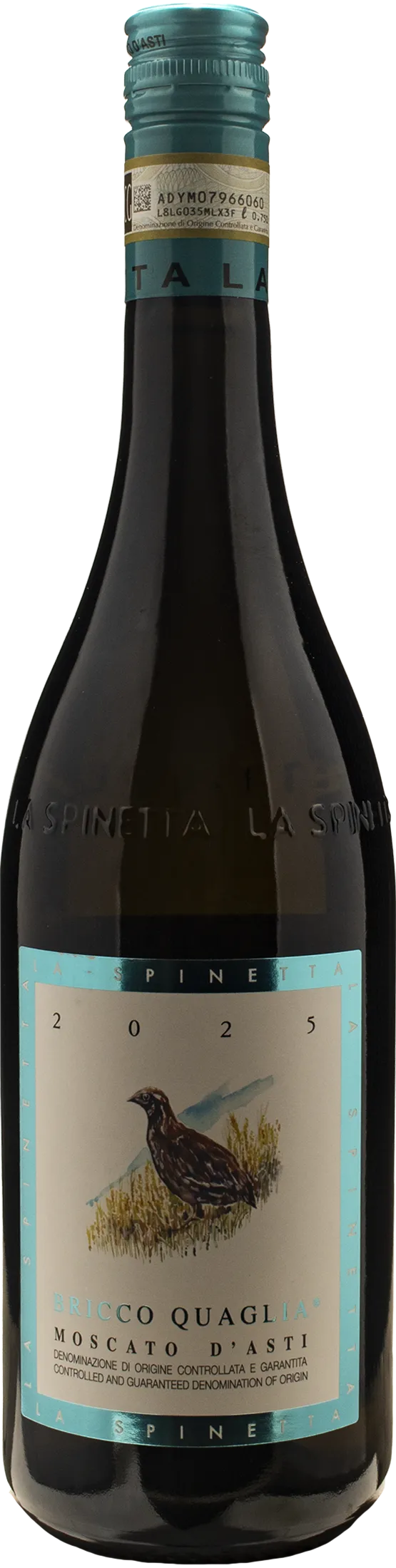
Moscato d'Asti Bricco Quaglia 2025
| Denomination | DOCG Moscato d'Asti |
|---|---|
| Size | 0,75 l |
| Alcohol content | 5.5% by volume |
| Area | Piedmont (Italy) |
| Grape varieties | 100% Moscato Bianco/Moscato Reale |
| Aging | No ageing indicated; fermentation in stainless steel and in autoclave (Martinotti/Charmat method) for about 1 month. |
- Name and vintage: Moscato d’Asti DOCG 2025, made from 100% Moscato Bianco
- Aromatic profile: notes of peach, apricot, sage, white flowers, honey and citrus
- Taste and liveliness: well-balanced sweetness, mineral freshness and a light effervescence
- Vinification: gentle pressing, fermentation at 18–20°C, stopped at -3°C and microfiltration
- Serving and pairings: serve at 6–10°C with desserts, fine pastries or blue cheeses
Description
What kind of wine it is
Moscato d’Asti Bricco Quaglia by La Spinetta is a sweet white wine from Piedmont, made exclusively from Moscato Bianco grapes, fermented in steel and autoclave. An iconic expression of Moscato d’Asti, it offers a sip where natural sweetness harmoniously blends with a pleasant mineral freshness. On the nose, it releases intense aromas of peach and apricot, enriched by notes of sage, honey and white flowers. The palate, enlivened by a delicate effervescence, is clean and persistent, ideal paired with pastries or to create intriguing contrasts with blue cheeses.
Where it comes from
This wine is born in the heart of the Asti area, between Castagnole delle Lanze and Mango, from grapes grown in the Bricco Quaglia vineyard. The rows, managed under organic farming, grow on calcareous marl soils with sandy components at about three hundred metres above sea level. The southern exposure and the age of the vines favour balanced ripening of the bunches. These pedoclimatic conditions ensure a crystalline aromatic yield, giving the wine a perfect combination of sugar richness and its mineral character.
How it is produced
In mid-September, the grapes undergo a gentle pressing to extract only the free-run must. This is kept at very low temperatures to preserve its fragrance until fermentation, which takes place in temperature-controlled steel tanks. To maintain the primary aromas and the natural residual sugar, the process is stopped by refrigeration. A rigorous microfiltration before bottling ensures maximum clarity, defining the typical and pleasant liveliness that characterises the drinking experience.
History and Curiosities
Since 1977, the Rivetti family has been producing the prestigious wines of La Spinetta in Castagnole delle Lanze. The Bricco Quaglia marks a historic milestone, being the first Moscato d’Asti DOCG produced from a single vineyard. The ancient name Muscat recalls the intense musky aroma of the grape. Although the winery is renowned for the rhinoceros inspired by Dürer's woodcuts, this bottle proudly displays the namesake quail on its label.
Tasting notes

Perlage
Perfume

Color

Taste
Serve at:
10 - 12 °C
Longevity:
03 - 05 years

- Start up year: 1977
- Oenologist: Giorgio Rivetti, Andrea Rivetti
- Bottles produced: 500.000
- Hectares: 100


| Name | La Spinetta Moscato d'Asti Bricco Quaglia 2025 |
|---|---|
| Type | White organic naturally sweet dessert wine aromatic |
| Denomination | Asti DOCG |
| Vintage | 2025 |
| Size | 0,75 l |
| Alcohol content | 5.5% by volume |
| Grape varieties | 100% Moscato Bianco/Moscato Reale |
| Country | Italy |
| Region | Piedmont |
| Vendor | La Spinetta |
| Story | History and Curiosities Since 1977, the Rivetti family has been producing the prestigious wines of La Spinetta in Castagnole delle Lanze. The Bricco Quaglia marks a historic milestone, being the first Moscato d’Asti DOCG produced from a single vineyard. The ancient name Muscat recalls the intense musky aroma of the grape. Although the winery is renowned for the rhinoceros inspired by Dürer's woodcuts, this bottle proudly displays the namesake quail on its label. |
| Origin | Castagnole delle Lanze and Mango (Asti), Piedmont, Italy |
| Climate | Altitude: 300 m a.s.l. Exposure: south. |
| Soil composition | Calcareous and sandy |
| Cultivation system | Guyot |
| Harvest | Mid-September |
| Fermentation temperature | Between 18 and 20°C |
| Fermentation | 1 month |
| Production technique | Pressing with bladder presses; fermentation in steel and in autoclave using the Martinotti/Charmat method; halting of fermentation via refrigeration and sterilising microfiltration |
| Wine making | After the harvest, the grapes undergo gentle pressing with pneumatic presses; the must is kept at 0°C until fermentation at a controlled temperature (about 15–20°C) in stainless steel and in autoclave according to the Martinotti/Charmat method. Fermentation is stopped by refrigeration (down to -3°C), then the wine is filtered and bottled after sterile microfiltration. |
| Aging | No ageing indicated; fermentation in stainless steel and in autoclave (Martinotti/Charmat method) for about 1 month. |
| Year production | 110000 bottles |
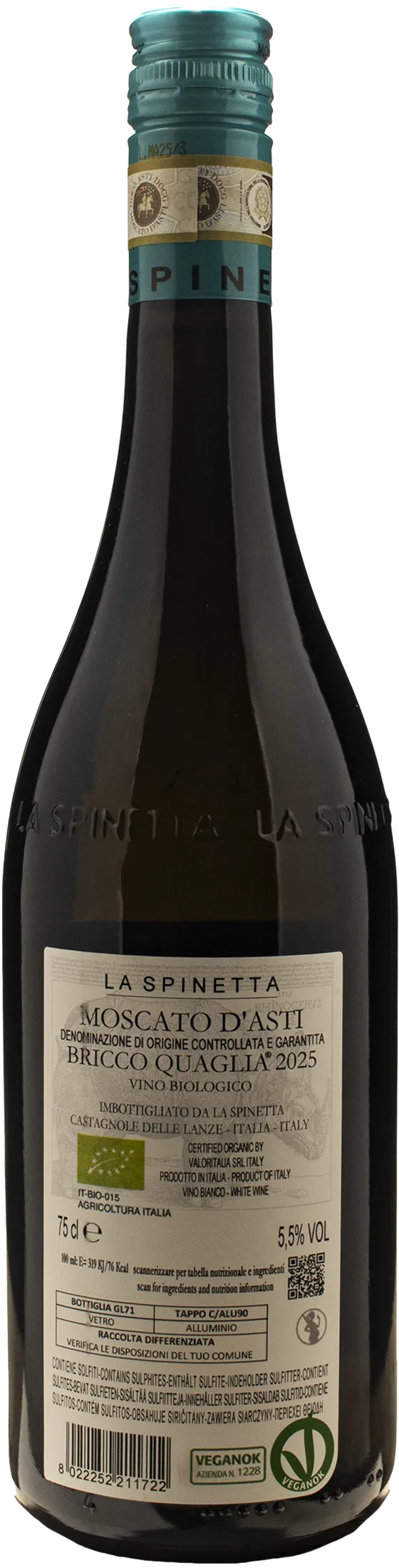
| Allergens | Contains sulphites |