


La Poderina
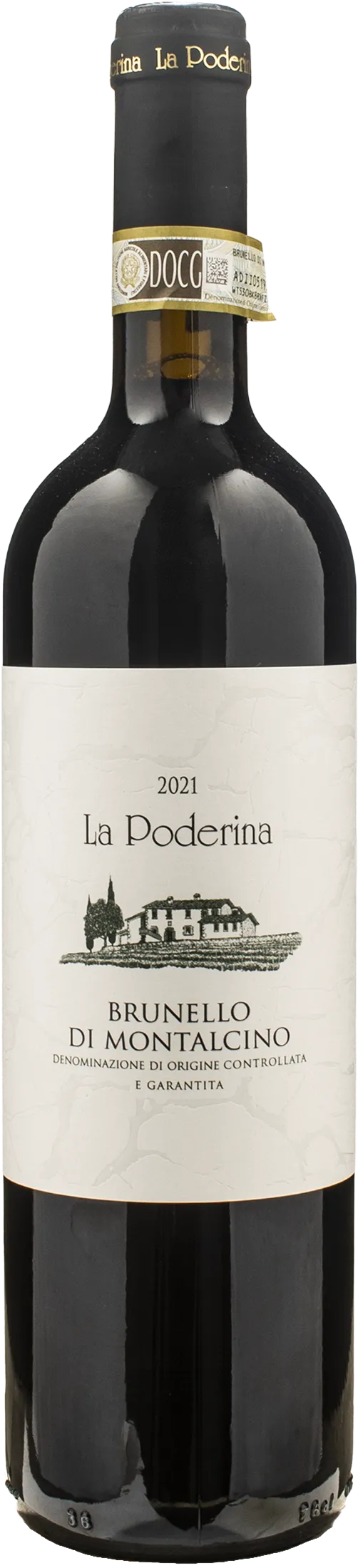
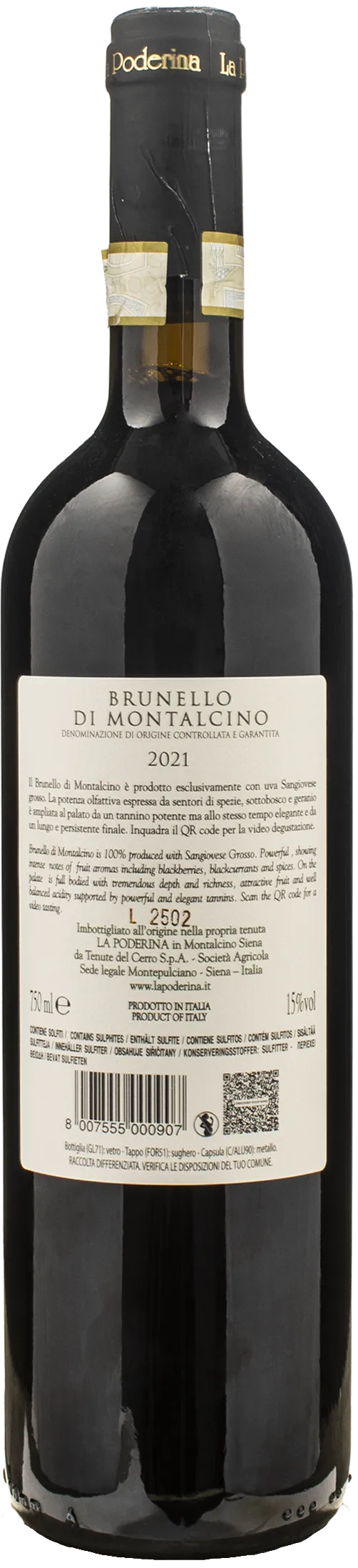
Brunello di Montalcino 2021
| Denomination | DOCG Brunello di Montalcino |
|---|---|
| Size | 0,75 l |
| Alcohol content | 15.0% by volume |
| Area | Tuscany (Italy) |
| Grape varieties | 100% Sangiovese Grosso |
| Aging | After racking, the wine is transferred to oak barrels, where malolactic fermentation takes place and weekly bâtonnage is carried out for about 4 months on the fine lees, followed by a further 20 months of ageing in oak (approximately 24 months in total). |
- Name and grapes: Brunello di Montalcino DOCG 2021, 100% Sangiovese Grosso, 0.75 l
- Vinification in steel: Maceration at 24-28 °C with pumping over and délestage; after 29 °C
- Ageing in oak: Around 24 months in wood, weekly bâtonnage on fine lees
- Sensory profile: Smoky notes and dark spices; plum, blackberry, mocha and cherry finish
- Pairings and awards: Roasts, poultry, mature cheeses; 92 points James Suckling, 93 Parker
Description
What kind of wine it is
La Poderina Brunello di Montalcino is a still red wine that embodies the authentic winemaking expression of Tuscany. Made exclusively from Sangiovese Grosso grapes, it stands out for its structured profile, with pronounced tannins and an enveloping, persistent texture. Visually, it displays a clear garnet colour, while on the nose it opens with a distinct smoky note, followed by complex aromas of dark spices, blackberry and plum. The palate is intense and vigorous, with a prolonged finish offering hints of mocha, cherry and subtle sanguine notes.
Where it comes from
This Brunello di Montalcino originates from the historic area of Castelnuovo dell’Abate, in the municipality of Montalcino. This area is renowned for its unique soil and climate conditions, which bestow the grapes with rare elegance and balance. The La Poderina winery manages its vineyards with a production philosophy based on low yields per hectare. This constant attention allows the distinctive character of the territory to shine through, precisely defining the Tuscan style that characterises this wine.
How it is produced
Following the manual harvest, vinification begins with fermentation in temperature-controlled steel tanks, complemented by daily pump-overs and délestage, followed by meticulous post-fermentation maceration. The wine is then transferred to wood for malolactic fermentation. Ageing includes careful weekly batonnage on the fine lees for about four months, essential for imparting softness to the structure. Finally, a prolonged rest in large casks and French oak barriques completes its evolution, resulting in a red often celebrated by the international critics.
History and Curiosities
Founded in 1988 in Castelnuovo dell’Abate, La Poderina skilfully combines innovation with the noble Tuscan tradition. The estate enhances Sangiovese Grosso by maintaining low yields and meticulously attending to every oenological detail. A distinctive feature of this Brunello di Montalcino DOCG is the malolactic fermentation in wood, enriched by weekly batonnage on the fine lees, which imparts an incredibly velvety texture. The slow ageing in French barriques and large casks shapes a prestigious red wine, acclaimed by leading international critics.
Awards
-
2021
 92
92/100
James Suckling is an influential American wine critic and journalist who worked at Wine Spectator for 30 years. He left the magazine in 2010 to start his own website and guidebook (JamesSuckling.com). He specialises in Italian and Bordeaux wines.
-
2021
 93
93/100
Vinous is the online guide from Antonio Galloni, one of the world's leading wine connoisseurs.
Tasting notes

Perfume

Color

Taste
Serve at:
18 - 20 °C
Longevity:
10 - 15 years
Decanting time:
1 hour
- Start up year: 1988
- Oenologist: Riccardo Cotarella, Raffaele Pistucchia
- Bottles produced: 120.000
- Hectares: 37
Thanks to a company philosophy that believes in innovation at the service of tradition, La Poderina wines are matured in French oak barriques and large casks. In addition, high-quality training systems are adopted in the vineyard with yields of 60 quintals per hectare, well below the 80 quintals the specifications allow.
The Brunello wine is produced in two versions: "Poggio Abate" Brunello di Montalcino Riserva DOCG and Brunello di Montalcino DOCG. La Poderina also produces Rosso di Montalcino DOC and Moscadello di Montalcino DOC. Read more


| Name | La Poderina Brunello di Montalcino 2021 |
|---|---|
| Type | Red still |
| Denomination | Brunello di Montalcino DOCG |
| Vintage | 2021 |
| Size | 0,75 l |
| Alcohol content | 15.0% by volume |
| Grape varieties | 100% Sangiovese Grosso |
| Country | Italy |
| Region | Tuscany |
| Vendor | La Poderina |
| Story | History and Curiosities Founded in 1988 in Castelnuovo dell’Abate, La Poderina skilfully combines innovation with the noble Tuscan tradition. The estate enhances Sangiovese Grosso by maintaining low yields and meticulously attending to every oenological detail. A distinctive feature of this Brunello di Montalcino DOCG is the malolactic fermentation in wood, enriched by weekly batonnage on the fine lees, which imparts an incredibly velvety texture. The slow ageing in French barriques and large casks shapes a prestigious red wine, acclaimed by leading international critics. |
| Origin | Castelnuovo dell'Abate - Montalcino (SI) |
| Fermentation temperature | 24-28 °C |
| Production technique | Fermentation with maceration in stainless steel tanks at controlled temperature (24-28 °C) with daily pump-overs and délestage; post-fermentation maceration at 29 °C; ageing in oak for about 24 months with weekly bâtonnage on the fine lees |
| Wine making | Fermentation with maceration in stainless steel tanks at a controlled temperature (24-28 °C) with daily pump-overs and délestage; at the end of the alcoholic fermentation, a post-fermentative maceration is carried out at 29 °C. |
| Aging | After racking, the wine is transferred to oak barrels, where malolactic fermentation takes place and weekly bâtonnage is carried out for about 4 months on the fine lees, followed by a further 20 months of ageing in oak (approximately 24 months in total). |
| Year production | 120000 bottles |
| Allergens | Contains sulphites |