


La Braccesca (Antinori)
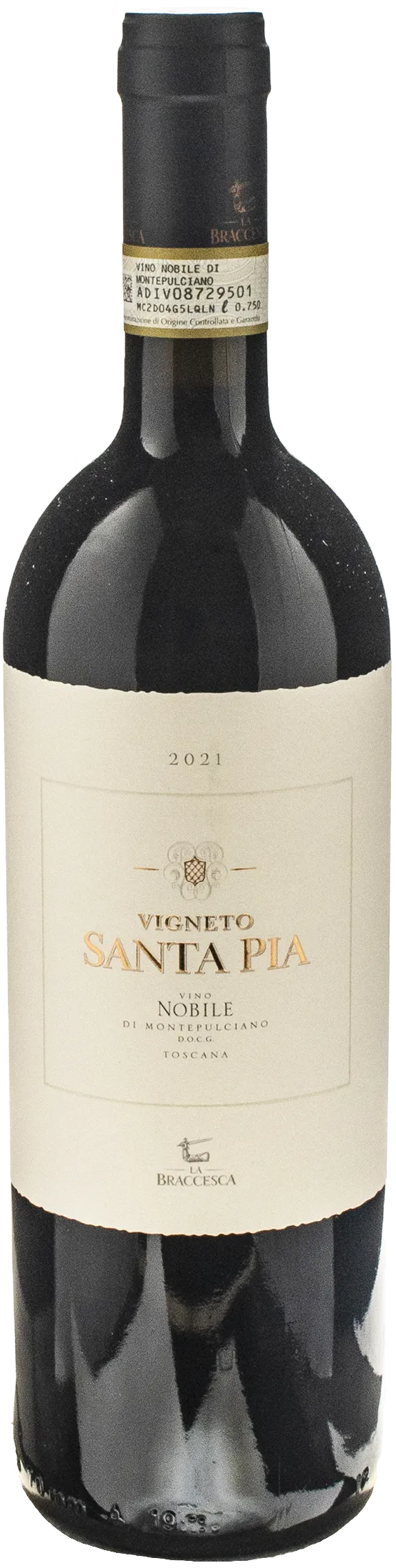
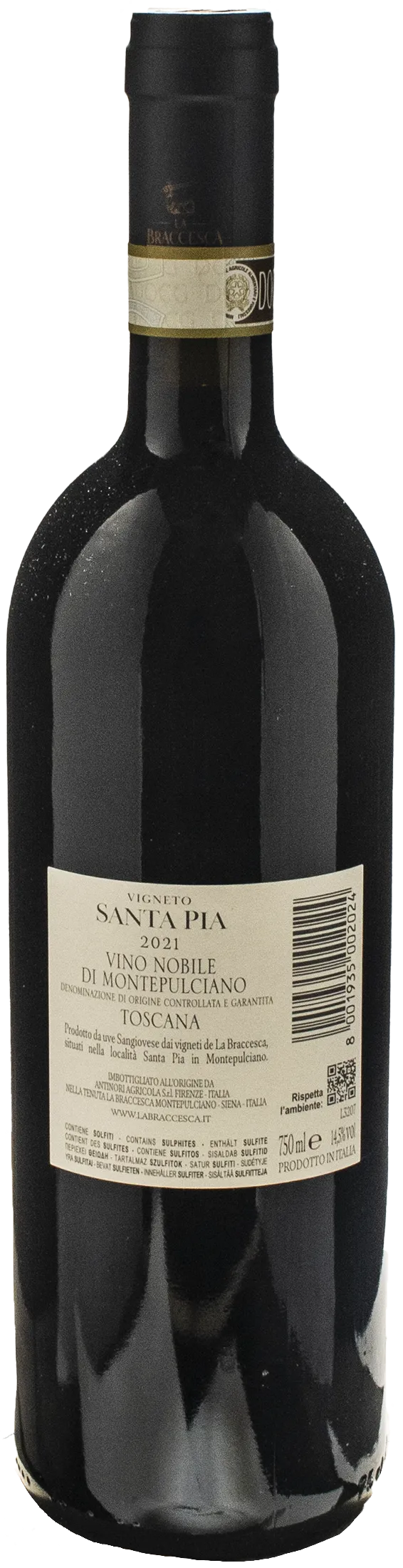
Nobile di Montepulciano Riserva Santa Pia 2021
| Denomination | DOCG Vino Nobile di Montepulciano |
|---|---|
| Size | 0,75 l |
| Alcohol content | 14.5% by volume |
| Area | Tuscany (Italy) |
| Grape varieties | 100% Sangiovese Grosso |
| Aging | The wine was transferred into 500-litre tonneaux for malolactic fermentation and subsequently matured in wood for around 12 months; after bottling, it underwent a further ageing period in bottle of 20 months before being released for sale. |
- Grape variety and designation: 100% Sangiovese Grosso, Vino Nobile di Montepulciano DOCG Riserva
- Aromas: notes of strawberry and cherry, blood orange, vanilla, spices, leather and tobacco
- Palate: enveloping and savoury flavour, pronounced freshness, silky tannins and a persistent finish
- Ageing: stainless steel at 26–28 °C, 12 months in 500-litre tonneaux, 20 months in bottle
- Serving and pairings: 18-20 °C, decant for 1 hour. Ideal with pasta, roasts, game and cheeses
Description
What kind of wine it is
The Nobile di Montepulciano Riserva Santa Pia by La Braccesca represents a rigorous expression of Sangiovese Grosso. On the nose, the aromatic profile weaves together notes of strawberry and cherry with hints of blood orange, vanilla, leather and tobacco. On the palate, the sip is enveloping and vibrant, supported by excellent freshness and silky tannins that lend elegance to the structure. This Nobile di Montepulciano Riserva offers a long and savoury finish, ideal for accompanying hearty first courses, pork roasts and mature cheeses.
Where it comes from
The grapes are grown in the splendid region of Tuscany, within the Santa Pia subzone, located on the slopes overlooking Montepulciano. The vineyard is rooted in a franco-sandy soil rich in stones, a composition that ensures optimal drainage and encourages remarkable aromatic concentration. The temperate microclimate, characterised by mild winters and hot summers, allows for harmonious ripening of the grapes. These particular environmental conditions result in a wine with pronounced savouriness, capable of reflecting the natural water reserves through a fine and balanced texture.
How it is produced
The winemaking process begins with destemming and a gentle pressing of the grapes, followed by fermentation in stainless steel tanks at a controlled temperature. Maceration is carried out with delicate pump-overs, carefully managed to encourage gentle extraction and achieve elegant polyphenols. After the alcoholic phase, the wine undergoes malolactic fermentation and rests for maturation in wooden barrels, where it fully develops its structural stability. The process concludes with a long ageing in the bottle, essential for harmonising freshness and aromatic complexity before release.
History and Curiosities
Produced on the La Braccesca estate, established in 1990, the Riserva Santa Pia comes from the subzone of the same name located on the slopes of Montepulciano. The property covers 508 hectares, inheriting its name and crest—a proud armoured arm wielding a sword—from an ancient historic farm. The result of an exclusive 15-hectare vineyard whose first vintage was produced in 2001, this prestigious selection by Antinori encapsulates true Tuscan nobility.
Tasting notes

Perfume

Color

Taste
Serve at:
18 - 20 °C
Longevity:
10 - 15 years
Decanting time:
1 hour

- Start up year: 1990
- Oenologist: Fabrizio Balzi
- Bottles produced: 429.800
- Hectares: 340


| Name | La Braccesca Nobile di Montepulciano Santa Pia 2021 |
|---|---|
| Type | Red still |
| Denomination | Vino Nobile di Montepulciano DOCG |
| Vintage | 2021 |
| Size | 0,75 l |
| Alcohol content | 14.5% by volume |
| Grape varieties | 100% Sangiovese Grosso |
| Country | Italy |
| Region | Tuscany |
| Vendor | La Braccesca (Antinori) |
| Story | History and Curiosities Produced on the La Braccesca estate, established in 1990, the Riserva Santa Pia comes from the subzone of the same name located on the slopes of Montepulciano. The property covers 508 hectares, inheriting its name and crest—a proud armoured arm wielding a sword—from an ancient historic farm. The result of an exclusive 15-hectare vineyard whose first vintage was produced in 2001, this prestigious selection by Antinori encapsulates true Tuscan nobility. |
| Origin | Località Santa Pia, on the slopes below Montepulciano (Tuscany, Italy) |
| Climate | Temperate climate with a mild, rainy winter and a dry, hot summer |
| Soil composition | Sandy loam rich in coarse fragments |
| Harvest | Metà ottobre |
| Fermentation temperature | 26–28 °C |
| Fermentation | 20 days |
| Production technique | Destemming and gentle crushing; fermentation in stainless steel tanks at controlled temperature with maceration and gentle punching down/pumping over; malolactic fermentation in 500 L tonneaux/puncheons; ageing in wood for about 12 months followed by further ageing in bottle. |
| Wine making | Grapes were destemmed and gently crushed upon arrival. The must fermented in stainless steel tanks at a controlled temperature (26–28 °C) to preserve the varietal aromas of Sangiovese. Maceration continued for several days after alcoholic fermentation with gentle mechanical pump-overs to extract softer tannins. After malolactic fermentation, the wine was transferred to 500 L tonneaux for maturation. |
| Aging | The wine was transferred into 500-litre tonneaux for malolactic fermentation and subsequently matured in wood for around 12 months; after bottling, it underwent a further ageing period in bottle of 20 months before being released for sale. |
| Allergens | Contains sulphites |