


Tenuta la Badiola
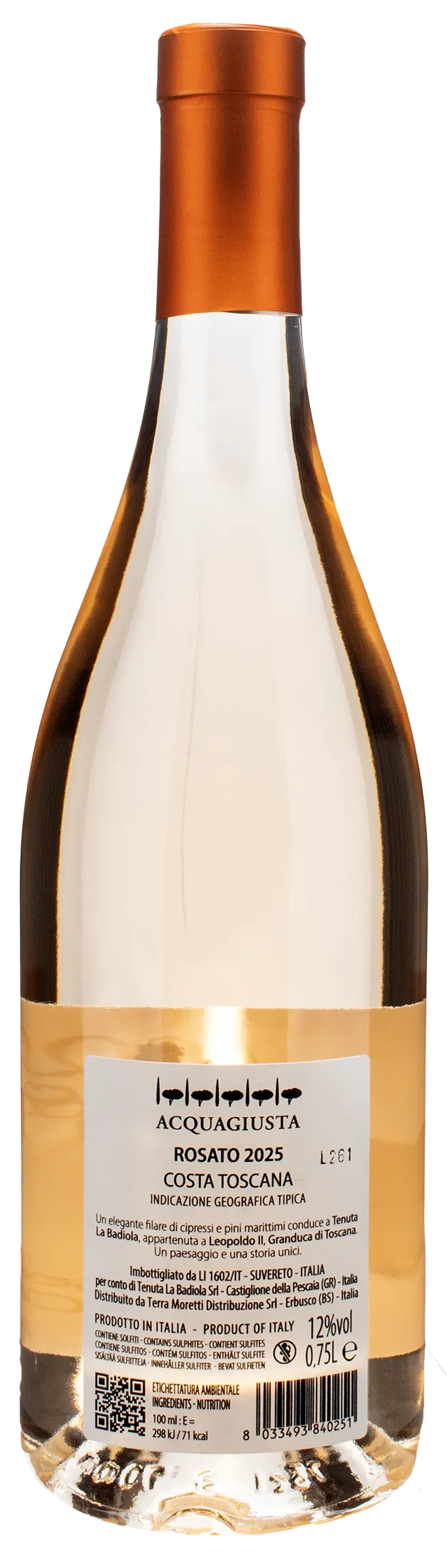
Acquagiusta Rosato 2025
| Denomination | DOC Maremma Toscana Rosato |
|---|---|
| Size | 0,75 l |
| Alcohol content | 12.0% by volume |
| Area | Tuscany (Italy) |
| Grape varieties | 100% Alicante |
| Aging | Bottling: February of the year following the harvest. Bottle ageing: 1–2 months. |
- Denomination and variety: Maremma Toscana DOC, 100% Alicante
- Vinification process: gentle pressing at very low pressures to preserve the aromas
- Hand-harvested: harvested in August in small crates to keep the bunches intact
- Tasting profile: hints of red fruits, spices and balsamic notes of Mediterranean scrub
- Characteristics and ageing: still rosé, 12.5% vol, 0.75 l; 1–2 months maturation

Description
What type of wine it is
Acquagiusta Rosato from Tenuta La Badiola is a still rosé wine that expresses the identity of the Tuscan Maremma territory. Made from Alicante grapes, it reveals a delicate mature onion-skin hue. The olfactory profile offers intense aromas of small red fruits, enriched by spicy and balsamic notes typical of the Mediterranean scrub. On the palate, it is vigorous and elegant, showing an excellent balance between freshness and structure, finishing with a long and aromatic persistence.
Where it comes from
This rosé originates in Maremma, near Castiglione della Pescaia, in an area once occupied by Lake Prile. The vine roots delve into the estate's Levante Vineyard, characterised by dark soils capable of retaining solar heat, favouring the ripening of the bunches. The property, founded in the 19th century as the agricultural estate of the Grand Duke of Tuscany, is immersed in an environment of high biodiversity. The surrounding landscape, dominated by Mediterranean scrub, gives the wine an authentic and territorial character.
How it is produced
Production begins in August with a manual harvest, aimed at preserving the integrity of the bunches. In the cellar, the whole grapes undergo soft pressing at very low pressures; this process limits colour extraction from the skins and transfers the best aromatic charge to the must. After static cold stabilisation, the wine rests until February. Before being marketed, it completes its journey with a brief final refinement to best harmonise its organoleptic characteristics.
History and trivia
Born in Maremma, on the site where Lake Prile once stood, Acquagiusta Rosato celebrates the historic vocation of Tenuta la Badiola. The estate was founded in the mid-nineteenth century as the agricultural estate of the Grand Duke of Tuscany.
Tasting notes

Perfume

Color

Taste
Serve at:
10 - 12 °C
Longevity:
03 - 05 years
- Oenologist: Daniele Orazzini
- Hectares: 36
The Acquagiusta vineyards cover thirty hectares, divided into two vineyards: we chose to position our vineyards by studying the exposure of the plants to the elements, in order to recreate the ideal conditions of water, soil, sun and wind and to exploit the strong character of the soil.
We want our wines to be pure and sincere: this is why we work with the utmost respect for natural processes, intervening as little as necessary. In this way, we enhance the grapes, keep the characteristics of the territory intact and create an authentic product.
Our work is based on tradition and experimentation. While rooted in Tuscan winemaking tradition, our style is constantly evolving: only by making the most of the fruits of the earth can we produce a wine that embodies its spirit and character. Read more


| Name | La Badiola Acquagiusta Rosato 2025 |
|---|---|
| Type | Rosé still |
| Denomination | Maremma Toscana DOC |
| Vintage | 2025 |
| Size | 0,75 l |
| Alcohol content | 12.0% by volume |
| Grape varieties | 100% Alicante |
| Country | Italy |
| Region | Tuscany |
| Vendor | Tenuta la Badiola |
| Story | History and trivia Born in Maremma, on the site where Lake Prile once stood, Acquagiusta Rosato celebrates the historic vocation of Tenuta la Badiola. The estate was founded in the mid-nineteenth century as the agricultural estate of the Grand Duke of Tuscany. |
| Origin | Maremma, near Castiglione della Pescaia, Tuscany (Levante Vineyard of the Tenuta La Badiola estate) |
| Soil composition | Dark soils that absorb sunlight well, ideal for the ripening of red grape varieties. |
| Cultivation system | Spurred cordon |
| Plants per hectare | 5,000 plants per hectare |
| Yield per hectare | 60 quintals per hectare |
| Harvest | August |
| Production technique | Hand-harvesting; whole-cluster pressing at very low pressures (soft pressing); static cold settling. |
| Wine making | Grapes hand-harvested and transported in small plastic crates; whole-bunch pressing at very low pressures to avoid extracting colour from the skins and to preserve aromatic compounds; static cold stabilisation; bottling in February of the year following the harvest; 1–2 months of bottle ageing. |
| Aging | Bottling: February of the year following the harvest. Bottle ageing: 1–2 months. |
| Allergens | Contains sulphites |