


Joseph Drouhin
Chassagne Montrachet Blanc 2023
| Denomination | AOC Chassagne-Montrachet |
|---|---|
| Size | 0,75 l |
| Alcohol content | 13.5% by volume |
| Area | Burgundy (France) |
| Grape varieties | 100% Chardonnay |
| Aging | Alcoholic fermentation, malolactic fermentation and ageing in oak barrels; about 20% new wood |
- Name: Chassagne-Montrachet AOC, Burgundy; 100% Chardonnay (2023 harvest)
- Aromas and taste: flowers, brioche and candied lemon; persistent finish with notes of gingerbread
- Ageing: gentle pressing; fermentation and maturation in oak, around 20% new wood
- Pairings: ideal with shellfish, lean fish, white meats, vegetarian dishes and cheeses
- Serving: 13.5% vol, temperature 12-14°C, decant for 1 hour; ageing potential 5-10 years
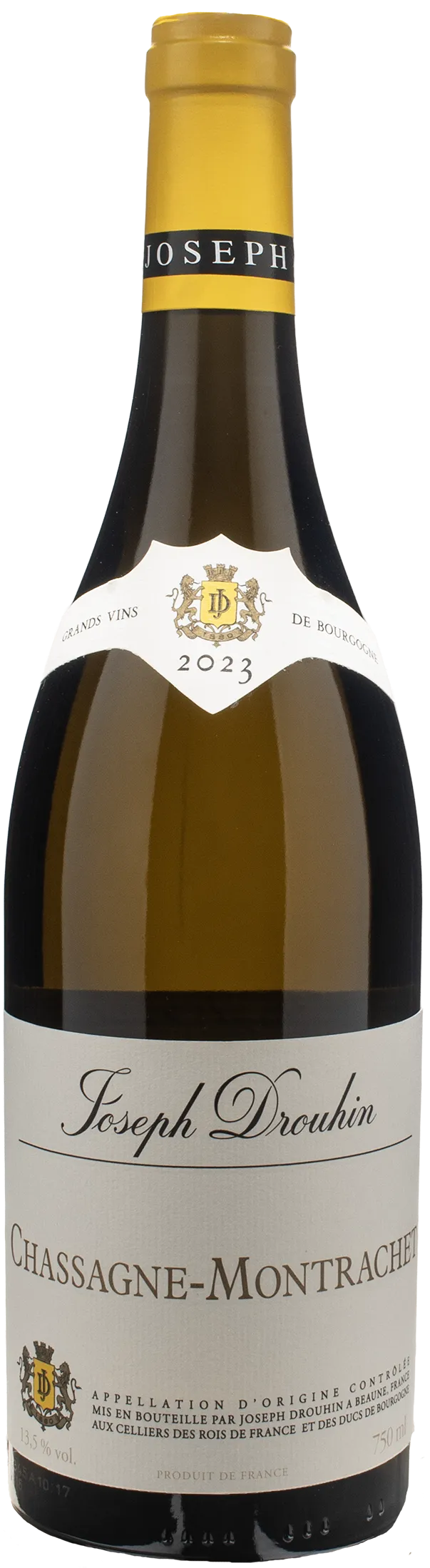
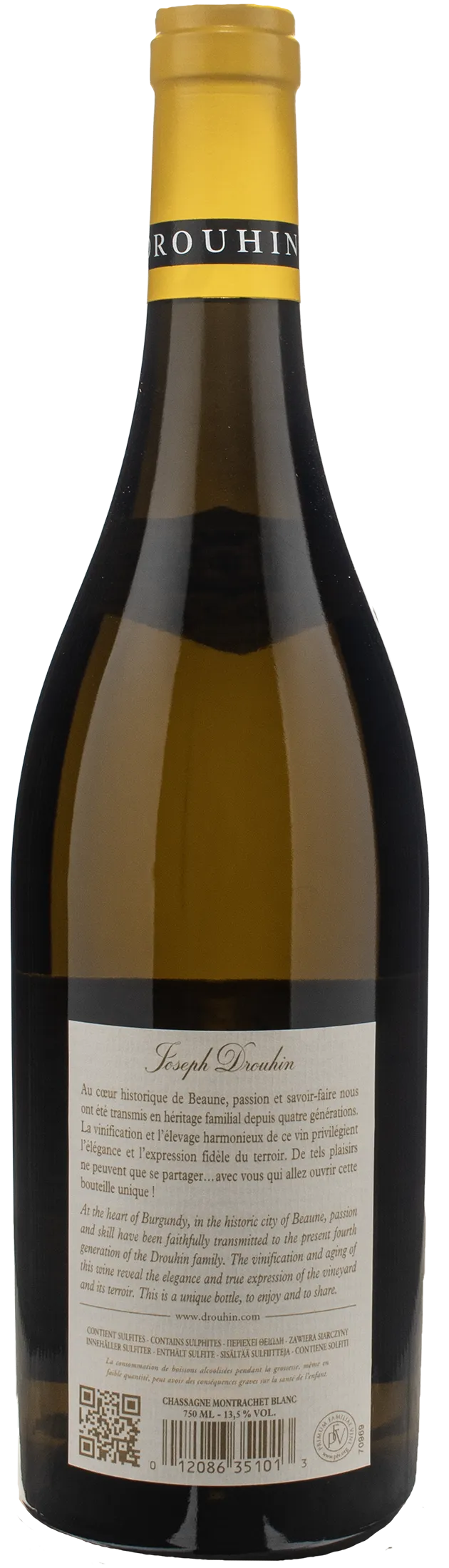
Description
What kind of wine it is
The Chassagne Montrachet Blanc by Joseph Drouhin embodies the essence of Burgundy Chardonnay. It presents a pale golden hue, hinting at an intense bouquet of flowers, brioche and candied lemon, which, with age, evolves towards toasted hazelnut and spices. On the palate, it is direct and highly refined, with a persistent finish marked by floral and gingerbread notes. This expression of the terroir pairs perfectly with shellfish starters, lean fish, poultry and a selection of cheeses.
Where it comes from
The grapes are sourced from the southern sector of the Côte de Beaune, in the heart of Chassagne-Montrachet. The vineyards are situated on gentle slopes that benefit from excellent sun exposure. The soil is notable for its complex and varied composition of marl and limestone, enriched with yellow or red clay, debris and gravel. The name of the area holds a fascinating paradox: it combines the Celtic word “cassanos”, meaning an oak forest, with “rachet”, a synonym for poor and barren land, in stark contrast to the typical richness of these wines.
How it is produced
Production begins with a manual harvest, followed by careful selection of the bunches. In the winery, a slow pressing is carried out to extract the free-run must, which is then briefly clarified. Both alcoholic and malolactic fermentation take place in oak barrels, where the wine continues to mature; the use of new wood is carefully balanced so as not to overpower the aromatic profile. The approach is based on integrated farming practices, aimed at limiting chemical intervention in the vineyards to preserve the integrity of the land.
History and Curiosities
Founded in 1880 in Burgundy, the Joseph Drouhin winery manages an estate of 73 hectares. The name of the renowned Chassagne-Montrachet AOC contains a fascinating paradox: it combines the Celtic term “cassanos” (place of oaks) with “rachet” (poor and barren soil). Despite the arid nature of these lands in the Côte de Beaune, they produce wines of great richness. This noble Chardonnay ferments and matures in oak barrels, recalling the roots of its name and releasing a remarkable finesse that captivates the palate with a harmonious, long and elegant texture.
Tasting notes
Perfume

Color
Taste
Serve at:
12 - 14 °C
Longevity:
05 - 10 years
Decanting time:
1 hour

- Start up year: 1880
- Hectares: 73
His son Maurice succeeded him and began to establish a vineyard domaine for the House, purchasing land in some outstanding appellations such as Clos des Mouches and Clos de Vougeot.
Robert Drouhin, who succeeded Maurice in 1957, gave the domaine its present dimension, acquiring many vineyards, especially in Chablis where he was able to recognize the true potential. He was one of the first in Burgundy to introduce "culture raisonnée" (doing away with pesticides and other chemicals) and to build a laboratory of enology run by Laurence Jobard, the very first woman enologist in Burgundy.
Philippe, Véronique, Laurent and Frédéric are Robert and Françoise Drouhin's four children. They uphold the values of the House and its constant quest for quality, for the pleasure of all those who have a deep appreciation for the natural elegance of Burgundy. Read more


| Name | Joseph Drouhin Chassagne Montrachet Blanc 2023 |
|---|---|
| Type | White still |
| Denomination | Chassagne-Montrachet AOC |
| Vintage | 2023 |
| Size | 0,75 l |
| Alcohol content | 13.5% by volume |
| Grape varieties | 100% Chardonnay |
| Country | France |
| Region | Burgundy |
| Vendor | Joseph Drouhin |
| Story | History and Curiosities Founded in 1880 in Burgundy, the Joseph Drouhin winery manages an estate of 73 hectares. The name of the renowned Chassagne-Montrachet AOC contains a fascinating paradox: it combines the Celtic term "cassanos" (place of oaks) with "rachet" (poor and barren soil). Despite the arid nature of these lands in the Côte de Beaune, they produce wines of great richness. This noble Chardonnay ferments and matures in oak barrels, recalling the roots of its name and releasing a remarkable finesse that captivates the palate with a harmonious, long and elegant texture. |
| Origin | Located in the south of the Côte de Beaune |
| Soil composition | Complex soil composed of marl, limestone, yellow or red clay, debris and gravel; mostly light and easy to cultivate, on a slight slope with good exposure |
| Production technique | Slow pressing in a pneumatic press; alcoholic and malolactic fermentation and ageing in oak barrels (about 20% new wood) |
| Wine making | Slow pressing in a pneumatic press; the juice from the final pressing is separated from the free-run juice; the must is briefly clarified and transferred to oak barrels, where alcoholic and malolactic fermentation and maturation take place (approximately 20% new wood). |
| Aging | Alcoholic fermentation, malolactic fermentation and ageing in oak barrels; about 20% new wood |
| Allergens | Contains sulphites |