


Henriot
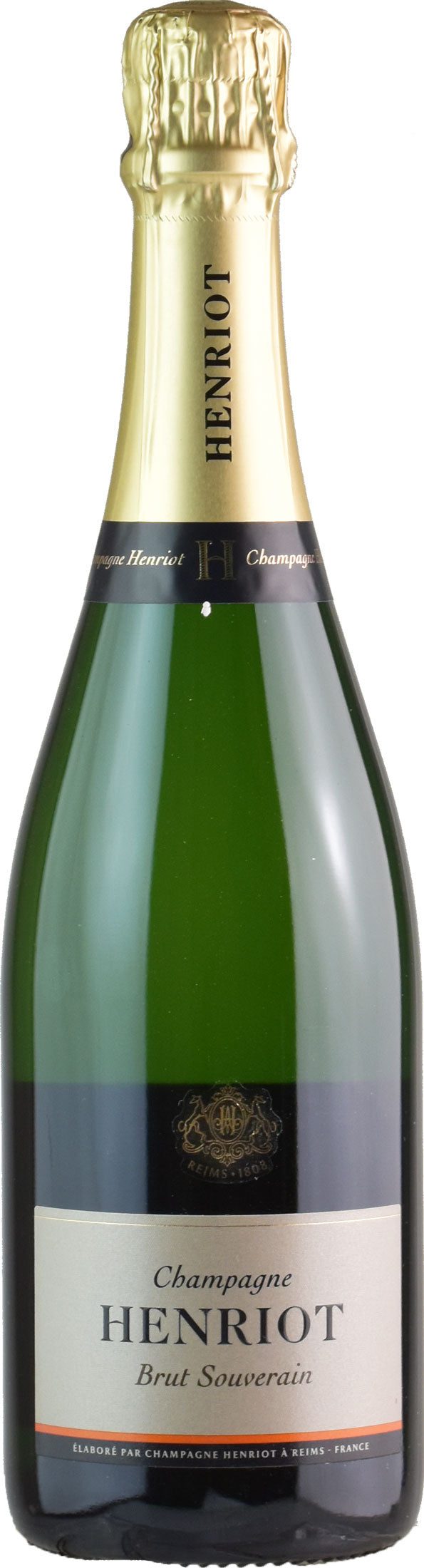
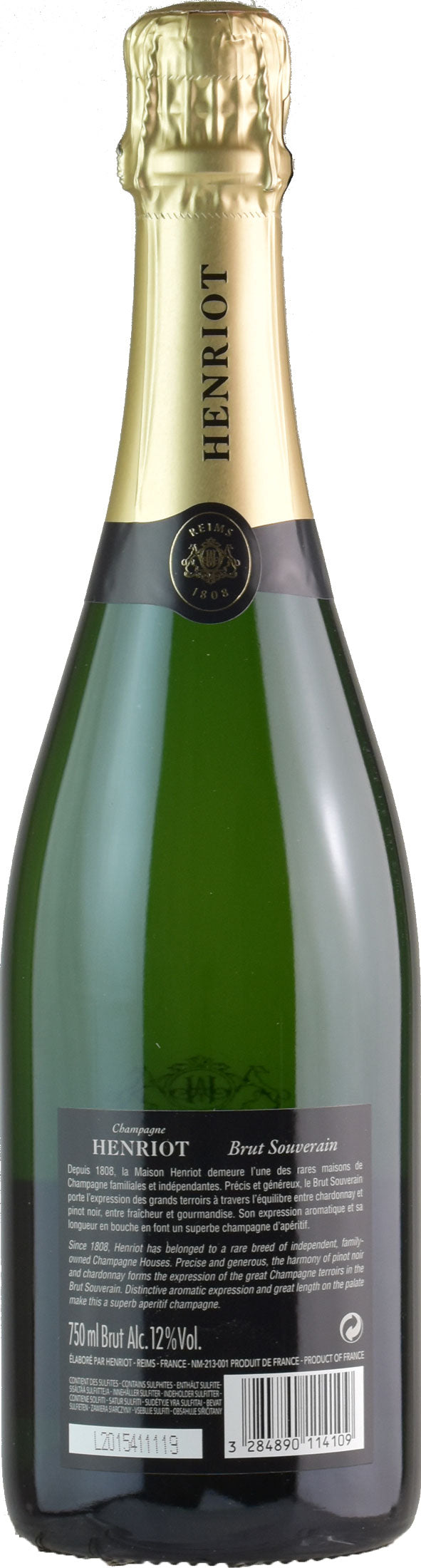
Champagne Souverain Brut
| Denomination | AOC Champagne Brut |
|---|---|
| Size | 0,75 l |
| Alcohol content | 12.0% by volume |
| Area | Champagne region (France) |
| Grape varieties | 50% Chardonnay, 45% Pinot Nero, 5% Pinot Meunier |
| Aging | Aged on the lees for at least 3 years, then rested in the cellar in Reims for about 4 years (including 8 months on wooden racks for the prise de mousse/maturation). |
- Traditional method: Blend of Pinot Noir, Chardonnay and Pinot Meunier with 30–50% reserve wines
- Ageing: At least 3 years on the lees with completed malolactic fermentation
- Aromatic profile: Notes of citrus and flowers followed by brioche, toasted bread and almond
- Taste and finish: Creamy with white peach and cherry; persistent finish of fresh hazelnut
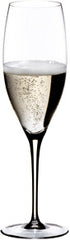
- Serving and pairings: 8–12 °C in a tulip glass; ideal with sea bass ceviche and gougères
Description
What kind of wine it is
Henriot's Souverain Brut Champagne is a structured Brut, born from a meticulous blend that combines Pinot Noir, Chardonnay and Pinot Meunier, vinified according to the Traditional Method. It stands out for its fine and persistent perlage which enhances delicate aromas of citrus and flowers, enriched by fragrant notes of brioche and toasted almond. On the palate, it offers a creamy texture, where clear hints of white peach and cherry blend harmoniously. The tasting concludes with a long and clean finish, marked by hints of hazelnut, confirming the fresh and lively character of the sip.
Where it comes from
Henriot's Champagne is produced in France, the result of a precise selection involving twenty-nine prestigious crus. The blend expresses the pedoclimatic characteristics of the Montagne de Reims and the Côte des Blancs, showcasing grapes grown in historic villages such as Avize, Cramant, Chouilly, Le Mesnil-sur-Oger, Aÿ and Mailly-Champagne. Most of the vineyards boast the coveted Grands Crus and Premiers Crus classification, giving the wine remarkable depth of flavour. This strong territorial imprint is revealed in the glass through a well-defined chalky minerality, capable of enhancing the citrus nuances and supporting the wine's dynamic character.
How it is produced
Production strictly follows the Traditional Method, a fundamental step for the harmonious and refined development of the mousse. The composition makes use of a significant proportion of reserve wines, including a precious perpetual reserve, to ensure consistent stylistic continuity. The initial vinification takes place in tanks, where the entire malolactic fermentation is completed to provide further balance. Subsequently, the Champagne undergoes patient ageing on the lees for at least three years in the historic Henriot cellars, fully developing its complex organoleptic identity in perfect Brut style.
History and Curiosities
Born in 1808 from the vision of Apolline Henriot, Brut Souverain encapsulates the true essence of Champagne. This exceptional non-vintage blend harmonises twenty-nine areas of excellence and a high percentage of reserve wines, including the renowned Cuve 38. Thanks to a maturation of at least three years on the lees, it achieves an elegance that in the past captivated the courts of Holland and Austria-Hungary. Winner of multiple awards, including the gold medal at the International Wine Challenge, this masterpiece continues to enchant palates around the world.
Awards
-
 91
91/100
James Suckling is an influential American wine critic and journalist who worked at Wine Spectator for 30 years. He left the magazine in 2010 to start his own website and guidebook (JamesSuckling.com). He specialises in Italian and Bordeaux wines.
-
 89
89/100
The prestigious international wine guide from the renowned Robert Parker, the world's most experienced and trusted wine taster.
-
 90
90/100
Vinous is the online guide from Antonio Galloni, one of the world's leading wine connoisseurs.
-
 93
93/100
Wine spectator is the most influential wine guide on the internet.
Tasting notes
Perlage
Perfume
Color
Taste
Serve at:
06 - 08 °C
Longevity:
05 - 10 years
- Start up year: 1808


| Name | Henriot Champagne Souverain Brut |
|---|---|
| Type | White classic method sparkling wine brut |
| Denomination | Champagne AOC |
| Size | 0,75 l |
| Alcohol content | 12.0% by volume |
| Grape varieties | 50% Chardonnay, 45% Pinot Nero, 5% Pinot Meunier |
| Country | France |
| Region | Champagne region |
| Vendor | Henriot |
| Story | History and Curiosities Born in 1808 from the vision of Apolline Henriot, Brut Souverain encapsulates the true essence of Champagne. This exceptional non-vintage blend harmonises twenty-nine areas of excellence and a high percentage of reserve wines, including the renowned Cuve 38. Thanks to a maturation of at least three years on the lees, it achieves an elegance that in the past captivated the courts of Holland and Austria-Hungary. Winner of multiple awards, including the gold medal at the International Wine Challenge, this masterpiece continues to enchant palates around the world. |
| Origin | Champagne (Montagne de Reims and Côte des Blancs), France |
| Fermentation | At least 3 years on the lees |
| Production technique | Traditional method; blending with 30–50% reserve wines (including a small portion of Cuve 38, a perpetual reserve of 100% Grands Crus Chardonnay); aged in vats; malolactic fermentation completed; matured on the lees for at least 3 years |
| Wine making | Traditional method; aged in vats (not in wooden barrels); full malolactic fermentation; aged on the lees for at least 3 years and subsequently rested in the cellar in Reims for about 4 years; blended with 30–50% reserve wines, including a small portion of Cuve 38 (perpetual reserve of 100% Grands Crus Chardonnay). |
| Aging | Aged on the lees for at least 3 years, then rested in the cellar in Reims for about 4 years (including 8 months on wooden racks for the prise de mousse/maturation). |
| Allergens | Contains sulphites |