


Haderburg
Metodo Classico Rosé Extra Brut
| Denomination | VSQ |
|---|---|
| Size | 0,75 l |
| Alcohol content | 12.5% by volume |
| Area | Trentino Alto Adige (Italy) |
| Grape varieties | 60% Pinot Nero, 40% Chardonnay |
| Aging | After bottling (the spring following the harvest), a second fermentation takes place in the bottle, with a minimum of 24 months maturation on the lees, traditional remuage on pupitres, disgorgement, and a period of refinement before release for sale. |
- Method: classic method extra brut, minimum ageing of 24 months on the lees in the bottle
- Grape variety: 60% Pinot Noir and 40% Chardonnay; rosé sparkling wine, 0.75 litres
- Aroma: elegant bouquet with wild strawberries, flowers and delicate pastry notes
- Perlage: extremely fine and persistent bubbles with an intense mousse that fades slowly
- Serving/pairings: serve at 10°C; ideal with aperitifs, fish, shellfish and beef carpaccio
Description
What kind of wine is it
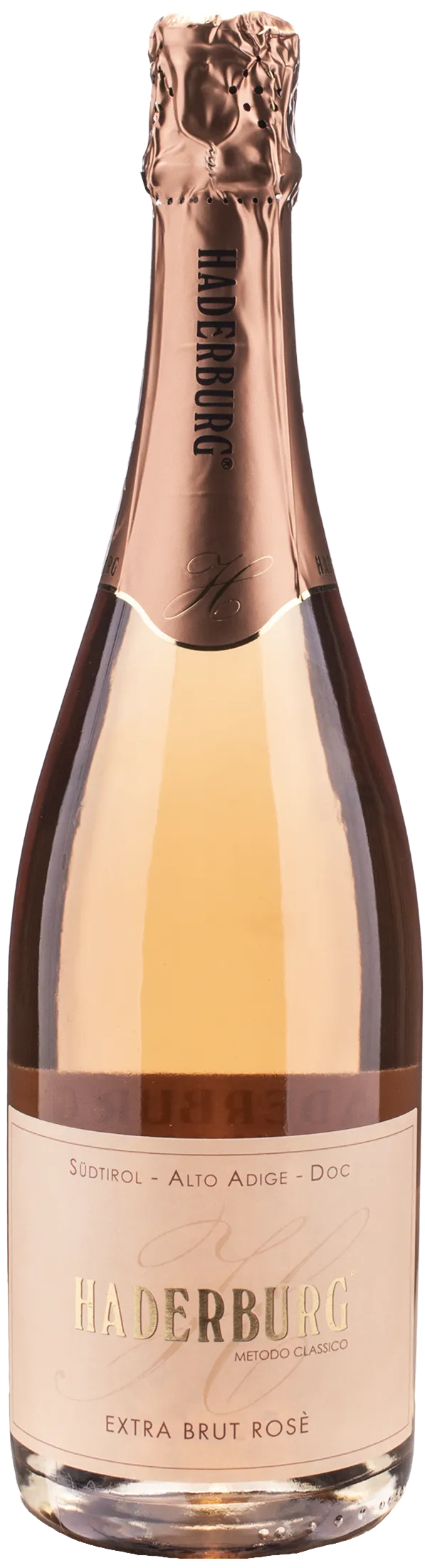
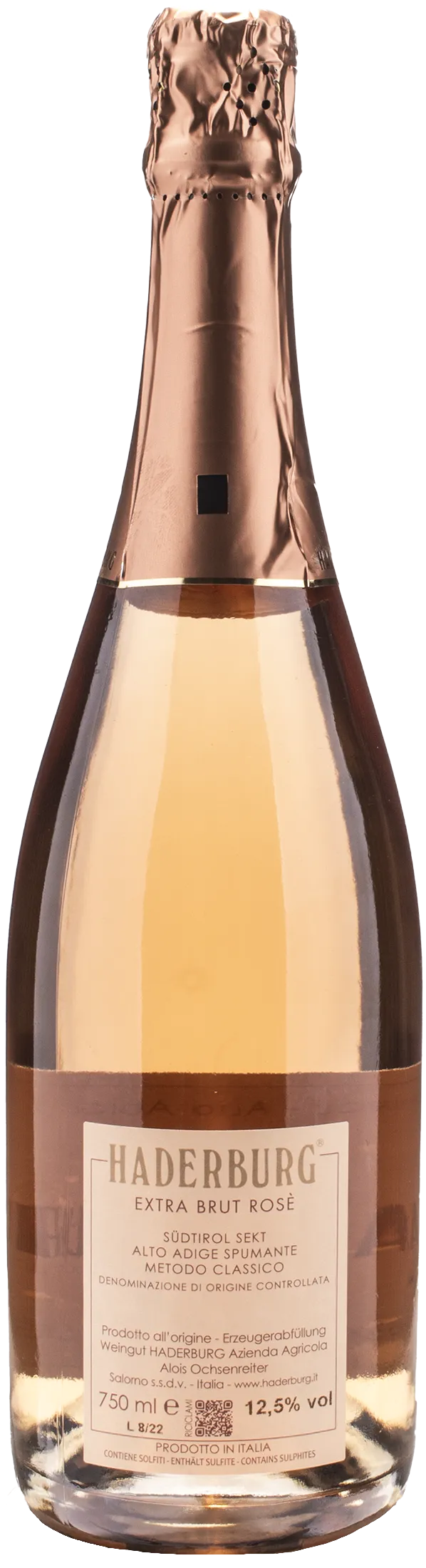
Haderburg Metodo Classico Rosè Extra Brut is a sparkling wine made from a blend of Pinot Noir and Chardonnay. This Metodo Classico stands out for its delicate pink colour, enhanced by a fine and persistent perlage. On the nose, the bouquet harmonises the freshness of wild strawberry and floral hints with subtle pastry notes. On the palate, the Extra Brut nature offers a dry, balanced and lively sip, with a gustatory tension ideal for an aperitif or paired with shellfish and meat carpaccio.
Where does it come from
The area of origin is in Trentino Alto Adige, in the heart of the Hausmannhof area in Pochi, in the municipality of Salorno, where the Haderburg winery is located. The vineyards are cultivated using the modified pergola system and include vines that are up to thirty-five years old. The roots sink into a calcareous and clayey soil, a composition that gives the wine marked freshness and a defined structure, outlining the rigorous and elegant profile of this sparkling wine.
How is it produced
The grapes, harvested at the beginning of September, begin vinification with fermentation and an initial ageing phase divided between steel tanks and small barrels. The following spring, refermentation takes place in the bottle according to the Metodo Classico, followed by a rest of at least 24 months on the lees. The process continues with the traditional remuage on pupitres and disgorgement, concluding with a final maturation before release. The result is a sparkling wine with an intense and persistent mousse, capable of leaving the palate clean and precise.
History and Curiosities
Created in 2008 by Haderburg, a South Tyrolean winery active since 1977, this Classic Method Rosé is made from selected Pinot Noir and Chardonnay grapes. After resting in steel and small barrels, it undergoes a patient 24-month maturation on the lees in the bottle, with the traditional manual rotation on racks. This meticulous artisanal care gives the glass an extremely fine and persistent perlage. It stands out for the elegant harmony between the lively freshness of wild strawberry and the sweet pastry notes, perfect for enhancing the most refined pairings.
Tasting notes

Perlage

Perfume

Color

Taste
Serve at:
06 - 08 °C
Longevity:
05 - 10 years
- Start up year: 1976
- Bottles produced: 100.000
- Hectares: 12
In the mid-1970s, we made the daring transformation from being a fruit-growing farm concerned only with the production and sale of grapes and apples to a winery which processes its own grapes. Since that turning point, our enthusiasm for good wines and champagnes has set the tone for the work in the vineyards and in the wine cellar. Read more


| Name | Haderburg Metodo Classico Rosè Extra Brut |
|---|---|
| Type | Rosé classic method sparkling wine extra brut |
| Denomination | VSQ |
| Size | 0,75 l |
| Alcohol content | 12.5% by volume |
| Grape varieties | 60% Pinot Nero, 40% Chardonnay |
| Country | Italy |
| Region | Trentino Alto Adige |
| Vendor | Haderburg |
| Story | History and Curiosities Created in 2008 by Haderburg, a South Tyrolean winery active since 1977, this Classic Method Rosé is made from selected Pinot Noir and Chardonnay grapes. After resting in steel and small barrels, it undergoes a patient 24-month maturation on the lees in the bottle, with the traditional manual rotation on racks. This meticulous artisanal care gives the glass an extremely fine and persistent perlage. It stands out for the elegant harmony between the lively freshness of wild strawberry and the sweet pastry notes, perfect for enhancing the most refined pairings. |
| Origin | Hausmannhof a Pochi - Salorno |
| Soil composition | Calcareous, clayey |
| Cultivation system | Modified pergola |
| Plants per hectare | 3500-5500 |
| Harvest | Early September |
| Fermentation | Minimo 24 mesi di maturazione sui lieviti |
| Production technique | Traditional method (bottle fermentation with ageing on the lees) |
| Wine making | Selected grapes, fermented and aged in stainless steel tanks and barriques. After bottling (the spring following the harvest), the second fermentation takes place in the bottle, with at least 24 months of maturation on the lees, traditional remuage on pupitres, disgorgement, and a period of ageing before release for sale. |
| Aging | After bottling (the spring following the harvest), a second fermentation takes place in the bottle, with a minimum of 24 months maturation on the lees, traditional remuage on pupitres, disgorgement, and a period of refinement before release for sale. |
| Total acidity | 6.2 gr/L |
| Residual sugar | 2.0 gr/L |
| Allergens | Contains sulphites |