


Grosjean
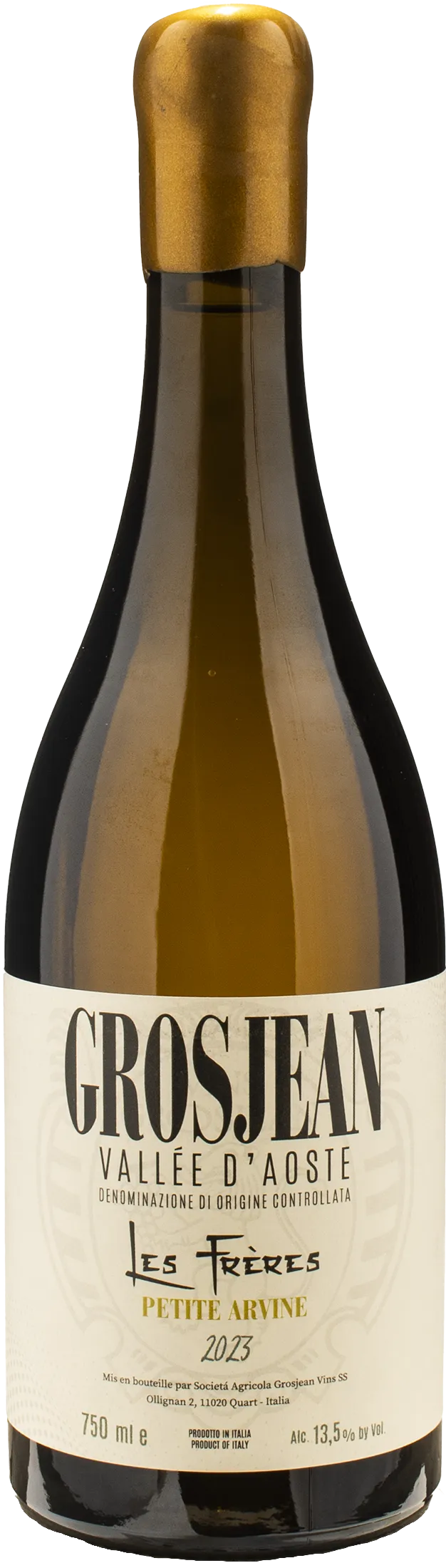
Petite Arvine Les Freres 2023
| Denomination | DOC Valle d'Aosta Petite Arvine |
|---|---|
| Size | 0,75 l |
| Alcohol content | 13.5% by volume |
| Area | Aosta Valley (Italy) |
| Grape varieties | 100% Petite Arvine |
| Aging | Aged 100% in 300-litre French barriques for 24 months, 12 months in bottle. |
- Grape variety and style: Still white wine from 100% Petite Arvine, Valle d’Aosta DOC, 2023 harvest
- Alpine terroir: Rovettaz vineyard in Quart, altitude 600–700 metres, sandy and stony glacial soils
- Vinification: Whole bunch pressing, flotation, fermentation in wood at low temperature
- Ageing: 24 months in 300-litre French barriques plus 12 months in bottle, substantial structure
- Aromas and characteristics: White flowers and pink grapefruit; 13.5% vol; 95 points James Suckling
Description
What kind of wine it is
Petite Arvine Les Freres is a still white wine produced by Grosjean in the Aosta Valley. Made from Petite Arvine grapes, it stands out for its elegant profile, solid structure, and pronounced savouriness. On the nose, it reveals a complex aromatic character, featuring a bouquet of white flowers and intense floral nuances. These aromas are complemented by fresh citrus sensations, with clear notes of pink grapefruit. On the palate, it is rich and harmonious, precisely reflecting the meticulous maturation process carried out in the cellar.
Where it comes from
The grapes grow in the municipality of Quart, within the Rovettaz Vineyard. The rows are situated at an altitude between 600 and 700 metres, benefiting from a favourable south-west exposure. The mountainous environment is characterised by glacial-origin soils, which are shallow, sandy in texture, and rich in stones. These pedoclimatic conditions impart a distinctive gustatory tension to the grapes, enhancing an Alpine terroir cultivated with dedication by a winemaking family rooted in the area since 1781.
How it is produced
The harvest takes place at the beginning of October, followed by a gentle whole-bunch pressing and must flotation. Alcoholic fermentation occurs in wood at low temperatures, using selected yeasts. The wine then matures through a long ageing process in French barrels lasting twenty-four months, completed by a further twelve months of bottle ageing. The agricultural approach follows organic principles, including periodic soil working, green manuring in alternate rows, and treatments exclusively with copper and sulphur.
History and Curiosities
The Petite Arvine Les Freres 2023 by Grosjean is an outstanding product of the Valle d’Aosta DOC, the result of a family’s passion for viticulture since 1781. The grapes ripen under the sun of the Vigna Rovettaz, with roots delving into glacial-origin soils at an altitude of 700 metres. This precious production, limited to just 1,300 bottles and awarded 95 points by James Suckling, offers a unique experience on the palate, encapsulating in every glass the essence of the most authentic high-altitude winemaking.
Awards
-
2023
 95
95/100
James Suckling is an influential American wine critic and journalist who worked at Wine Spectator for 30 years. He left the magazine in 2010 to start his own website and guidebook (JamesSuckling.com). He specialises in Italian and Bordeaux wines.
Tasting notes

Perfume

Color

Taste
Serve at:
12 - 14 °C
Longevity:
05 - 10 years
- Start up year: 1969
- Oenologist: Hervè Grosjean
- Bottles produced: 14.000
- Hectares: 14
The company is located on the border of the towns of Quart and Saint Christophe, where lie the vineyards of Tzeriat, Rovetta, Creton, Touren in Quart, Tzantè de Wet, lace and Castle Pleod Saint Christophe. The first cultivated vines, in addition to traditional Petit Rouge, were Gamay, Pinot Noir and Petite Arvine, and currently are growing even as the native Fumin, carnelian, pressed and Vuillermin. Cultivation techniques are rooted in respect for the environment since 1975 so it is not handled insecticides and acaricides treatments are carried out rigorously and fertilizing with manure of organic origin.
Read more


| Name | Grosjean Petite Arvine Les Freres 2023 |
|---|---|
| Type | White still |
| Denomination | Valle d'Aosta DOC |
| Vintage | 2023 |
| Size | 0,75 l |
| Alcohol content | 13.5% by volume |
| Grape varieties | 100% Petite Arvine |
| Country | Italy |
| Region | Aosta Valley |
| Vendor | Grosjean |
| Story | History and Curiosities The Petite Arvine Les Freres 2023 by Grosjean is an outstanding product of the Valle d’Aosta DOC, the result of a family’s passion for viticulture since 1781. The grapes ripen under the sun of the Vigna Rovettaz, with roots delving into glacial-origin soils at an altitude of 700 metres. This precious production, limited to just 1,300 bottles and awarded 95 points by James Suckling, offers a unique experience on the palate, encapsulating in every glass the essence of the most authentic high-altitude winemaking. |
| Origin | Comune di Quart, Vigna Rovettaz |
| Soil composition | Suolo di origine glaciale, sciolto, con prevalenza di sabbia e una buona percentuale di scheletro |
| Cultivation system | Guyot on contour terraces and vertical rows |
| Plants per hectare | 7000 plants/ha |
| Harvest | First ten days of October |
| Fermentation temperature | At low temperature |
| Production technique | Cultural operations: Soil tillage in the under-row 3 times a year, harrowing and sowing of green manure in the inter-row on alternate rows. Application of bovine manure every 5/6 years. Management of cryptogamic diseases according to organic farming methodology, using exclusively copper and sulphur. |
| Wine making | Whole cluster pressing; must flotation; alcoholic fermentation in wood at low temperature with the addition of selected yeasts; maturation 100% in 300-litre French barriques for 24 months and 12 months in bottle. |
| Aging | Aged 100% in 300-litre French barriques for 24 months, 12 months in bottle. |
| Year production | 1300 bottles |
| Allergens | Contains sulphites |