


Giovanni Rosso
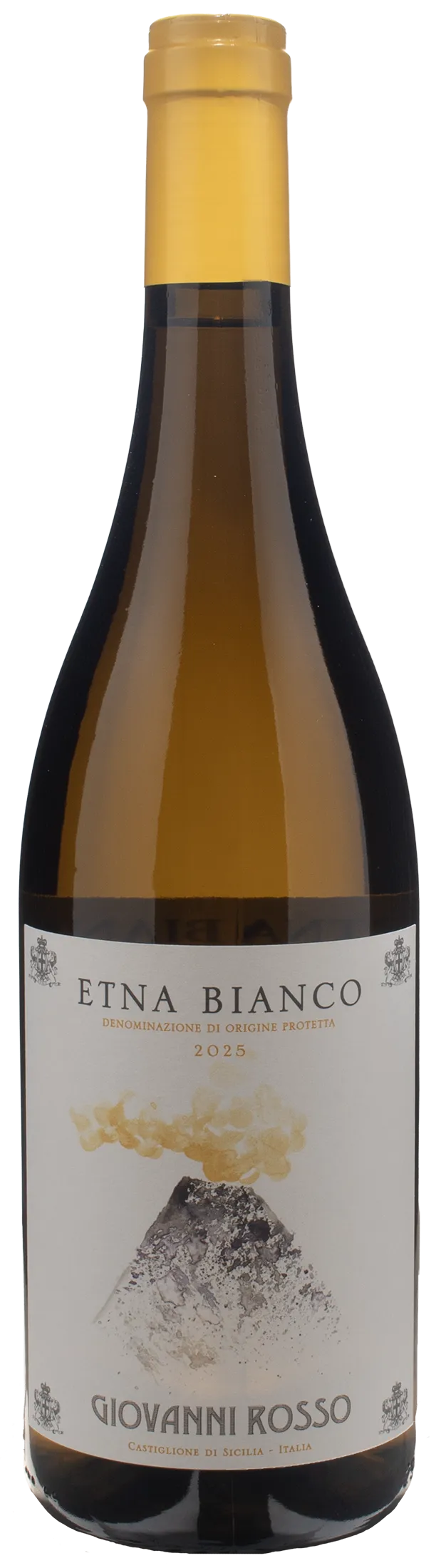
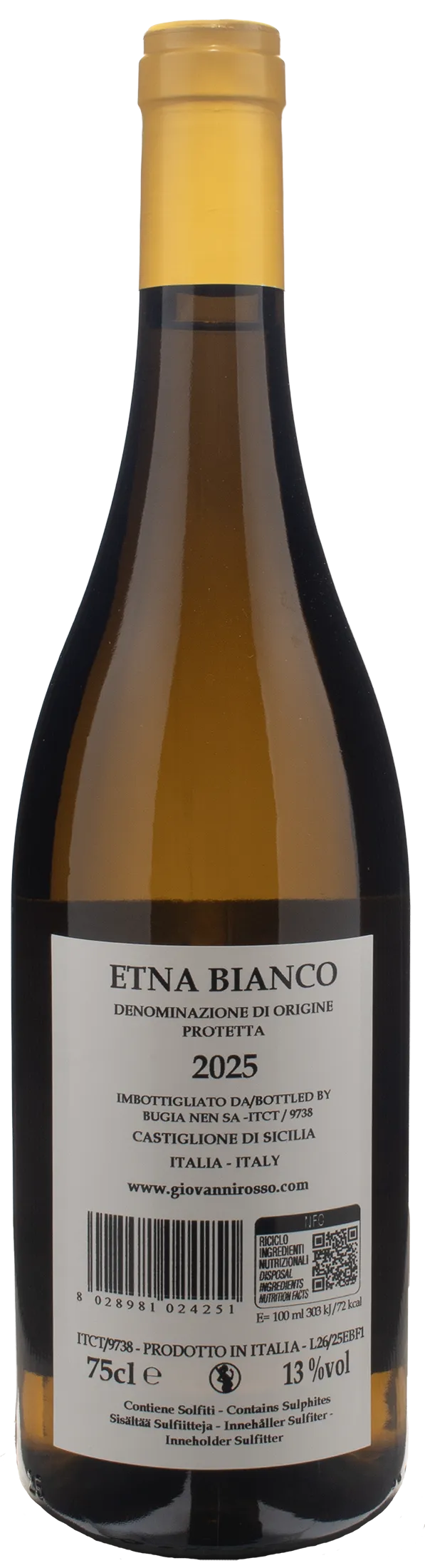
Etna Bianco 2025
| Denomination | DOC Etna Bianco |
|---|---|
| Size | 0,75 l |
| Alcohol content | 13.0% by volume |
| Area | Sicily (Italy) |
| Grape varieties | 100% Carricante |
| Aging | Ageing in stainless steel with maturation on the lees for five months before bottling, with weekly stirring. |
- Origin: Etna Bianco DOC 2025, 100% Carricante from Solicchiata
- Winemaking: whole-cluster pressing, fermentation in stainless steel for 15-20 days
- Ageing: 5 months in stainless steel on fine lees with weekly bâtonnage
- Aromas: notes of broom, yellow citrus and herbaceous undertones
- Tasting notes: fresh and savoury, persistent finish; 93/100 Vinous, 9-11°C
Description
What type of wine is it
Etna Bianco by Giovanni Rosso is a wine made from Carricante grapes, capable of authentically telling the story of the Sicilian territory. This interpretation of the Etna appellation stands out for its intense aromatic profile, led by fragrant notes of broom and yellow-skinned citrus fruits, combined with a clear herbaceous background. On the palate, it offers a full and linear structure, characterised by a sharp freshness that leads into a savoury and persistent finish. Aged in stainless steel on the lees, it is an excellent match for fish-based recipes, such as a classic seafood risotto or a delicate salt-crusted sea bream.
Where it comes from
The vineyards are located in the Solicchiata area on Mount Etna, benefiting from a constant north and north-east exposure. The vines grow on deep volcanic soil, at altitudes between 730 and 750 metres. This particular geographical location ensures a striking acidic energy and a clear definition of the aromas. The pedoclimatic origin transfers a distinct saline sensation directly into the glass, which supports and enhances the long-lasting gustatory potential of the sip.
How it is produced
The manual harvest takes place around mid-October. Vinification begins with whole-cluster pressing and a short skin maceration. Fermentation takes place in stainless steel at a low temperature, lasting for about twenty days. Maturation continues for five months through targeted ageing on the lees and careful weekly batonnage. These specific cellar processes provide aromatic consistency and ensure perfect structural integration before final bottling.
Tasting notes

Perfume

Color

Taste
Serve at:
10 - 12 °C
Longevity:
05 - 10 years
- Start up year: 1960
- Oenologist: Davide Rosso
- Bottles produced: 55.000
- Hectares: 9
Giovanni's son, Davide, studied Oenology and gained invaluable experience in France. In 2001 Davide, then 27 years old, took charge of the vinification & affinamento/elevage of the wines with one goal in mind: "Wine should be a perfect copy of its terroir"... in this case from the slopes of Serralunga d'Alba, among the finest soils in the world.
The Giovanni Rosso cantina (winery) is located in the hamlet of Baudana, just a couple of kilometres north of Serralunga d'Alba village. A traditional family cascina, or farmhouse, it houses the fermentation, ageing, bottling and labeling facilities as well as the offices.
Davide Rosso has been looking for many years for a new terroir where he could face a new challenge himself. The side-project was officially born in May 2016 with the purchase of the Etna estate near the village Solicchiata of Castiglione di Sicilia. The farm rises a few kilometers before Passopisciaro down to Montedolce, a small inactive crater that gives the name to the Contrada. We are in the northeast side of the volcano, a perfectly suited area for the production of red wines. The new holdings extend for fourteen hectares in one single plot among which just something more than six hectares are dedicated to viticulture: 1.2 ha for the whites and 5.5 ha for the reds (Carricante and Nerello Mascalese with small percentages of other local grape varieties, as the tradition requires). The training system has been renamed as "candelabro". Read more


| Name | Giovanni Rosso Etna Bianco 2025 |
|---|---|
| Type | White still |
| Denomination | Etna DOC |
| Vintage | 2025 |
| Size | 0,75 l |
| Alcohol content | 13.0% by volume |
| Grape varieties | 100% Carricante |
| Country | Italy |
| Region | Sicily |
| Vendor | Giovanni Rosso |
| Origin | Solicchiata (CT) |
| Soil composition | Volcanic soil |
| Cultivation system | ‘Continental style’ bilateral cordon / head training, long spur |
| Harvest | Mid-October |
| Fermentation temperature | Low temperature |
| Fermentation | Approximately 15–20 days |
| Production technique | Soft whole-bunch pressing with brief skin maceration; low-temperature fermentation in stainless steel tanks for 15–20 days; ageing in stainless steel on the lees for 5 months with weekly lees stirring (bâtonnage). |
| Wine making | Soft pressing of whole bunches; light skin maceration in the press for a few hours; fermentation of the must in stainless steel tanks at low temperature for approximately 15–20 days. |
| Aging | Ageing in stainless steel with maturation on the lees for five months before bottling, with weekly stirring. |
| Allergens | Contains sulphites |