


Giacomo Borgogno e Figli
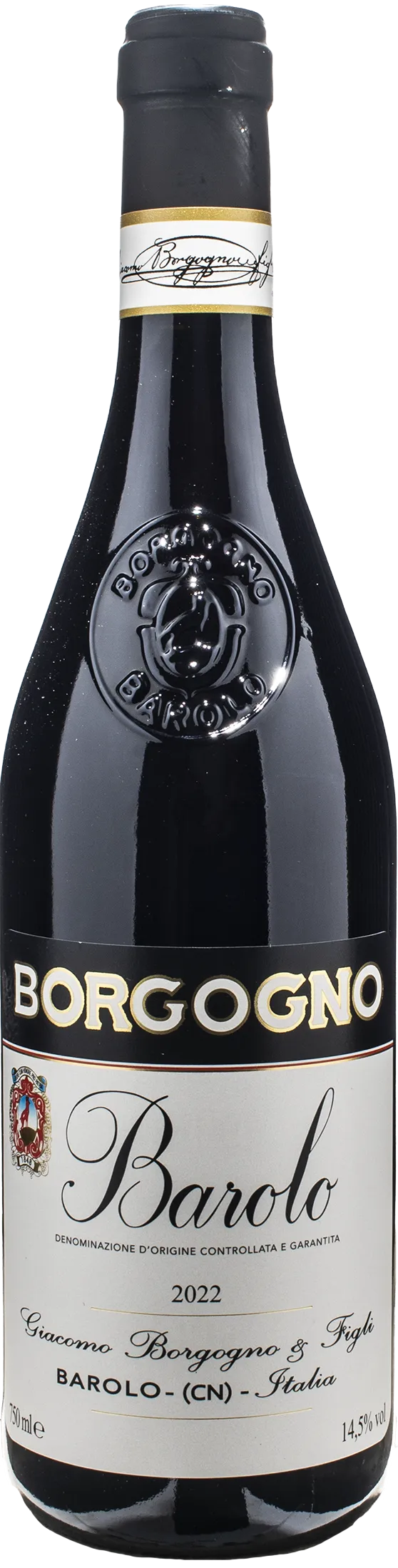
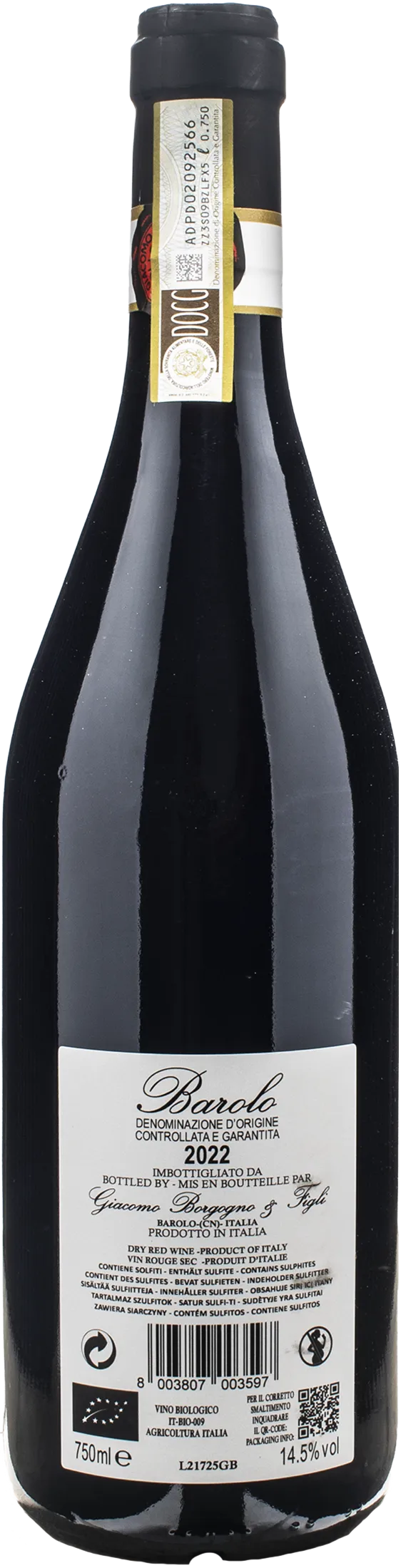
Barolo 2022
| Denomination | DOCG Barolo |
|---|---|
| Size | 0,75 l |
| Alcohol content | 14.5% by volume |
| Area | Piedmont (Italy) |
| Grape varieties | 100% Nebbiolo |
| Aging | Aged in 4,500-litre Slavonian oak casks for 4 years, followed by a further 6 months of bottle ageing. |
- Origin and vineyards: Barolo and La Morra (Cannubi, Liste), altitude 290–370 m, marly soils
- Vinification: spontaneous fermentation in concrete; submerged cap maceration
- Ageing: maturation in Slavonian oak barrels, rest in concrete and bottling
- Tasting notes: garnet ruby colour; notes of red fruits and spices; balsamic finish
- Service and awards: serve at 18 °C, decant for 1 hour; 93 points from James Suckling
Description
What type of wine it is
Borgogno's organic Barolo is a red wine with a Controlled and Guaranteed Designation of Origin from Piedmont, produced from Nebbiolo grapes. Fermented in concrete tanks and aged in large oak barrels, it is characterised by a ruby colour with garnet highlights, while its aromatic profile reveals hints of red fruits, dark spices and earthy notes. On the palate, it is austere, revealing a velvety texture combined with sweet tannins. The lively acidity provides a distinct freshness to the sip, which evolves into a balsamic finish, ideal for pairing with Piedmontese meats, goulash and Japanese dishes such as yakiniku.
Where it comes from
The grapes come from Piedmont, in the municipalities of Barolo and La Morra, including historic plots such as Cannubi and Liste. The vineyards are situated between 290 and 370 metres above sea level and benefit from a south and south-east exposure. Guyot training is used on soils composed of calcareous-clay marls.
How it is produced
Production begins with a meticulous manual harvest in autumn. In the cellar, spontaneous fermentation occurs thanks to indigenous yeasts within concrete tanks. This is followed by traditional submerged-cap maceration, which slowly extracts colour and aromatic components, facilitating the malolactic fermentation process. Long ageing in large Slavonian oak barrels, followed by a period in concrete, gives this red wine a full gustatory harmony.
History and trivia
This organic Barolo DOCG is made from Nebbiolo grapes grown in five historic vineyards in the commune of Barolo, including Cannubi and Liste. Among its distinguishing features, in addition to the prestigious 93 points awarded by James Suckling, its versatility in food pairing stands out: it is suitable for accompanying not only traditional dishes and goulash, but also Japanese specialities such as gyoza, yakiniku and marinated black cod.
Awards
-
2022
 93
93/100
James Suckling is an influential American wine critic and journalist who worked at Wine Spectator for 30 years. He left the magazine in 2010 to start his own website and guidebook (JamesSuckling.com). He specialises in Italian and Bordeaux wines.
Tasting notes

Perfume

Color

Taste
Serve at:
18 - 20 °C
Longevity:
10 - 15 years
Decanting time:
1 hour
- Start up year: 1761
- Oenologist: Simone Borsari
- Bottles produced: 250.000
- Hectares: 40
The winery has some interesting records: in 1861, Barolo Borgogno sealed the pact for the birth of Italian unity, and in 1908, it was served to the Tsar of all Russia during a visit to Racconigi.
The turning point came in 1920, when Cesare Borgogno began exporting abroad. However his greatest insight came when he decided to "forget" half of the production of Barolo Riserva in order to sell it 20 years later, realising the great versatility and power of Nebbiolo.
Borgogno is synonymous with slowness: the winery chooses to take its time understanding things and doing them correctly. The vineyards are cared for and attended to with only organic products.
This has resulted in the winery to gain their first Biological harvest.
The decision to plant forest on eight of their 39 hectars is to protect the biodiversity of the Langa fauna from being decimated by the cultivation of vineyards.
Borgogno has a sense of history, tradition, and roots that blend with the innovation of the changing times. Read more


| Name | Giacomo Borgogno Barolo 2022 |
|---|---|
| Type | Red organic still |
| Denomination | Barolo DOCG |
| Vintage | 2022 |
| Size | 0,75 l |
| Alcohol content | 14.5% by volume |
| Grape varieties | 100% Nebbiolo |
| Country | Italy |
| Region | Piedmont |
| Vendor | Giacomo Borgogno e Figli |
| Story | History and trivia This organic Barolo DOCG is made from Nebbiolo grapes grown in five historic vineyards in the commune of Barolo, including Cannubi and Liste. Among its distinguishing features, in addition to the prestigious 93 points awarded by James Suckling, its versatility in food pairing stands out: it is suitable for accompanying not only traditional dishes and goulash, but also Japanese specialities such as gyoza, yakiniku and marinated black cod. |
| Origin | Barolo and La Morra (Piedmont, Italy) |
| Soil composition | Calcareous-clayey marls |
| Cultivation system | Guyot system |
| Plants per hectare | Four thousand |
| Harvest | Late September, mid-October |
| Fermentation temperature | 22 to 29 °C |
| Fermentation | About 12–15 days |
| Production technique | Spontaneous fermentation with indigenous yeasts in concrete tanks and submerged cap maceration; ageing in large Slavonian oak casks. |
| Wine making | After hand-harvesting, the grapes are destemmed and crushed. Fermentation occurs spontaneously with indigenous yeasts, without added yeasts, in concrete tanks for approximately 12–15 days at 22–29 °C. This is followed by submerged-cap maceration in concrete for at least 20–30 days. After racking, malolactic fermentation begins for about 15 days at a constant temperature of 22 °C. |
| Aging | Aged in 4,500-litre Slavonian oak casks for 4 years, followed by a further 6 months of bottle ageing. |
| Allergens | Contains sulphites |