


Frank Cornelissen
Munjebel Rosso 2022
| Denomination | IGT Terre Siciliane |
|---|---|
| Size | 0,75 l |
| Alcohol content | 14.5% by volume |
| Area | Sicily (Italy) |
| Grape varieties | 100% Nerello Mascalese |
| Aging | In neutral vats made of fibreglass or epoxy resin (2,500–7,000 L) for about 12 months |
- Grape variety and vintage: 100% Nerello Mascalese, harvested in 2022, dry red wine
- Volcanic origin: Northern Etna area (Solicchiata), altitude 650–980 metres, vines over 50 years old
- Natural vinification: Spontaneous fermentation, 50 days maceration, no fining
- Ageing: 12 months in neutral fibreglass or epoxy resin tanks
- Profile and pairings: Notes of red fruits and minerality, suitable for roasts and mature cheeses
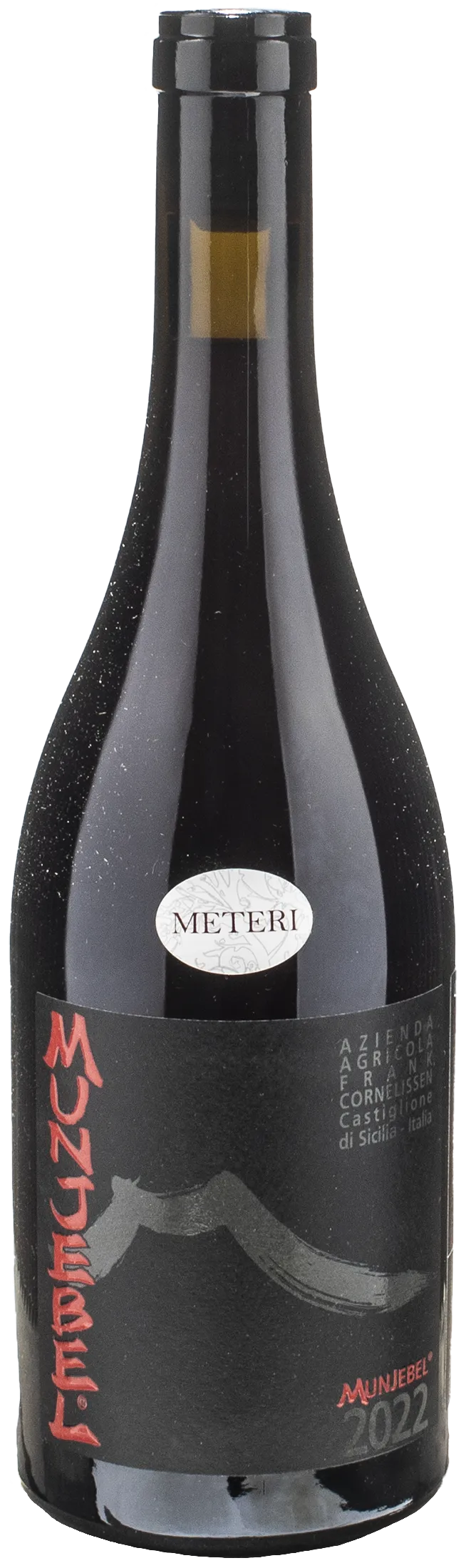

Description
What kind of wine it is
Munjebel Rosso is a dry red wine produced by Frank Cornelissen, an authentic expression of the Etna Rosso region and Sicilian lands. Made from Nerello Mascalese grapes, it reveals a deep aromatic profile characterised by ripe red fruit, medicinal herbs, Mediterranean scrub and citrus peel. On the palate, it is structured and powerful, supported by firm tannins and an elegant freshness. The vibrant minerality accompanies a long and savoury finish, perfect for enhancing braised meats, game and mature cheeses.
Where it comes from
The grapes come from Solicchiata, located on the northern slope of Mount Etna. The vineyards are planted on volcanic soil rich in minerals, at an altitude between 650 and 980 metres. The north and north-east exposure encourages slow and steady ripening of the bunches. The vines, cultivated as free-standing bush vines, are old vineyards over fifty years old, including some rare centenarian plots. The very low yields, the result of short pruning, allow for concentration of aromas and structure in every berry.
How it is produced
In the winery, a minimal intervention philosophy is followed. The bunches, hand-picked and destemmed, undergo a spontaneous fermentation in fibreglass tanks, started by a pied de cuve of indigenous yeasts. This is followed by a maceration on the skins for about fifty days, managed with careful manual punch-downs. Ageing takes place for twelve months in neutral tanks of fibreglass or epoxy resin, in order to preserve the purest identity of the Nerello Mascalese grape. The wine is finally bottled without any fining.
History and Curiosities
Munjebel Rosso embodies Frank Cornelissen's authentic vision of the Etna region. The name pays homage to the ancient Arab-Latin root of the volcano, Mongibello, meaning “beautiful mountain”. Created in 2001, since 2012 this fine natural wine has been bottled as a single vintage, alongside single crus such as Zottorinoto-Chiusa Spagnolo and Feudo di Mezzo-Porcaria. The grapes ripen on the northern slopes of Solicchiata, sourced from old vineyards over fifty years old, including rare century-old plots.
Awards
-
2022
 92
92/100
Vinous is the online guide from Antonio Galloni, one of the world's leading wine connoisseurs.
Tasting notes

Perfume

Color

Taste
Serve at:
16 - 18 °C
Longevity:
10 - 15 years

- Start up year: 2001
- Hectares: 24
Our farming philosophy is based on our acceptance of the fact that man will never be able to understand nature’s full complexity and interactions. We therefore choose to concentrate on observing and learning the movements of Mother Earth in her various energetic and cosmic passages and prefer to follow her indications as to what to do, instead of deciding and imposing ourselves. Read more


| Name | Frank Cornelissen Munjebel Rosso 2022 |
|---|---|
| Type | Red organic still |
| Denomination | Terre Siciliane IGT |
| Vintage | 2022 |
| Size | 0,75 l |
| Alcohol content | 14.5% by volume |
| Grape varieties | 100% Nerello Mascalese |
| Country | Italy |
| Region | Sicily |
| Vendor | Frank Cornelissen |
| Story | History and Curiosities Munjebel Rosso embodies Frank Cornelissen's authentic vision of the Etna region. The name pays homage to the ancient Arab-Latin root of the volcano, Mongibello, meaning "beautiful mountain". Created in 2001, since 2012 this fine natural wine has been bottled as a single vintage, alongside single crus such as Zottorinoto-Chiusa Spagnolo and Feudo di Mezzo-Porcaria. The grapes ripen on the northern slopes of Solicchiata, sourced from old vineyards over fifty years old, including rare century-old plots. |
| Origin | Northern slopes of Mount Etna, Solicchiata near Castiglione di Sicilia |
| Climate | Exposure: North, North East |
| Soil composition | Mineral-rich volcanic soil |
| Fermentation | Approximately 50 days |
| Production technique | Fermentation with indigenous yeasts (pied de cuve) in fibreglass tanks, maceration on the skins for about 50 days with manual punching down and gentle pressing; ageing for about 12 months in neutral fibreglass or epoxy resin tanks |
| Wine making | Destemming and gentle crushing, manual punching down and soft pressing. Spontaneous fermentation started with a pied-de-cuve of only indigenous yeasts, with maceration on the skins for about 50 days. |
| Aging | In neutral vats made of fibreglass or epoxy resin (2,500–7,000 L) for about 12 months |
| Allergens | Contains sulphites |