


Fontanafredda
Langhe Riesling Marin 2022
| Denomination | DOC Langhe Riesling |
|---|---|
| Size | 0,75 l |
| Alcohol content | 13.0% by volume |
| Area | Piedmont (Italy) |
| Grape varieties | 100% Riesling |
| Aging | Matured on fine lees for about a year, then bottled and further matured in bottle for about 24 months (3 years in bottle). |
- Aromas: notes of white peach, citrus fruits and rosemary with a typical hydrocarbon evolution
- Palate: pronounced yet elegant acidity, marked savouriness and a long, vibrant finish
- Terroir: vineyards in Castino and Serravalle Langhe up to 600 metres, west and south-west exposure
- Vinification: hand harvesting, direct pressing, cold settling and controlled fermentation
- Ageing: time on fine lees and bottle maturation to enhance energy and minerality


Description
What kind of wine it is
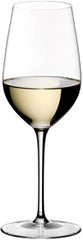
Langhe Riesling Marin by Fontanafredda is a white wine with Langhe denomination, boasting a vibrant profile. It displays a straw yellow hue with greenish highlights and offers a bouquet where notes of white peach and citrus intertwine with subtle hints of rosemary. Its excellent ageing potential encourages the development of the petrol notes typical of Riesling. On the palate, the wine is driven by a pronounced acidity that envelops the senses without being aggressive, balanced by a deep savouriness that delivers a long, taut finish. This rigorous Piedmontese offering, refined on fine lees, is also suitable for vegan diets.
Where it comes from
The Riesling grapes are grown in Piedmont, in the areas of Castino and Serravalle Langhe. The vineyards are trained using the Guyot system and benefit from an optimal west and south-west exposure, reaching up to six hundred metres in altitude. This position ensures an ideal microclimate for gradual ripening, preserving the fruit's natural freshness. The soil consists of calcareous-clay marl interspersed with layers of sand and arenaceous stones. This rich geological matrix imparts a distinct mineral character to the wine, resulting in a unique salinity that precisely defines its identity within the Langhe context.
How it is produced
The grapes are carefully hand-picked to preserve the integrity of the bunches. In the winery, direct pressing is followed by cold static settling and fermentation. The process continues with meticulous ageing on fine lees and careful bottle maturation, essential steps to enhance aromatic purity and gustatory energy. This method gives the wine a vibrant, savoury tension.
Tasting notes
Perfume
Color
Taste
Serve at:
10 - 12 °C
Longevity:
03 - 05 years
- Start up year: 1878
- Oenologist: Giorgio Lavagna
- Bottles produced: 7.000.000
- Hectares: 120
Like all beautiful things, Fontanafredda originates from a love story between the first King of Italy, Vittorio Emanuele II, and Rosa Vercellana.
Producers of Barolo and sumptuous wines of the Langhe, it was the scene of many firsts: they were the first Barolo to go overseas, the first to produce the first Classic Method in 1959, which was to be the forerunner of Alta Langa.
The founding principle of the winery is the concept of community.
Since 2018, Fontanafredda has been cultivating 120 organically certified hectares that are the setting for Italy's first Storytelling Village ('Villaggio Narrante'), which is still home to 12 families of workers who make the village an authentic village, alive and productive.
Fontanafredda is also hospitality, a meeting place where everyone is welcome thanks to its 4-star hospitality.
Today, the company preserves intact the testimonies of its noble past - the hunting lodge, the village, the extensive cellars, the vineyards - but continues to renew itself and experiment, perfecting what nature and history have handed down. For this reason, in the Langhe, where vines and wine bind generations to each other and shape the landscape, Fontanafredda is an essential reference point. The expression of a wine culture that comes from the earth, from the vineyard, and is refined through the work and creativity of people.
In 2021, the Alta Langa DOCG Contessa Rosa Rosé 2014 was named 'Best Sparkling Wine in the World' according to Tastingbook 2021.
In 2022 the BAROLO SERRALUNGA 2018 entered the TOP100 of WINE SPECTATOR in 78th place. Read more


| Name | Fontanafredda Langhe Riesling Marin 2022 |
|---|---|
| Type | White green still semi-aromatic |
| Denomination | Langhe DOC |
| Vintage | 2022 |
| Size | 0,75 l |
| Alcohol content | 13.0% by volume |
| Grape varieties | 100% Riesling |
| Country | Italy |
| Region | Piedmont |
| Vendor | Fontanafredda |
| Origin | Castino, Serravalle Langhe (Langhe, Piedmont, Italy) |
| Climate | Altitude: 650 m a.s.l. Exposure: West, South-West. |
| Soil composition | White clays and layers of sandstone |
| Cultivation system | Guyot |
| Plants per hectare | 5000 plants/ha |
| Harvest | Late September - early October |
| Production technique | Manual harvest in small crates, direct pressing, static decantation of the must, alcoholic fermentation, ageing on fine lees and bottle maturation |
| Wine making | The grapes, delivered in 20 kg crates, are directly pressed to obtain the must which, after a period of static settling for 24 hours at 10°C, is started on fermentation. At the end of fermentation, the wine is aged on fine lees for 4 months. Bottling takes place before the summer. |
| Aging | Matured on fine lees for about a year, then bottled and further matured in bottle for about 24 months (3 years in bottle). |
| Allergens | Contains sulphites |