


Feudo Principi di Butera
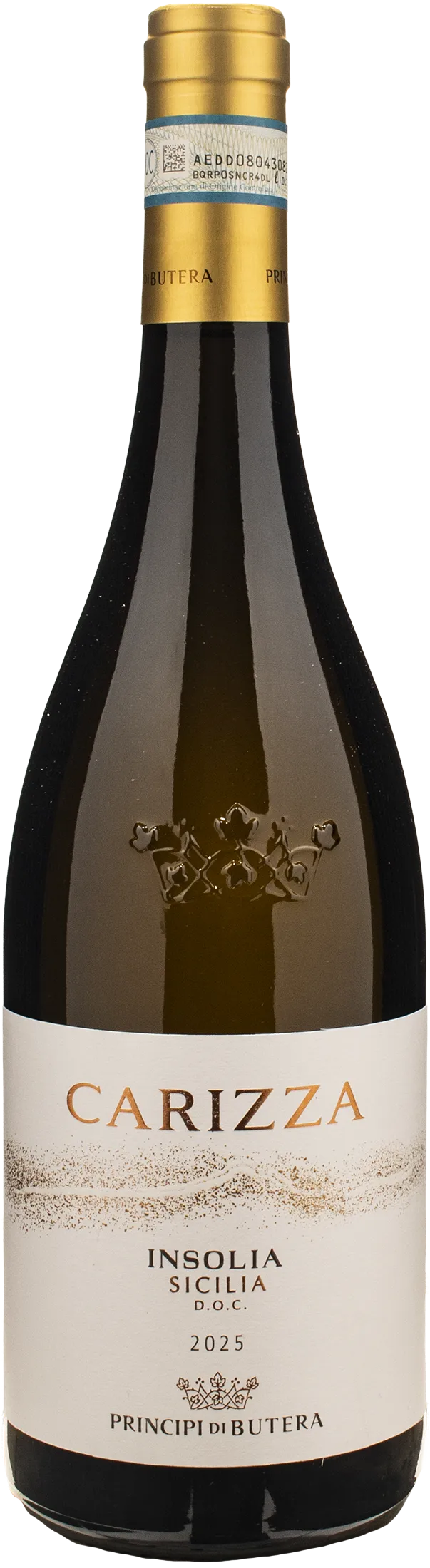
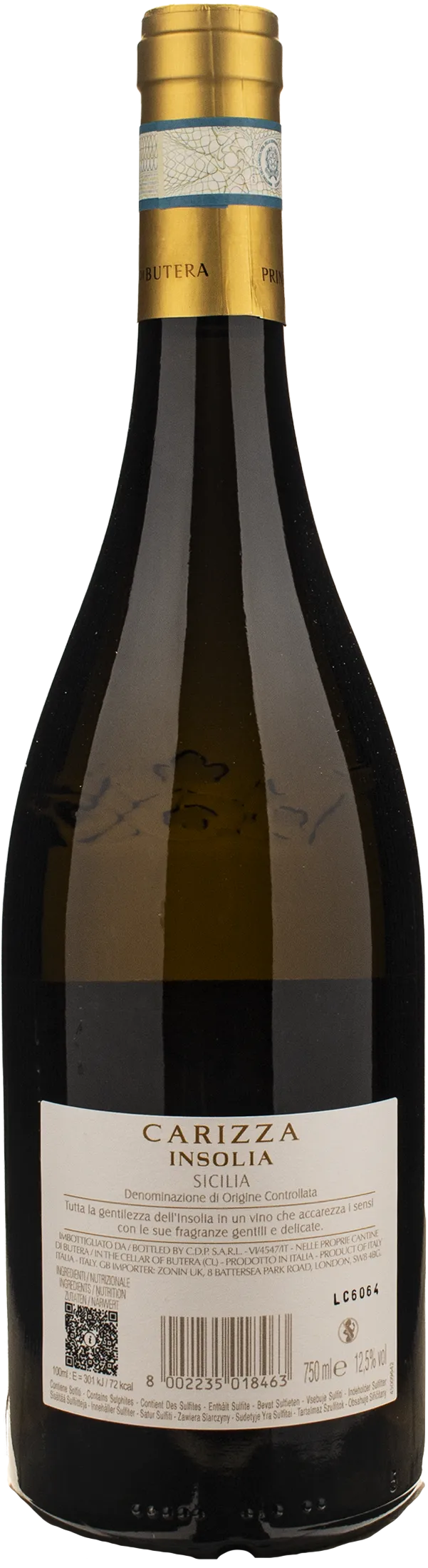
Carizza Insolia 2025
| Denomination | DOC Sicilia Inzolia |
|---|---|
| Size | 0,75 l |
| Alcohol content | 12.5% by volume |
| Area | Sicily (Italy) |
| Grape varieties | 100% Ansonica/Inzolia |
| Aging | Aged on the lees for 6 months, followed by several months of bottle ageing. |
- Grape variety and designation: 100% Insolia, Sicilia DOC, vintage 2025
- Aromatic profile: notes of broom and mimosa, followed by melon, pineapple and mango
- Taste: rich and harmonious structure, freshness and savouriness, finish of sweet almond
- Vinification: gentle pressing, fermentation in steel at 16–18 °C, ageing for 6 months on the lees
- Serving and pairings: temperature 10–12 °C, ideal with fish soups, shellfish and white meats
Description
What kind of wine it is
Carizza Insolia by Principi di Butera is a still white wine with Denomination of Controlled Origin produced in Sicily, a faithful expression of the Insolia grape variety vinified in steel. To the eye, it presents a pale straw yellow colour with delicate greenish highlights. The aromatic profile is distinguished by its floral imprint with notes of broom and mimosa, followed by hints of melon, pineapple and mango. On the palate, it is soft and distinctly harmonious, characterised by a pleasant freshness that fades into a finish of sweet almond. It is ideal paired with fish dishes, shellfish, vegetable-based preparations and white meats.
Where it comes from
The grapes grow on the hills around Butera and Riesi, in the province of Caltanissetta, at the heart of Sicily's wine region. The vineyards are located at an altitude between 250 and 350 metres above sea level, about ten kilometres from the coast. The area is characterised by a Mediterranean climate, where constant sea breezes moderate the temperatures and promote balanced ripening. The soil is notable for being rich in minerals, with abundant limestone and remnants of marine shells, elements that give the wine a vibrant savoury flavour profile and a balanced natural acidity.
How it is produced
The production process begins with the harvest of grapes at perfect ripeness. Once in the winery, the bunches undergo a gentle pressing to extract the must. Fermentation takes place in stainless steel tanks at a controlled temperature, a crucial technical choice to preserve the integrity of the floral and fruity aromas. The wine then rests through ageing on fine lees for six months, acquiring greater structural softness, before completing its evolutionary journey with a further period of rest that definitively stabilises its gustatory harmony.
History and Curiosities
The name Carizza, which means “caress” in Sicilian, evokes the elegance with which Feudo Principi di Butera interprets this captivating pure Insolia. Born on the hills between the Valley of the Temples and Piazza Armerina, this wine draws its vibrant freshness from the gentle coastal breezes. The fine limestone soils, enriched by marine sediments, impart a refined minerality, in a landscape where careful sustainable viticulture enhances the authentic Sicilian biodiversity.
Tasting notes

Perfume

Color

Taste
Serve at:
10 - 12 °C
Longevity:
03 - 05 years
- Start up year: 1997
- Oenologist: Antonio Paolo Froio
- Bottles produced: 800.000
- Hectares: 180
The name Butera appears to have its origins in Re Bute, the first king of the Siculi, who along with the Sicani and Grek colonisers, inhabited the strategically important southern central region of Sicily which acted as the border between the three civilisations.
Saracen occupation of the island started in 854 AD and continued until their expulsion in 1089 at the hands of the Norman Roger of Altavilla. The history of the principality was then characterised by three great families in succession: the Santapau, the Bracinforte and the Lanza.
The Santapau held the Feudo Principi di Butera for two centuries before ceding it to the Bracinforte, a noble family originally from the Piacenza region. In 1543 King Philip of Spain then nominated Ambrogio Bracinforte as Lord of Feudo Principi di Butera, which remained the most important noble title in Sicily up until the 19th century. The Bracinforte dynasty became one of the most powerful in the history of Sicily and it is estimated that at the turn of the 18th century they owned what amounted to about ten percent of the entire island’s income.
The Bracinforte dynasty came to an end with marriage of Stefania Bracinforte to Guiseppe Lanza, whose union brought together into one family dozens of titles, hundreds of manor houses, thousands of hectares of land and unbound riches. In 1895 the Lanza heir was also awarded the title of Prince of Deliella.
In the previous century, the Italian Royal Family of Savoia had founded the Principality of Deliella, on the very lands which today represent the borders of the Feudo Principi di Butera
The ancient Baglio (fortified manor house) of the Feudo Principi di Butera, having been completely restored with great attention being paid to its ancient structures, has come back to life and the intense ochre colours of its walls are even more striking when they meet the incredible blues and greens of the surrounding Sicily.
The Zonin family has thus also taken on the role of custodian of the territory, convinced that they have a definite responsibility to care for and highlight the history, architecture and landscape of the island. Read more


| Name | Feudo Principi di Butera Carizza Insolia 2025 |
|---|---|
| Type | White still |
| Denomination | Sicilia DOC |
| Vintage | 2025 |
| Size | 0,75 l |
| Alcohol content | 12.5% by volume |
| Grape varieties | 100% Ansonica/Inzolia |
| Country | Italy |
| Region | Sicily |
| Vendor | Feudo Principi di Butera |
| Story | History and Curiosities The name Carizza, which means "caress" in Sicilian, evokes the elegance with which Feudo Principi di Butera interprets this captivating pure Insolia. Born on the hills between the Valley of the Temples and Piazza Armerina, this wine draws its vibrant freshness from the gentle coastal breezes. The fine limestone soils, enriched by marine sediments, impart a refined minerality, in a landscape where careful sustainable viticulture enhances the authentic Sicilian biodiversity. |
| Origin | Hills around Butera and Riesi, province of Caltanissetta, Sicily, Italy |
| Climate | Mediterranean |
| Soil composition | Mineral-rich soils with limestone and marine shell residues |
| Fermentation temperature | 16–18 °C |
| Production technique | Soft pressing; fermentation in stainless steel at controlled temperature (16–18 °C); ageing on the lees for 6 months; subsequent ageing in bottle |
| Wine making | Gentle pressing of the grapes at perfect ripeness; fermentation in stainless steel tanks at a controlled temperature (16–18 °C); ageing on the lees for 6 months, followed by several months of bottle ageing. |
| Aging | Aged on the lees for 6 months, followed by several months of bottle ageing. |
| Allergens | Contains sulphites |