


Feudo Montoni
Vigna Lagnusa Nero d'Avola 2022
| Denomination | DOC Sicilia Nero d'Avola |
|---|---|
| Size | 0,75 l |
| Alcohol content | 13.5% by volume |
| Area | Sicily (Italy) |
| Grape varieties | 100% Nero d'Avola |
| Aging | 20 months in concrete, 4 months in barrel, 4 months in bottle |
- Grape variety and designation: 100% Nero d’Avola, Sicilia DOC, 2022 harvest
- Aromatic profile: notes of fruit and spices, cinnamon and fresh menthol hints
- Vinification: extended maceration and malolactic fermentation in concrete vats
- Ageing: 20 months in concrete, followed by 4 months in barrel and 4 months in bottle
- Pairings and serving: ideal with red meats and game; decant for one hour, serve at 16–18 °C

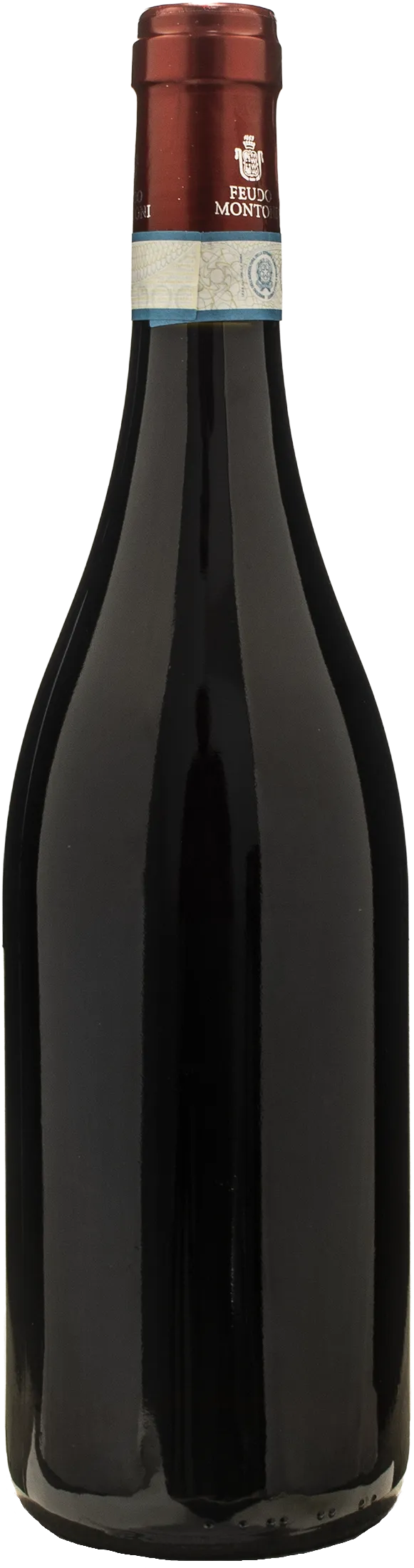
Description
What kind of wine it is
Feudo Montoni Vigna Lagnusa is an organic red wine that showcases the pure character of Nero d’Avola. Produced in Sicily, it displays an intense ruby colour with subtle violet highlights. On the nose, it reveals a complex aromatic profile, where fruity notes blend with enveloping spicy hints of cinnamon. On the palate, it offers an elegant structure that favours finesse over power, enlivened by pleasantly refreshing menthol nuances. Soft and savoury, it boasts well-balanced tannins that make it the ideal companion for red meats, game and mature cheeses. It is recommended to serve at around eighteen degrees, after decanting for an hour.
Where it comes from
The roots of this label lie in the Cammarata area, where the hillside vineyards are situated at six hundred metres above sea level, enjoying a privileged eastern exposure. Feudo Montoni manages the vines, trained as bush vines and on trellises, on clay and sandy soil. The entire estate operates according to the strict principles of organic farming, respecting natural cycles and the forces of nature. This unique pedoclimatic context plays a decisive role in defining the wine’s aromatic identity and vibrant freshness.
How it is produced
The vinification process involves a long maceration in contact with the skins in cement vats, precisely extracting all the polyphenolic components. The subsequent malolactic fermentation also takes place in the same containers. The meticulous maturation in cement lasts for twenty months, followed by a four-month rest in barrels, a crucial step to smooth the palate sensations without overpowering the grape variety’s expression. The process concludes with a further four months in bottle, ensuring a harmonious sip and excellent longevity, with an ageing potential of up to ten years.
History and Curiosities
With roots dating back to the Catalan-Aragonese era, Feudo Montoni maintains a deep connection with the land through entirely organic production. Harnessing natural forces such as gravity, time, and the rhythm of the seasons, the winery creates Vigna Lagnusa Nero d’Avola 2022, an outstanding wine awarded 93 points by Decanter. A meticulous traditional vinification process precedes careful maturation in concrete and casks, completed by four months of rest in the bottle. The result is a captivating red wine, renowned for its elegant and enveloping structure.
Awards
-
2022
 4
4Italian Sommelier Foundation (FIS) guide This has been one of the most prestigious wine guides in Italy for over 10 years.
-
2022
 93
93/100
Decanter is a wine and lifestyle magazine, published monthly in around 90 countries. The magazine includes industry news, classic guides and advice on wine and spirits.
-
2022
 3
3One of the most prestigious wine guides in Italy.
-
2022
 91
91/100
Vinous is the online guide from Antonio Galloni, one of the world's leading wine connoisseurs.
-
2022
 3
3Italian Sommelier Association (AIS) guide
-
2022
 90
90/100
Wine spectator is the most influential wine guide on the internet.
Tasting notes

Perfume

Color

Taste
Serve at:
16 - 18 °C
Longevity:
05 - 10 years
Decanting time:
1 hour

- Start up year: 1469
- Oenologist: Fabio Sireci
- Bottles produced: 240.000
- Hectares: 44
At the end of the 19th century, the estate passed into the hands of the Sireci family, in the person of Rosario, the grandfather of the current owner Fabio. With Fabio, this continuous evolution continues in the name of the most rigorous integration with nature, so much so that, since 2013, the entire production has been certified organic.
The company's philosophy is based on the use of natural forces for wine production: "gravity" as a means of transport, "time" as a refiner, winter and the "mountains" as a refrigerator. Read more


| Name | Feudo Montoni Vigna Lagnusa Nero d'Avola 2022 |
|---|---|
| Type | Red organic still |
| Denomination | Sicilia DOC |
| Vintage | 2022 |
| Size | 0,75 l |
| Alcohol content | 13.5% by volume |
| Grape varieties | 100% Nero d'Avola |
| Country | Italy |
| Region | Sicily |
| Vendor | Feudo Montoni |
| Story | History and Curiosities With roots dating back to the Catalan-Aragonese era, Feudo Montoni maintains a deep connection with the land through entirely organic production. Harnessing natural forces such as gravity, time, and the rhythm of the seasons, the winery creates Vigna Lagnusa Nero d’Avola 2022, an outstanding wine awarded 93 points by Decanter. A meticulous traditional vinification process precedes careful maturation in concrete and casks, completed by four months of rest in the bottle. The result is a captivating red wine, renowned for its elegant and enveloping structure. |
| Origin | Cammarata (AG) |
| Soil composition | Clay and sandy soil |
| Cultivation system | Bush vines and espalier |
| Plants per hectare | 4,400 vines per hectare |
| Production technique | Traditional vinification with long maceration of the must on the skins in concrete; malolactic fermentation in concrete |
| Wine making | Traditional vinification with long maceration of the must on the skins in cement; malolactic fermentation in cement. |
| Aging | 20 months in concrete, 4 months in barrel, 4 months in bottle |
| Year production | 240000 bottles |
| Allergens | Contains sulphites |