


Felsina
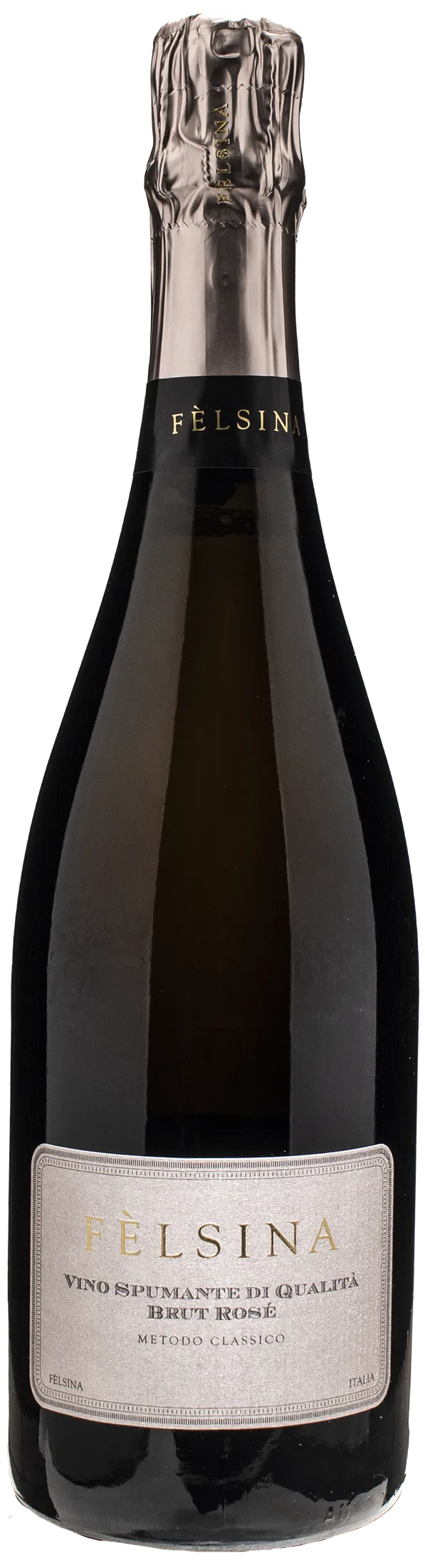
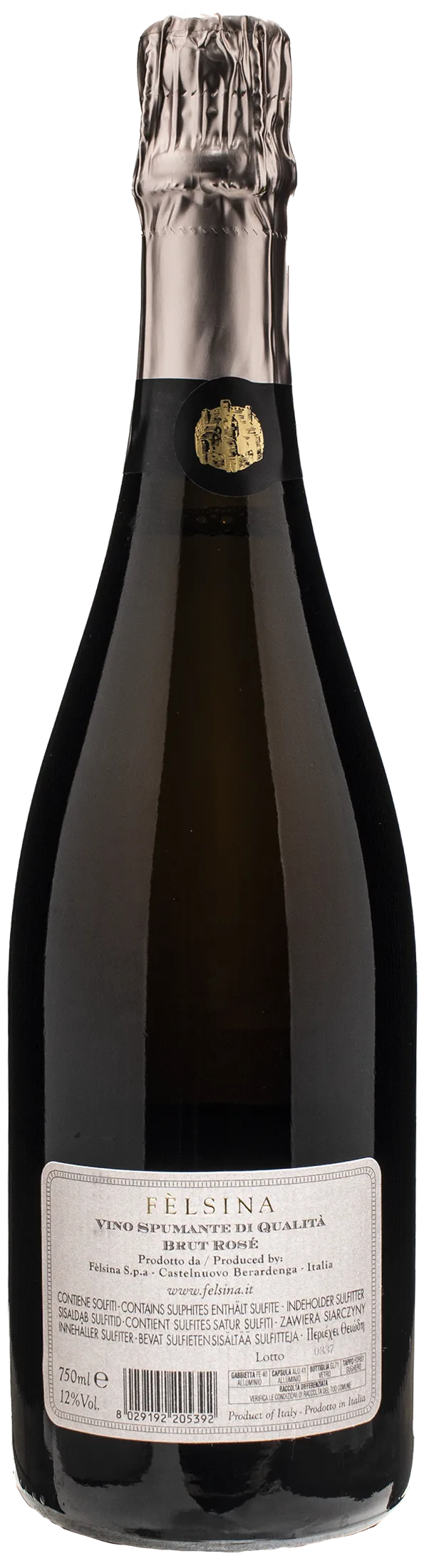
Brut Rosé Metodo Classico
| Denomination | VSQ |
|---|---|
| Size | 0,75 l |
| Alcohol content | 12.0% by volume |
| Area | Tuscany (Italy) |
| Grape varieties | 50% Sangiovese, 30% Pinot Nero, 20% Chardonnay |
| Aging | Refermentation in the bottle for 20–22 months on the lees; then disgorgement, topping up with liqueur d'expédition and ageing in the bottle for at least 3 months before sale. |
- Metodo Classico Brut Rosé: Dry Tuscan sparkling wine with a fine and persistent perlage
- Balanced blend: 50% Sangiovese, 30% Pinot Noir, 20% Chardonnay
- Elegant bouquet: notes of wild berries, citrus fruits and delicate rose petals
- Harmonious palate: freshness, lively acidity, finish of redcurrant, almond and blackcurrant
- Serving and pairings: 7–8 °C; ideal with aperitifs, fish, shellfish and delicate cheeses
Description
What kind of wine is it
Felsina Brut Rosé Metodo Classico is a Tuscan sparkling wine created from a blend of Sangiovese, Pinot Noir and Chardonnay. Produced using the Traditional Method, it offers a fine and persistent perlage that enhances its elegant profile. The bouquet reveals notes of wild berries and rose, leading to a fresh palate with a harmonious finish of currant. It is perfect as a refined aperitif or paired with fish and shellfish dishes.
Where does it come from
This sparkling wine originates in Tuscany, in Castelnuovo Berardenga, on the southern side of the Chianti Classico area. The Fèlsina winery cultivates its vineyards in this historically renowned Sienese district, where the microclimate and soils give the wine a distinct finesse. Every sip expresses a clear territorial character, outlining the harmonious nature of this Brut rosé.
How is it produced
Production begins with manual harvesting and selection of the grape bunches. This is followed by a brief maceration, essential for extracting the delicate rosé hue. After gentle pressing, the must ferments at low temperatures. Following the Traditional Method, the secondary fermentation takes place slowly, with a long ageing on the lees for 20-22 months, which imparts structure. After disgorgement, a further three-month rest perfects the wine's harmony.
History and Curiosities
Produced in Castelnuovo Berardenga, this elegant Metodo Classico Brut Rosé from Fèlsina is a masterful Tuscan expression crafted by oenologist Franco Bernabei. The blend skilfully combines grapes from historic vineyards and fine reserve wines. The slow refermentation, with 20-22 months on the lees followed by a further three months of maturation, creates an extremely fine perlage that enhances the delicate notes of wild berries. A true oenological excellence, awarded by international critics with the prestigious 94 points from James Suckling.
Awards
-
 94
94/100
James Suckling is an influential American wine critic and journalist who worked at Wine Spectator for 30 years. He left the magazine in 2010 to start his own website and guidebook (JamesSuckling.com). He specialises in Italian and Bordeaux wines.
-
 92
92/100
The prestigious international wine guide from the renowned Robert Parker, the world's most experienced and trusted wine taster.
Tasting notes

Perlage

Perfume

Color

Taste
Serve at:
06 - 08 °C
Longevity:
05 - 10 years
- Start up year: 1966
- Oenologist: Franco Bernabei
- Bottles produced: 550.000
- Hectares: 72
In the second half of the 1970s Giuseppe Mazzocolin entered the family business with the task of commercial development. His studies in the Humanities, his wealth of contacts, his elevated work ethic and his respect for Tuscan and Italian culture constitute the foundation for the growth of the Fèlsina winery, paving the way for the beginnings of their international recognition.
Their friendship with Luigi Veronelli and collaboration with oenologist Franco Bernabei shaped a developmental strategy that has proven itself extremely coherent starting with the wines of 1983, the first year of Fontalloro and of Rancia, up to the present day. With Domenico and Giuseppe Poggiali at the helm, an extraordinary development began which, since 1990, also includes Giovanni Poggiali, the oldest of Giuseppe’s three son Read more


| Name | Felsina Brut Rosè Metodo Classico |
|---|---|
| Type | Rosé classic method sparkling wine brut |
| Denomination | VSQ |
| Size | 0,75 l |
| Alcohol content | 12.0% by volume |
| Grape varieties | 50% Sangiovese, 30% Pinot Nero, 20% Chardonnay |
| Country | Italy |
| Region | Tuscany |
| Vendor | Felsina |
| Story | History and Curiosities Produced in Castelnuovo Berardenga, this elegant Metodo Classico Brut Rosé from Fèlsina is a masterful Tuscan expression crafted by oenologist Franco Bernabei. The blend skilfully combines grapes from historic vineyards and fine reserve wines. The slow refermentation, with 20-22 months on the lees followed by a further three months of maturation, creates an extremely fine perlage that enhances the delicate notes of wild berries. A true oenological excellence, awarded by international critics with the prestigious 94 points from James Suckling. |
| Origin | Castelnuovo Berardenga (Siena), Tuscany, Italy |
| Cultivation system | Guyot |
| Plants per hectare | 5400 |
| Fermentation | 20–22 months on the lees (bottle refermentation) |
| Production technique | Traditional method (bottle fermentation) |
| Wine making | After a careful selection, the grapes macerate in the press for 24–36 hours, then are gently pressed. The must is cold-settled, racked, and fermented at a controlled temperature. Bottling takes place in spring with the addition of sugars and selected yeasts to initiate the prise de mousse; this is followed by a secondary fermentation in the bottle for 20–22 months on the lees, then disgorgement and topping up with liqueur d’expédition, and ageing in the bottle for at least 3 months before release. |
| Aging | Refermentation in the bottle for 20–22 months on the lees; then disgorgement, topping up with liqueur d'expédition and ageing in the bottle for at least 3 months before sale. |
| Allergens | Contains sulphites |