


Federico Graziani
Etna Rosso 2024
| Denomination | DOC Etna Rosso |
|---|---|
| Size | 0,75 l |
| Alcohol content | 13.5% by volume |
| Area | Sicily (Italy) |
| Grape varieties | Nerello Cappuccio, Nerello Mascalese |
| Aging | Aged for 12 months in third-passage barriques, followed by approximately 6 months of bottle ageing. |
- Grape varieties: Etna Rosso DOC from Nerello Mascalese and Nerello Cappuccio grapes
- Aromatic profile: hints of strawberry and raspberry, a touch of mandarin and a light smoky note
- Taste: fresh and savoury, lively and well-integrated tannins, persistent mineral finish
- Vineyards: north of Etna at 650-800m on sandy soils and lava stone
- Cellar: in steel with indigenous yeasts, 12 months in barrique. Excellent with fish
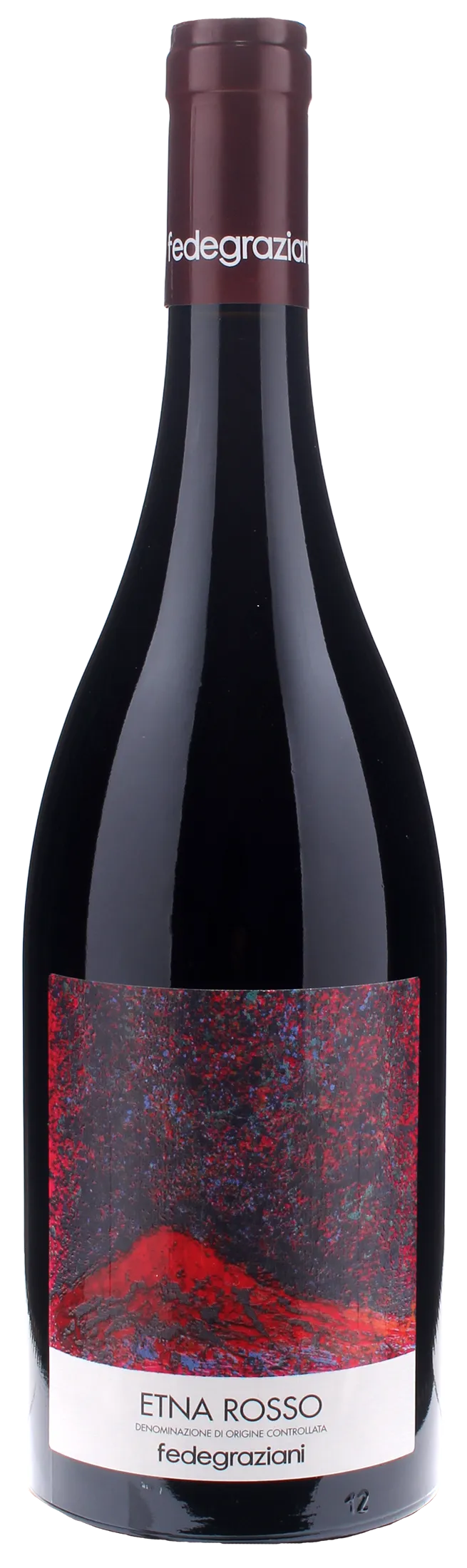
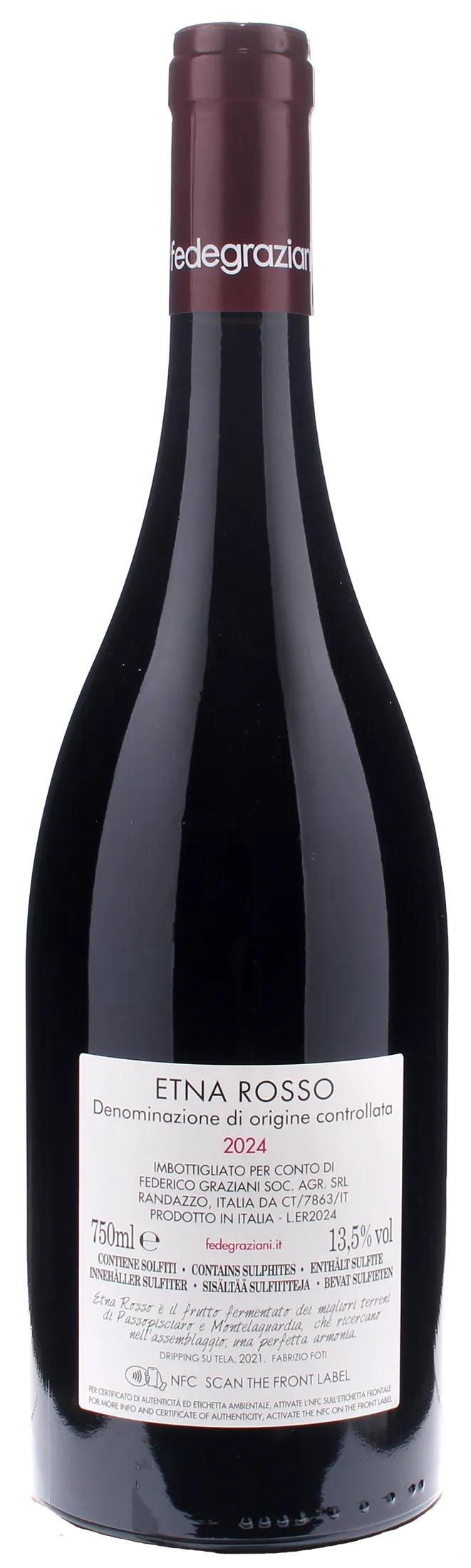
Description
What type of wine it is
Federico Graziani's Etna Rosso is a still wine with a controlled designation of origin that interprets the Sicilian territory through a blend of Nerello Mascalese and Nerello Cappuccio, fermented in steel and aged in barrels. In the glass, it reveals a clear ruby red hue, while on the nose, distinct hints of strawberry and raspberry are discernible, accompanied by notes of mandarin and slight smoky accents. On the palate, a vibrant and harmonious tannic texture emerges, with a savoury and smooth mouthfeel. The mineral finish makes it perfect for pairing with fish and shellfish, or for enhancing white meat dishes.
Origin
The grapes grow on the northern slope of the volcano, between the localities of Passopisciaro and Montelaguardia, in the heart of the Etna Rosso territory. The vines, cultivated according to the vineyard-garden model, are integrated among ancient olive trees at an altitude between 650 and 800 metres. The roots sink into sandy soils rich in stony fragments and lava stone. This high-altitude microclimate encourages the slow ripening of the bunches, giving the wine an authentic flavour profile that reflects the deep minerality of the volcanic soil.
How it is produced
The winemaking is focused on preserving the purity of the fruit through non-invasive practices. Spontaneous fermentation in steel takes place thanks to the action of indigenous yeasts, keeping the varietal character of the grapes intact. Subsequently, the wine matures for twelve months in third-fill barrels, a technical choice that enriches the bouquet with delicate nuances of vanilla and white chocolate, without overpowering the savoury freshness. After a further period of bottle ageing, the wine reaches its full expressive harmony.
History and curiosities
Created to offer an authentic experience, Federico Graziani's Etna Rosso DOC originates between Passopisciaro and Montelaguardia. The vines grow in a three-hectare garden-vineyard among centuries-old olive trees, protected by a long boundary wall. Here, millennia-old agricultural tradition meets modernity thanks to the innovative NFC system on the label, which certifies the absolute authenticity of every bottle. The result of the same dedication that inspires the famous Profumo di Vulcano, this wine vigorously reflects all the power of the Sicilian volcanic terroir.
Awards
-
2024
 90
90/100
Decanter is a wine and lifestyle magazine, published monthly in around 90 countries. The magazine includes industry news, classic guides and advice on wine and spirits.
Tasting notes

Perfume

Color

Taste
Serve at:
14 -16 °C
Longevity:
10 - 15 years
Decanting time:
1 hour

For the past 2000 years, people here have been growing vineyards in small plots of land reclaimed from the mountain, living in symbiosis with the volcano and adapting to the power and unpredictability of its elements. This is slow and ancient work, carried out by hand with toil, passion, and respect. Read more


| Name | Federico Graziani Etna Rosso 2024 |
|---|---|
| Type | Red green still |
| Denomination | Etna DOC |
| Vintage | 2024 |
| Size | 0,75 l |
| Alcohol content | 13.5% by volume |
| Grape varieties | Nerello Cappuccio, Nerello Mascalese |
| Country | Italy |
| Region | Sicily |
| Vendor | Federico Graziani |
| Story | History and curiosities Created to offer an authentic experience, Federico Graziani's Etna Rosso DOC originates between Passopisciaro and Montelaguardia. The vines grow in a three-hectare garden-vineyard among centuries-old olive trees, protected by a long boundary wall. Here, millennia-old agricultural tradition meets modernity thanks to the innovative NFC system on the label, which certifies the absolute authenticity of every bottle. The result of the same dedication that inspires the famous Profumo di Vulcano, this wine vigorously reflects all the power of the Sicilian volcanic terroir. |
| Origin | Northern slope of Mount Etna, between Passopisciaro and Montelaguardia (Castiglione di Sicilia, CT), Sicily |
| Soil composition | Sandy soils rich in stones and lava stone |
| Production technique | Spontaneous fermentation in stainless steel with indigenous yeasts |
| Wine making | Spontaneous fermentation with indigenous yeasts in stainless steel; aged for 12 months in third-passage barriques and approximately 6 months in bottle. |
| Aging | Aged for 12 months in third-passage barriques, followed by approximately 6 months of bottle ageing. |
| Allergens | Contains sulphites |