


Enrico Gatti
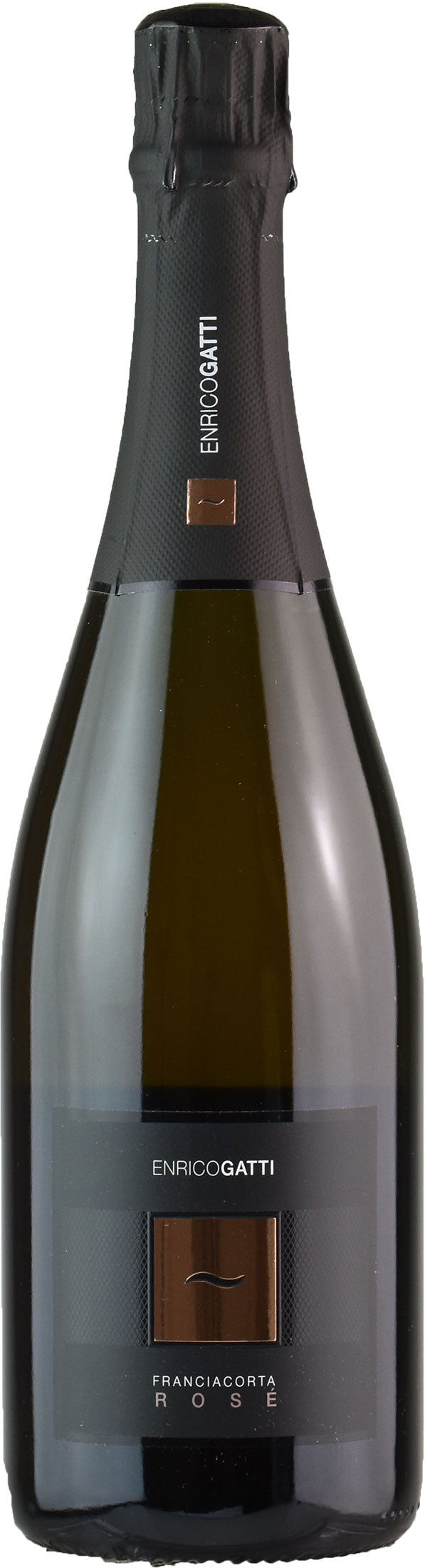
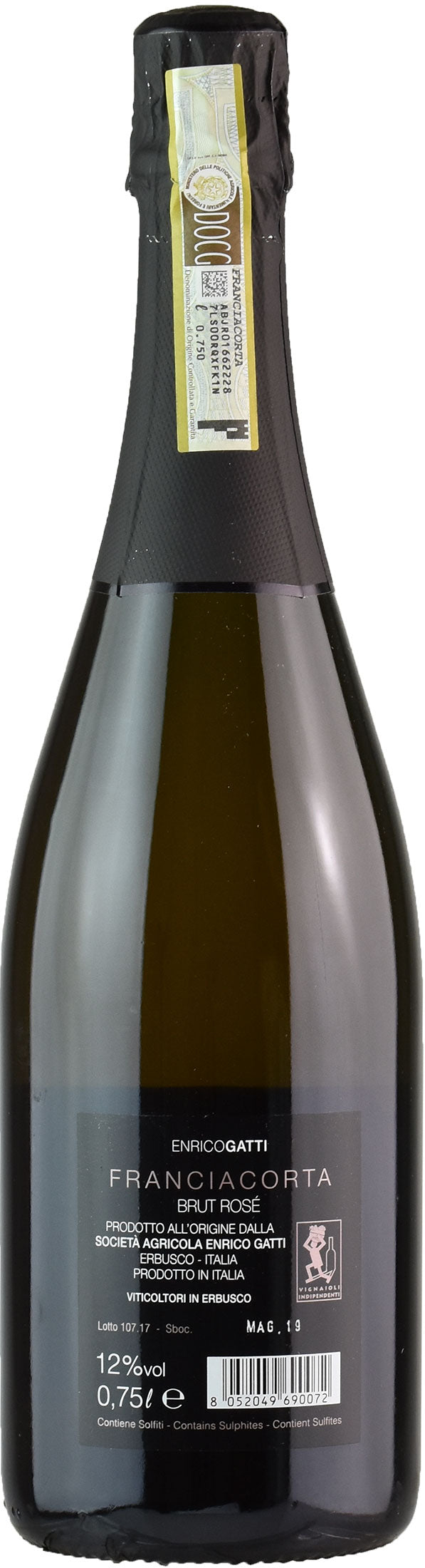
Franciacorta Rosé Brut
| Denomination | DOCG Franciacorta Rosé Brut |
|---|---|
| Size | 0,75 l |
| Alcohol content | 12.0% by volume |
| Area | Lombardy (Italy) |
| Grape varieties | 100% Pinot Nero |
| Aging | On the lees for a minimum of 25 months. |
- Grape variety and style: Brut rosé sparkling wine made exclusively from Pinot Noir, Franciacorta DOCG
- Method and ageing: Traditional Method, 25 months on the lees, velvety bubbles
- Aromas: Notes of strawberry, pomegranate and raspberry combined with hints of rose, blackcurrant and a mineral nuance
- Taste: Dry and fresh profile, smooth texture, balanced acidity and a long finish
- Serving and pairings: Temperature 6-8 °C; ideal throughout the meal, from starters to main courses
Description
What kind of wine it is
Enrico Gatti Franciacorta Rosé Brut is a sparkling rosé wine produced in Lombardy, a true expression of Pinot Noir crafted using the Traditional Method. Its aromatic bouquet opens with fragrant notes of strawberry, pomegranate and raspberry, interwoven with hints of rose and a subtle mineral streak. On the palate, it is dry and fresh, distinguished by a silky texture and a pleasantly persistent finish. Thanks to its velvety bubbles, when served chilled it proves ideally versatile for accompanying an entire meal, enhancing both starters and main courses with balance.
Where it comes from
This wine originates in Erbusco, at the heart of Franciacorta. The vineyards are situated over two hundred metres above sea level on morainic soils of glacial origin, which are essential for imparting acidic tension and pronounced aromatic precision. The planting density and meticulous care of the vines encourage regular ripening of the grapes. These specific soil and climate conditions ensure a clear expression of the terroir, fully showcasing the winegrowing vocation of the Brescia hills.
How it is produced
After manual harvesting, careful gentle pressing and a brief maceration allow the extraction of the delicate rosé hue. Primary fermentation takes place in stainless steel tanks at controlled temperatures to preserve the vibrancy of the aromas. The secondary fermentation in the bottle follows the strict principles of the Traditional Method, completed by ageing on the lees for at least twenty-five months. This slow maturation gives the wine its typical elegant structure and finely defined effervescence.
History and Curiosities
Originating from Erbusco, Enrico Gatti Franciacorta Rosé Brut showcases pure Pinot Noir, cultivated on glacial moraine soils that are particularly well-suited. The meticulous artisanal process follows the Traditional Method, involving slow fermentation in steel, followed by ageing for at least 25 months on the lees. This rigorous dedication, rewarded with prestigious accolades from Bibenda and AIS, ensures an elegant and structured Franciacorta DOCG. Each glass tells the story of Lombardy's winemaking tradition, offering a velvety experience.
Awards
-
 4
4Italian Sommelier Foundation (FIS) guide This has been one of the most prestigious wine guides in Italy for over 10 years.
-
 4
4Italian Sommelier Association (AIS) guide
Tasting notes

Perlage

Perfume

Color

Taste
Serve at:
06 - 08 °C
Longevity:
05 - 10 years

- Start up year: 1986
- Oenologist: Andrea Rudelli
- Bottles produced: 120.000
- Hectares: 21
Wine is "alive" and constantly evolving, so the company has tried to create an ideal space in the cellar that guarantees optimal conditions for vinification and conservation. Underground and thermo-conditioned, the cellar is equipped with tanks that have a computerised temperature control system—modern winemaking techniques with total respect for the raw material. Read more


| Name | Enrico Gatti Franciacorta Rosè Brut |
|---|---|
| Type | Rosé green brut |
| Denomination | Franciacorta DOCG |
| Size | 0,75 l |
| Alcohol content | 12.0% by volume |
| Grape varieties | 100% Pinot Nero |
| Country | Italy |
| Region | Lombardy |
| Vendor | Enrico Gatti |
| Story | History and Curiosities Originating from Erbusco, Enrico Gatti Franciacorta Rosé Brut showcases pure Pinot Noir, cultivated on glacial moraine soils that are particularly well-suited. The meticulous artisanal process follows the Traditional Method, involving slow fermentation in steel, followed by ageing for at least 25 months on the lees. This rigorous dedication, rewarded with prestigious accolades from Bibenda and AIS, ensures an elegant and structured Franciacorta DOCG. Each glass tells the story of Lombardy's winemaking tradition, offering a velvety experience. |
| Origin | Erbusco (Brescia) |
| Soil composition | Glacial moraine soils (till) |
| Plants per hectare | 4,000–4,500 plants per hectare |
| Fermentation temperature | Below 19 °C |
| Fermentation | Approximately 25 months on the lees |
| Production technique | Classic method (traditional method) |
| Wine making | Hand-harvested grapes; brief maceration on the skins to extract the rosé colour; primary fermentation in stainless steel tanks at controlled temperature (below 19°C); secondary fermentation and ageing in bottle according to the Traditional Method for about 25 months on the lees. |
| Aging | On the lees for a minimum of 25 months. |
| Allergens | Contains sulphites |