


Duca di Salaparuta
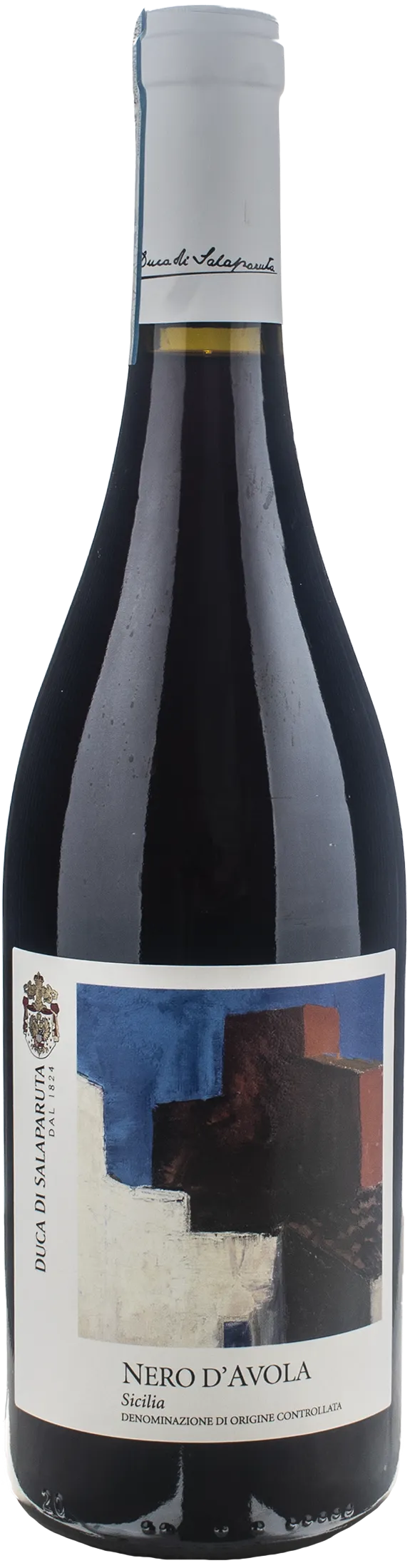
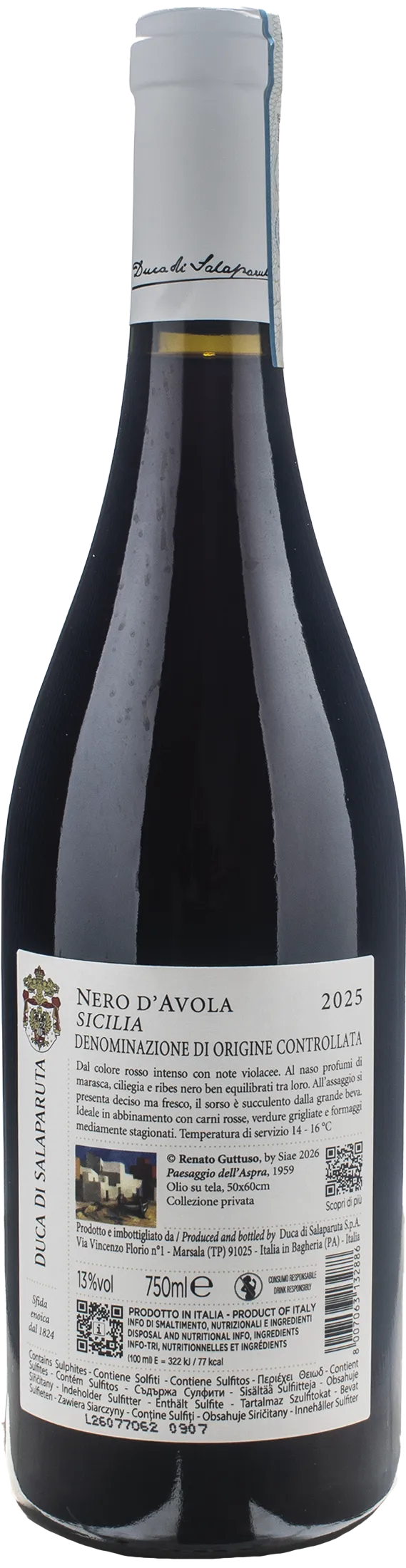
Autentici Nero d'Avola 2025
| Denomination | DOC Sicilia Nero d'Avola |
|---|---|
| Size | 0,75 l |
| Alcohol content | 13.0% by volume |
| Area | Sicily (Italy) |
| Grape varieties | 100% Nero d'Avola |
| Aging | After malolactic fermentation, ageing in tanks (with racking) for at least 3 months; followed by bottle ageing for at least 1 month before commercialisation. |
- Denomination and grape variety: Sicilia DOC from 100% Nero d’Avola grapes, 2025 vintage
- Colour and aromas: ruby red with violet hues; notes of black cherry, plum and blackcurrant
- Palate: Juicy and fresh flavour, broad and velvety medium-bodied structure; excellent finish
- Vinification: Maceration for 15 days, fermentation at 24-28 °C, followed by malolactic fermentation
- Ageing and service: 3 months in stainless steel, 1 in bottle; decant for one hour before serving
Description
What type of wine it is
Autentici Nero d’Avola by Duca di Salaparuta is a still red wine with a controlled designation of origin from Sicily, produced with Nero d’Avola grapes. Characterised by a succulent and fresh profile, it stands out for its aromas of morello cherry and blackcurrant and a broad, velvety medium-bodied sip. Its production involves maceration on the skins and ageing in steel tanks, which preserve its pleasant aromatic persistence.
Where it comes from
This red originates in central-western Sicily, from estate-owned vineyards rooted in limestone soils, essential for giving the wine a clean and dynamic profile. The local climate, characterised by dry seasons and a hot summer, creates the perfect conditions for a complete and intense ripening of the clusters. The manual harvest, carried out between the first and fourth week of September, allows for a rigorous selection of grapes in the vineyard, ensuring maximum aromatic clarity.
How it is produced
After de-stemming and soft pressing, the grapes are placed in small fermenting vats for maceration on the skins. Alcoholic fermentation takes place at a controlled temperature for about ten days, followed by a further five days of skin contact to optimally extract colour and tannins. Once racking is complete, malolactic fermentation takes place. The wine matures in steel tanks for at least three months, then completes its refinement in the bottle for at least one month before being released to the market.
History and curiosities
Founded in 1824, the Duca di Salaparuta winery combines island tradition with modern techniques in its Nero d’Avola Sicilia DOC. The grapes for the Calanica range come from estate vineyards located in central-western Sicily and are harvested by hand in September. The dry climate and hot summers have shaped a 2024 vintage rich in nuances, delivering a unique vintage that highlights the excellent quality and winemaking expertise of this historic company.
Tasting notes

Perfume

Color

Taste
Serve at:
14 -16 °C
Longevity:
05 - 10 years
Decanting time:
1 hour

- Start up year: 1824
- Oenologist: Team di tecnici
- Bottles produced: 9.500.000
- Hectares: 150
In this part of the island for centuries the Nero d'Avola, the prince of the Sicilian vines, which in the area of Riesi, thanks to special conditions pedoclimatic, has found an ideal habitat.
The vineyards, currently about 127 hectares, are located on soils with a composition of silicaocalcarea that allows the roots to penetrate deeply finding water, rare and precious in this part of Sicily in summer.
Here are born some of the great Duca di Salaparuta wines, each with its own personality. different thanks to the fact that the grapes from which they are born are harvested in different areas. of the estate. the particular exposure to the sun and wind of the vineyards and the nature characteristic of the various areas of the soil, in fact, guarantee different fruits to a few yards apart.
Duca Entico 2017 received a special award as Best Wine from Nero d'Avola grapes from Doctor Wine - Essential Guide to the Wines of Italy 2022 with 96 points out of 100. Read more


| Name | Duca di Salaparuta Autentici Nero d'Avola 2025 |
|---|---|
| Type | Red still |
| Denomination | Sicilia DOC |
| Vintage | 2025 |
| Size | 0,75 l |
| Alcohol content | 13.0% by volume |
| Grape varieties | 100% Nero d'Avola |
| Country | Italy |
| Region | Sicily |
| Vendor | Duca di Salaparuta |
| Story | History and curiosities Founded in 1824, the Duca di Salaparuta winery combines island tradition with modern techniques in its Nero d’Avola Sicilia DOC. The grapes for the Calanica range come from estate vineyards located in central-western Sicily and are harvested by hand in September. The dry climate and hot summers have shaped a 2024 vintage rich in nuances, delivering a unique vintage that highlights the excellent quality and winemaking expertise of this historic company. |
| Origin | Central-western Sicily, Italy |
| Climate | Dry autumn and winter, dry spring, hot summer. |
| Soil composition | Calcareous |
| Harvest | From the first to the fourth week of September |
| Fermentation temperature | 24–28°C |
| Fermentation | About 10 days |
| Production technique | Destemming and light crushing, followed by maceration on the skins with alcoholic fermentation at a controlled temperature (24–28 °C) for approximately 10 days (with a further 5 days of skin contact) and subsequent malolactic fermentation. |
| Wine making | The winemaking process involves destemming the bunches, gentle crushing and transferring the fruit to the fermentation tank. This is followed by maceration on the skins with alcoholic fermentation at a controlled temperature of 24–28 °C for approximately 10 days, with movement of the pomace to extract colour and tannins; the wine then remains in contact with the skins for at least a further 5 days. After devatting, malolactic fermentation takes place. |
| Aging | After malolactic fermentation, ageing in tanks (with racking) for at least 3 months; followed by bottle ageing for at least 1 month before commercialisation. |
| Total acidity | 6.4 gr/L |
| PH | 3.43 |
| Allergens | Contains sulphites |