


Donnhoff
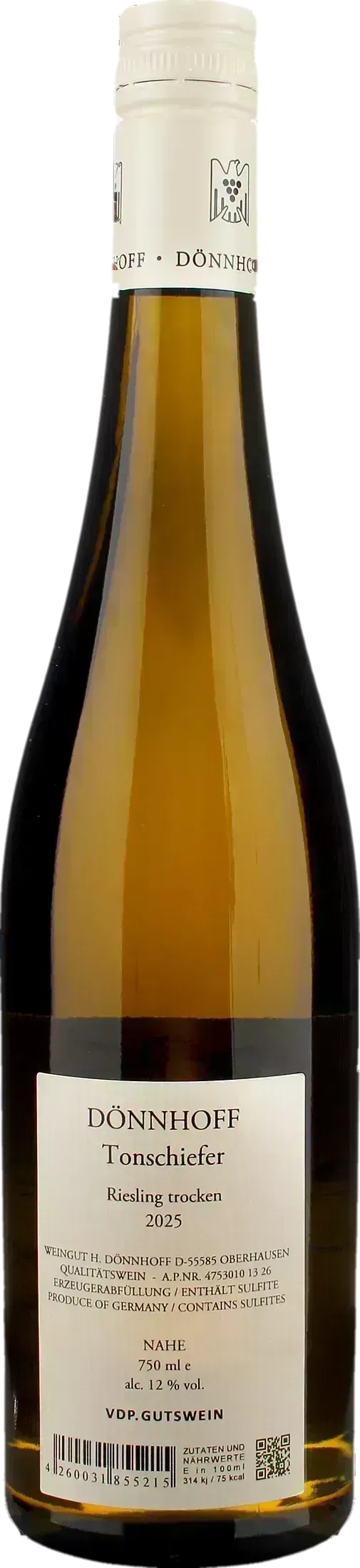
Riesling Tonschiefer Trocken 2025
| Denomination | QbA Mosel-Saar-Ruwer |
|---|---|
| Size | 0,75 l |
| Alcohol content | 12.0% by volume |
| Area | Mosel-Saar-Ruwer (Germany) |
| Grape varieties | 100% Riesling |
| Aging | Aged partly in stainless steel tanks and partly in traditional large German oak casks. |
- Wine style: Dry still white Riesling, 12% vol, zero residual sugar
- Aroma: Hints of wisteria, orange blossom, unripe pear and mineral accents with a petrol note
- Flavour: Lively palate, sharp freshness and minerality; persistent finish with hints of almond
- Origin: Leistenberg hills (Nahe), non-irrigated steep slopes for a distinct minerality
- Winemaking: Hand-harvested, indigenous yeasts, ageing in steel and oak. 92 Parker pts

Description
What kind of wine it is
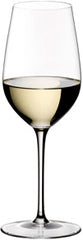
Dönnhoff's Riesling Tonschiefer Trocken is a dry still white wine that precisely expresses the identity of German Riesling. Produced in Germany, it belongs to the designation of origin. In the glass, it presents a pale straw-yellow colour, opening with a fresh bouquet of wisteria, orange blossom and unripe pear, enriched by clear mineral tones and light hints of petrol. On the palate, it is vibrant, driven by a sharp freshness combined with profound minerality. The persistent finish, characterised by almond nuances, reveals a taut and refined sip, perfectly representative of the estate's style.
Where it comes from
This wine originates from the Leistenberg vineyard, a steep site located in the Nahe region of Germany. The steep slope of the terrain encourages optimal exposure and gradual ripening of the bunches. The vines grow without any artificial irrigation, an agronomic approach that maximises the mineral expression of the soil. This territorial context gives the wine a defined structure and clean aromas, precisely capturing the essence of the cultivation terroir and ensuring an indissoluble link with the Nahe landscape.
How it is produced
Production begins with a careful manual harvest carried out in several passes to select only the best grapes. The must ferments slowly, partly spontaneously with the help of indigenous yeasts. Subsequently, the wine ages partly in stainless steel tanks, ideal for preserving aromatic tension, and partly in large traditional German oak casks, which help to broaden the flavour profile. This technique balances the vigorous mineral component and gives the wine remarkable aromatic complexity, while keeping its innate elegance intact.
History and interesting facts
The Dönnhoff Riesling Tonschiefer Trocken boasts truly fascinating origins, originating in the steep Erste Lage Leistenberg vineyards of the Nahe region. A particularly interesting feature lies in the agricultural approach adopted, as the vines grow on steep slopes excluding any artificial irrigation to preserve the pure mineral expression of the soil. This ancient method, combined with the use of indigenous yeasts during fermentation and ageing in historic German oak barrels, provides an incredible elegance celebrated by the famous score of 92 Robert Parker points.
Tasting notes
Perfume
Color
Taste
Serve at:
10 - 12 °C
Longevity:
05 - 10 years
- Hectares: 25
Read more


| Name | Donnhoff Riesling Tonschiefer Trocken 2025 |
|---|---|
| Type | White still dry |
| Denomination | Mosel-Saar-Ruwer QbA |
| Vintage | 2025 |
| Size | 0,75 l |
| Alcohol content | 12.0% by volume |
| Grape varieties | 100% Riesling |
| Country | Germany |
| Region | Mosel-Saar-Ruwer |
| Vendor | Donnhoff |
| Story | History and interesting facts The Dönnhoff Riesling Tonschiefer Trocken boasts truly fascinating origins, originating in the steep Erste Lage Leistenberg vineyards of the Nahe region. A particularly interesting feature lies in the agricultural approach adopted, as the vines grow on steep slopes excluding any artificial irrigation to preserve the pure mineral expression of the soil. This ancient method, combined with the use of indigenous yeasts during fermentation and ageing in historic German oak barrels, provides an incredible elegance celebrated by the famous score of 92 Robert Parker points. |
| Origin | Leistenberg, Nahe, Germany |
| Production technique | Manual harvest in several passes; slow fermentation, partly spontaneous using indigenous yeasts; ageing partly in stainless steel tanks and partly in large traditional German oak casks. |
| Wine making | Hand-harvesting in multiple passes; slow, partly spontaneous fermentation with indigenous yeasts; ageing partly in stainless-steel tanks and partly in large traditional German oak casks. |
| Aging | Aged partly in stainless steel tanks and partly in traditional large German oak casks. |
| Allergens | Contains sulphites |