


Donnhoff
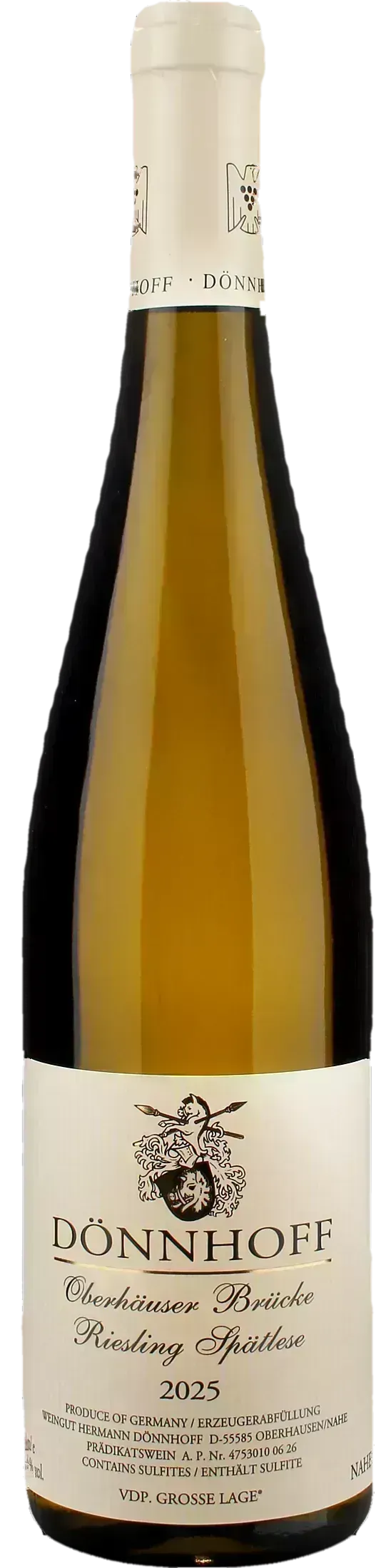
Oberhauser Brucke Riesling Spatlese 2025
| Denomination | QbA Mosel-Saar-Ruwer |
|---|---|
| Size | 0,75 l |
| Alcohol content | 8.0% by volume |
| Area | Mosel-Saar-Ruwer (Germany) |
| Grape varieties | 100% Riesling |
| Aging | Fermentation and maturation in stainless steel tanks; slow and prolonged fermentation, mostly spontaneous |
- Type of wine: Sweet white made from late-harvest Riesling grapes, produced by Dönnhoff
- Aroma and flavour: Notes of pear, yellow roses, orange blossom; lemon curd, peach and lime
- Terroir origin: Exclusive Oberhäuser Brücke vineyard, Moselle-Saar-Ruwer region
- Winemaking method: Manual harvesting in multiple stages, spontaneous fermentation with wild yeasts
- Style and pairings: Creamy and mineral, 8% ABV; ideal with fruit-based desserts and cheeses
Description
What type of wine it is
The Oberhäuser Brücke Monopol Riesling Spätlese is an exceptional sweet white wine by Dönnhoff. Crafted entirely from Riesling grapes from the prestigious Mosel-Saar-Ruwer appellation, this Spätlese fully expresses the character of the grape variety. On the palate, it is soft and creamy, balanced by a lively freshness and an elegant structure. Winemaking techniques include spontaneous fermentation and ageing in stainless steel tanks, designed to enhance the vibrant minerality and purity of the fruit.
Where it comes from
This Riesling originates in Germany, in the historic Oberhäuser Brücke monopoly vineyard, located in the renowned Mosel-Saar-Ruwer region. The terroir is characterised by a complex geological combination, with a bedrock of clay slate covered by a layer of loess. The area's unique microclimate is ideal for late ripening, giving the glass a distinctive mineral signature and allowing the development of a natural sweetness of exceptional finesse.
How it is produced
The production of this wine begins with a rigorous selective hand-harvest carried out in several passes, essential for picking the bunches at the perfect degree of ripening. Subsequently, the must undergoes a spontaneous fermentation that is slow and prolonged, carried out mainly through the action of indigenous yeasts. Finally, the maturation process takes place entirely in stainless steel tanks, a technical choice aimed at preserving the vibrant acidity and aromatic complexity of the wine intact.
History and interesting facts
The prestigious 2025 Riesling Spätlese originates from the renowned monopoly vines of the famous Oberhäuser Brücke vineyard, considered a true VDP Grosse Lage jewel. This enchanting terroir is located in the heart of the famous German wine-growing region of Moselle-Saar-Ruwer. Thanks to its exceptional microclimate, perfect for late ripening, the ancient vines rooted in clay slate manage to yield grapes of noble and fascinating sweetness, highlighting the signature of the renowned Dönnhoff winery.
Tasting notes
Perfume
Color
Taste
Serve at:
10 - 12 °C
Longevity:
05 - 10 years
- Hectares: 25
Read more


| Name | Donnhof Oberhauser Brucke Riesling Spatlese 2025 |
|---|---|
| Type | White green dessert wine dessert wine |
| Denomination | Mosel-Saar-Ruwer QbA |
| Vintage | 2025 |
| Size | 0,75 l |
| Alcohol content | 8.0% by volume |
| Grape varieties | 100% Riesling |
| Country | Germany |
| Region | Mosel-Saar-Ruwer |
| Vendor | Donnhoff |
| Story | History and interesting facts The prestigious 2025 Riesling Spätlese originates from the renowned monopoly vines of the famous Oberhäuser Brücke vineyard, considered a true VDP Grosse Lage jewel. This enchanting terroir is located in the heart of the famous German wine-growing region of Moselle-Saar-Ruwer. Thanks to its exceptional microclimate, perfect for late ripening, the ancient vines rooted in clay slate manage to yield grapes of noble and fascinating sweetness, highlighting the signature of the renowned Dönnhoff winery. |
| Origin | Oberhäuser Brücke, Mosel-Saar-Ruwer (Germany) |
| Soil composition | Shale bedrock covered by loess |
| Harvest | Late harvest |
| Fermentation | Slow and prolonged |
| Production technique | Selective manual harvesting in several passes; slow and prolonged fermentation, mostly spontaneous using indigenous yeasts; maturation in stainless steel tanks. |
| Wine making | Selective manual harvesting in several passes; slow and prolonged fermentation, mostly spontaneous with indigenous yeasts; maturation in stainless steel tanks. |
| Aging | Fermentation and maturation in stainless steel tanks; slow and prolonged fermentation, mostly spontaneous |
| Allergens | Contains sulphites |