


Dipoli Peter
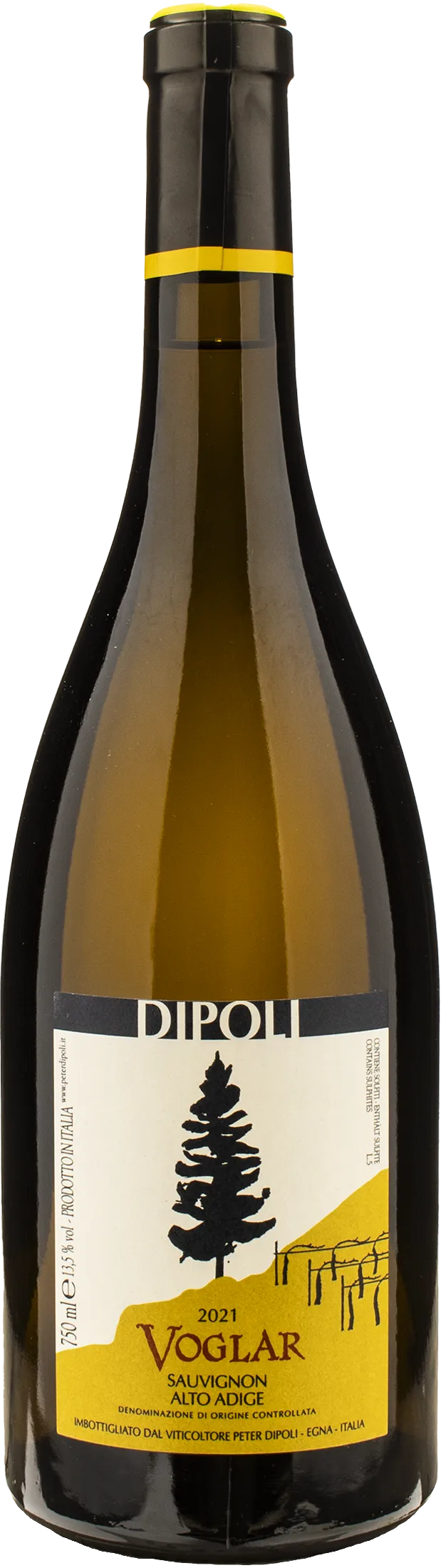
Alto Adige Sauvignon Voglar 2021
| Denomination | DOC Alto Adige Sauvignon |
|---|---|
| Size | 0,75 l |
| Alcohol content | 13.5% by volume |
| Area | Trentino Alto Adige (Italy) |
| Grape varieties | 100% Sauvignon |
| Aging | The wine remains on the fermentation lees in the barrel until May following the harvest; during the first 3 months after fermentation, bâtonnage is carried out every 10 days; it is then bottled and matured in the cellar until January of the following year before being released for sale. |
- Name and vintage: Alto Adige DOC 2021, pure Sauvignon, 0.75 l, 13.5% vol
- Fermentation: around ten days in large acacia barrels from 19 to 58 hectolitres
- Ageing: on fine lees until May, bâtonnage every ten days for three months
- Aromatic profile: tropical and vegetal notes, candied citrus fruits, mineral, persistent and savoury finish
- Pairings: serve at 12–14 °C with lean fish, scallops in leek sauce, mature cheeses
Description
What kind of wine it is
Peter Dipoli's Sauvignon Voglar is a still white wine that faithfully expresses the character of the Alto Adige region. In the glass, it appears an intense straw yellow with golden highlights. The aromatic profile reveals hints of tropical fruit, vegetal notes and candied citrus, enriched by saline nuances. On the palate, it offers a perfect balance between the soft and creamy components and a lively fresh and savoury streak, finishing with a long persistence.
Where it comes from
This Sauvignon originates from the Voglar area, a historic place name for the vineyards located in the municipality of Egna, in Alto Adige. The vines grow between five hundred and six hundred metres above sea level, benefiting from a microclimate ideal for promoting the full ripening of the grapes without compromising their natural vibrancy. The sandy soils are characterised by a strong presence of calcareous skeleton of dolomitic origin. This composition gives the wine remarkable ageing potential and a pronounced mineral imprint.
How it is produced
Production begins with the harvest, carried out between mid and late September. Alcoholic fermentation takes place in large acacia barrels. To preserve the natural gustatory tension, malolactic fermentation is not carried out. The wine rests on its lees in the same barrels until May, developing greater complexity thanks to careful periodic bâtonnage performed during the first months. The process concludes with further ageing in the cellar, allowing the wine to reach its full structural balance.
History and Curiosities
The Voglar, which means hearth in the local dialect, embodies the soul of the winery founded by Peter Dipoli in 1987 in Egna. In this extraordinary South Tyrolean region, situated between 500 and 600 metres above sea level, the traditional Schiava grape has been boldly replaced by a pure Sauvignon Blanc. This decision stems from thorough studies showing that the soil, rich in dolomitic limestone, best preserves the acidity and complex aromas of the grapes, resulting in a prestigious label awarded 95 points by Vinous for the 2021 vintage.
Awards
-
2021
 95
95/100
Vinous is the online guide from Antonio Galloni, one of the world's leading wine connoisseurs.
Tasting notes
Perfume

Color

Taste
Serve at:
12 - 14 °C
Longevity:
05 - 10 years
- Start up year: 1987
- Oenologist: Peter Dipoli
- Bottles produced: 40.000
- Hectares: 5
In the following years, the estate was enlarged by buying some new vineyard and renting others. This is how the vineyard Iugum in the nearby village of Magré, became part of the property. In the beginning the grapes were vinified at a friend’s winery. A fundamental step was to buy an ancient, rural house in Villa, in the village of Egna, that in 1998 was restored and became the estate winery. Read more


| Name | Dipoli Alto Adige Sauvignon Voglar 2021 |
|---|---|
| Type | White still |
| Denomination | Alto Adige DOC |
| Vintage | 2021 |
| Size | 0,75 l |
| Alcohol content | 13.5% by volume |
| Grape varieties | 100% Sauvignon |
| Country | Italy |
| Region | Trentino Alto Adige |
| Vendor | Dipoli Peter |
| Story | History and Curiosities The Voglar, which means hearth in the local dialect, embodies the soul of the winery founded by Peter Dipoli in 1987 in Egna. In this extraordinary South Tyrolean region, situated between 500 and 600 metres above sea level, the traditional Schiava grape has been boldly replaced by a pure Sauvignon Blanc. This decision stems from thorough studies showing that the soil, rich in dolomitic limestone, best preserves the acidity and complex aromas of the grapes, resulting in a prestigious label awarded 95 points by Vinous for the 2021 vintage. |
| Origin | Voglar, Egna (Bolzano) |
| Soil composition | Sandy soil with a strong presence of calcareous skeleton of dolomitic origin |
| Cultivation system | Single cordon (Guyot) |
| Plants per hectare | 5,000–7,500 plants per hectare |
| Harvest | Mid/late September |
| Fermentation | Approximately ten days |
| Production technique | Alcoholic fermentation in large acacia barrels; ageing on the lees with periodic bâtonnage; malolactic fermentation avoided. |
| Wine making | The alcoholic fermentation lasts about ten days and takes place in large acacia barrels ranging from 19 to 58 hl. Malolactic fermentation is avoided and the wine remains on the fermentation lees in the barrels until May following the harvest. During the first three months after fermentation, bâtonnage is carried out every ten days. The wine is then bottled and remains in the cellar until January of the following year before being released for sale. |
| Aging | The wine remains on the fermentation lees in the barrel until May following the harvest; during the first 3 months after fermentation, bâtonnage is carried out every 10 days; it is then bottled and matured in the cellar until January of the following year before being released for sale. |
| Allergens | Contains sulphites |