


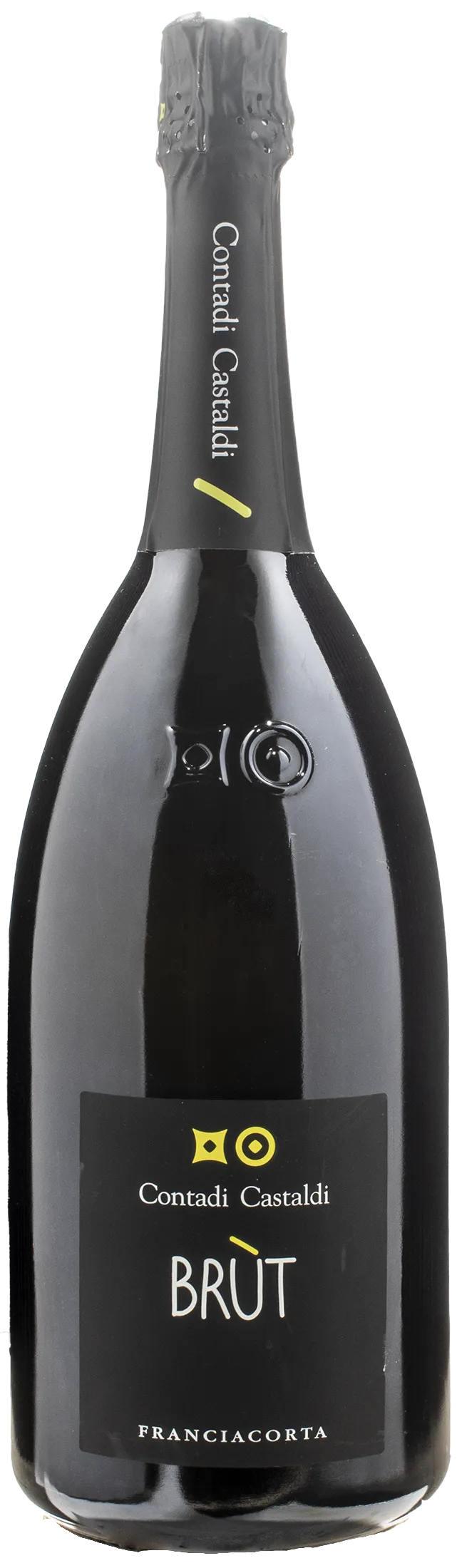
Contadi Castaldi
Franciacorta Brùt
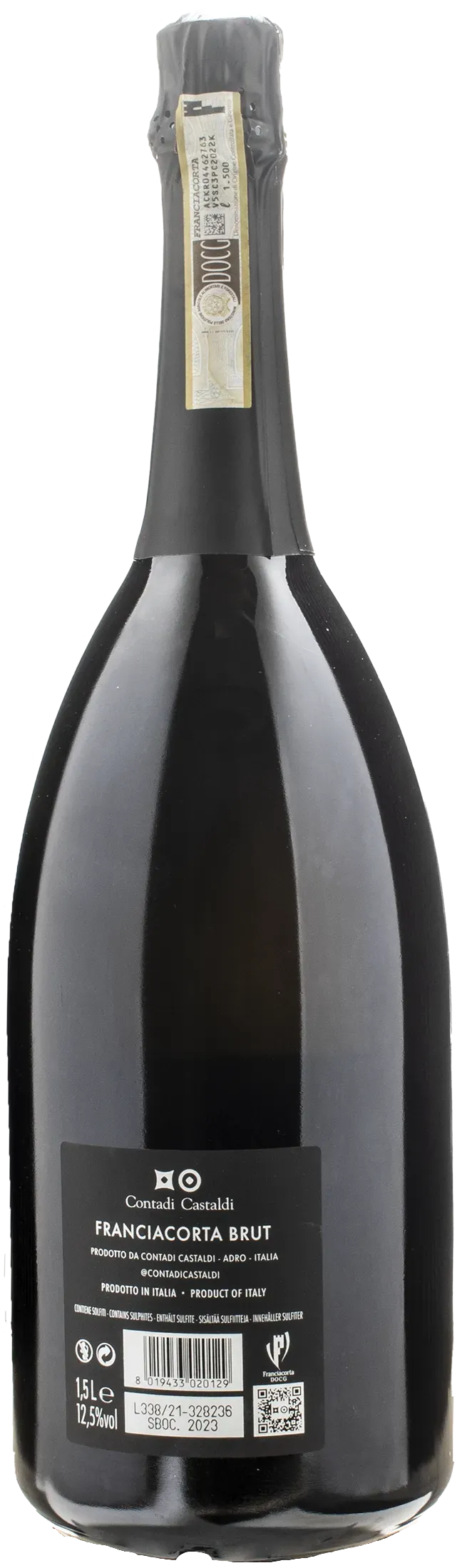
| Denomination | DOCG Franciacorta Brut |
|---|---|
| Size | 1,50 l |
| Alcohol content | 12.5% by volume |
| Area | Lombardy (Italy) |
| Grape varieties | 80% Chardonnay, 10% Pinot Bianco, 10% Pinot Nero |
| Aging | Initial ageing of 7 months, partly in stainless steel and partly in barrique; ageing on the lees for 20–26 months; further ageing after disgorgement for 3–4 months. |
- Denomination and Method: Brut sparkling wine with DOCG designation, refermented in the bottle
- Grape composition: 80% Chardonnay, 10% Pinot Noir, 10% Pinot Blanc
- Magnum Format: 1.5 litre bottle suitable for special occasions
- Ageing on the lees: 20–26 months plus 3–4 months after disgorgement
- Tasting notes: fine bubbles, citrus freshness and pronounced savouriness
Description
What kind of wine it is
Contadi Castaldi Franciacorta Brut faithfully expresses the character of Franciacorta. This blend combines the expressiveness of Chardonnay, the structure of Pinot Noir and the elegance of Pinot Blanc. Produced using the Traditional Method, it offers a taut and vertical profile. On the palate, a clear savoury streak emerges, accompanied by a gentle structure, while the sip finishes with a pleasant citrus persistence and a fine perlage.
Where it comes from
The grapes grow in Franciacorta, south of Lake Iseo, where the fruit benefits from a mild climate. In this area, Monte Alto protects the vineyards from northern winds and lowland fogs. The soils are composed of marine sedimentary rocks, rich in limestone, marl and sandstone. This specific geological matrix directly influences the wine, giving it a deep mineral texture and perfectly balanced freshness.
How it is produced
The manual harvest is followed by a gentle pressing and static cold settling of the must. After the addition of selected yeasts, fermentation takes place in stainless steel with partial malolactic fermentation. The wine rests for seven months between stainless steel containers and barrels. Once stabilised, it undergoes secondary fermentation in the bottle according to the Traditional Method, with a long ageing on the lees for between twenty and twenty-six months. The process concludes with disgorgement and a final rest before release.
History and Curiosities
Born in 1987 in Adro, Contadi Castaldi Franciacorta Brut is the expression of a prestigious winemaking tradition, cultivated at the foot of Monte Alto on soils rich in marine sedimentary rocks. This outstanding sparkling wine, belonging to the first Italian classic method denomination to be awarded DOCG status, embodies the essence of a terroir tempered by the mild climate of Lake Iseo. Acclaimed by critics with 93 points from James Suckling and 90 points from Robert Parker, it offers the palate a seductive citrus freshness, a symbol of the renowned Lombard winemaking expertise.
Awards
-
 93
93/100
James Suckling is an influential American wine critic and journalist who worked at Wine Spectator for 30 years. He left the magazine in 2010 to start his own website and guidebook (JamesSuckling.com). He specialises in Italian and Bordeaux wines.
-
 90
90/100
The prestigious international wine guide from the renowned Robert Parker, the world's most experienced and trusted wine taster.
-
 2
2One of the most prestigious wine guides in Italy.
Tasting notes

Perlage
Perfume

Color
Taste
Serve at:
06 - 08 °C
Longevity:
05 - 10 years
- Start up year: 1987
- Oenologist: Gian Luca Uccelli
- Bottles produced: 1.600.000
- Hectares: 174
Satèn means silkiness, a sensation that transferred from touch to the palate and can be rendered with creaminess even though this doesn’t convey the freshness of Satèn Contadi Castaldi. How can we describe it? Maybe by taking a step back and staying with the expression "like silk". Anything that is able to evoke the full-bodied lightness, the depth of thought, the princely humour that is as delicate as it is politely fickle, a graceful smile or a gesture that sows questions.
So, we're almost there. If we squeeze into a single image the impression of freshness, softness, immediacy, charging it with the absolute yellow of gold, we cannot but define what is young, who or who feels young. Satèn evokes that malice still lacking in contrasts, a free richness, the ease of wanting with joy. Read more


| Name | Contadi Castaldi Franciacorta Brut Magnum |
|---|---|
| Type | White brut |
| Denomination | Franciacorta DOCG |
| Size | 1,50 l |
| Alcohol content | 12.5% by volume |
| Grape varieties | 80% Chardonnay, 10% Pinot Bianco, 10% Pinot Nero |
| Country | Italy |
| Region | Lombardy |
| Vendor | Contadi Castaldi |
| Story | History and Curiosities Born in 1987 in Adro, Contadi Castaldi Franciacorta Brut is the expression of a prestigious winemaking tradition, cultivated at the foot of Monte Alto on soils rich in marine sedimentary rocks. This outstanding sparkling wine, belonging to the first Italian classic method denomination to be awarded DOCG status, embodies the essence of a terroir tempered by the mild climate of Lake Iseo. Acclaimed by critics with 93 points from James Suckling and 90 points from Robert Parker, it offers the palate a seductive citrus freshness, a symbol of the renowned Lombard winemaking expertise. |
| Origin | Franciacorta (province of Brescia), south of Lake Iseo, Adro |
| Climate | Mild |
| Soil composition | Marine sedimentary rocks: limestones, marls and sandstones |
| Cultivation system | Guyot and Casarsa |
| Plants per hectare | 3000-5000 plants per hectare |
| Yield per hectare | 10,000 kg/hectare (100 quintals of grapes/hectare) |
| Harvest | Between the end of August and the beginning of September |
| Fermentation | 20 days |
| Production technique | Metodo classico (fermentazione in bottiglia) |
| Wine making | Gentle pressing followed by static cold settling; inoculation with selected yeasts; 20-day fermentation in stainless steel (AISI 316) with partial malolactic fermentation; initial ageing for 7 months partly in steel and partly in barrique; cold stabilisation, bottling and prise de mousse in bottle (traditional method) with ageing on the lees for 20–26 months; disgorgement and further ageing for 3–4 months. |
| Aging | Initial ageing of 7 months, partly in stainless steel and partly in barrique; ageing on the lees for 20–26 months; further ageing after disgorgement for 3–4 months. |
| Allergens | Contains sulphites |