


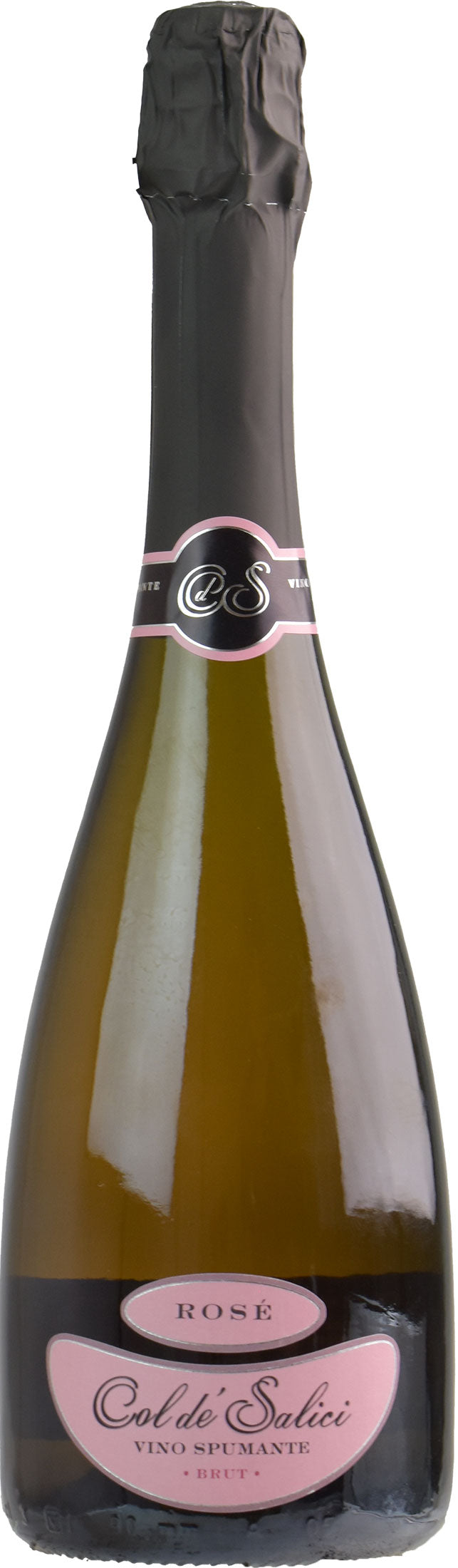
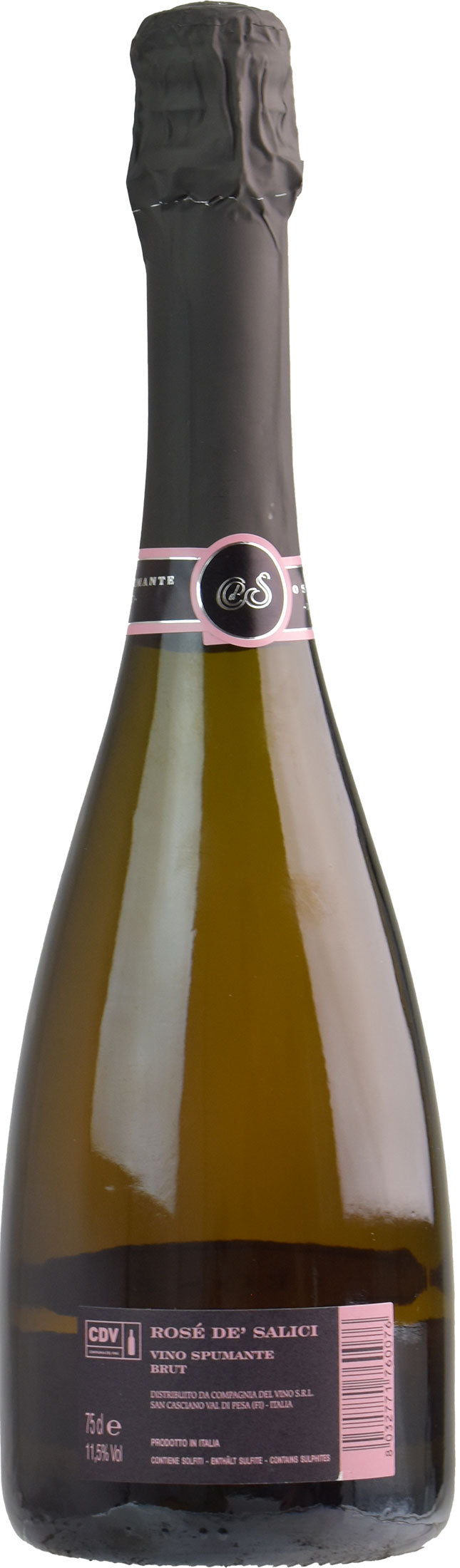
Col de' Salici
Brut Rosé
| Denomination | VSQ |
|---|---|
| Size | 0,75 l |
| Alcohol content | 11.5% by volume |
| Area | Veneto (Italy) |
| Grape varieties | 100% Raboso Piave |
| Aging | Isobaric bottling (under pressure) with low doses of SO2; after 30 days of resting in the bottle, the wine is ready to be marketed. |
- Grape varieties and type: Glera and Raboso, Brut rosé sparkling wine 11.5% vol, Valdobbiadene DOCG
- Sparkling technique: Charmat method in autoclave to preserve freshness and aromas
- Aromas: Dog rose, wild strawberry, redcurrant, white flowers and a light citrus note
- Flavour and bubbles: Dry and fresh, fine and persistent bubbles, elegant and spicy finish
- Temperature and pairings: 6–8 °C; ideal with aperitifs, raw seafood, sushi and fresh cheeses
Description
What kind of wine it is
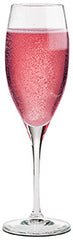
Col De’ Salici Brut Rosé is a sparkling rosé wine by Col De’ Salici, made from a blend of Glera and Raboso grapes. An expression of the Valdobbiadene Superiore region, it stands out for its clear bouquet of dog rose, white flowers, wild strawberry and redcurrant. The prise de mousse using the Charmat method preserves the immediate purity of the grapes’ original aromas. On the palate, it is dry and fresh, enlivened by a fine and persistent perlage that accompanies a delicate savouriness towards an elegantly spiced finish.
Where it comes from
This sparkling wine is produced in Veneto, in the Piave area historically linked to Valdobbiadene. The vineyards are situated at around two hundred metres above sea level and rest on alluvial soils, rich in clay and calcareous components. This specific geological formation imparts a smooth texture and a subtle minerality to the wine. The terroir gives the glass a clean profile, where the structural balance merges with a vibrant and well-defined freshness.
How it is produced
After manual harvesting, the grapes undergo gentle pressing. Maceration on the skins at low temperatures allows for a delicate extraction of colour and varietal aromas. Glera and Raboso ferment separately in stainless steel tanks before being blended with care. The second fermentation takes place in a pressurised tank at a controlled temperature, a crucial process for preserving the aromatic liveliness. A brief final maturation stabilises the fresh structure and ensures a pleasant overall harmony.
History and Curiosities
Founded in Veneto by the Notari family, the Col de’ Salici winery expresses the authenticity of its territory through refined sparkling wines.
Tasting notes
Perlage

Perfume

Color
Taste
Serve at:
06 - 08 °C
Longevity:
03 - 05 years
- Start up year: 1997
- Oenologist: Saverio Notari
- Bottles produced: 600.000
- Hectares: 32
High-level packaging combines with quality in production. First, the grapes are selected only in the best production areas of the Conegliano Valdobbiadene DOC and DOCG. Then, the vinification occurs with partial cryomaceration, enhancing the grape variety's fragrance and fruity sensation. Finally, the bottling is carried out every 40 days to guarantee the market a product that is always fresh. Read more



| Name | Col De' Salici Brut Rosè |
|---|---|
| Type | Rosé charmat method sparkling wine brut |
| Denomination | VSQ |
| Size | 0,75 l |
| Alcohol content | 11.5% by volume |
| Grape varieties | 100% Raboso Piave |
| Country | Italy |
| Region | Veneto |
| Vendor | Col de' Salici |
| Story | History and Curiosities Founded in Veneto by the Notari family, the Col de’ Salici winery expresses the authenticity of its territory through refined sparkling wines. |
| Origin | North-east Italy, near the Piave area |
| Climate | Vineyard altitude: 200 m a.s.l. |
| Soil composition | Of alluvial origin, predominantly clayey with a calcareous tendency. |
| Cultivation system | Spurred cordon, Guyot and Sylvoz |
| Plants per hectare | 2300 plants/ha |
| Yield per hectare | 150 quintals/ha |
| Harvest | Hand-picked after the second week of September |
| Fermentation temperature | Below 18 °C |
| Production technique | Charmat method (autoclave fermentation) |
| Wine making | Pressing of hand-picked grapes brought to the winery; rosé vinification with skin maceration at a controlled temperature (below 10°C) for 12–24 hours; decantation and fermentation with the temperature kept below 18°C to preserve the aromas; secondary fermentation at a low temperature in an autoclave using the Charmat method after clarification of the base wine. |
| Aging | Isobaric bottling (under pressure) with low doses of SO2; after 30 days of resting in the bottle, the wine is ready to be marketed. |
| Total acidity | 5.5 gr/L |
| Allergens | Contains sulphites |