


Claudio Mariotto
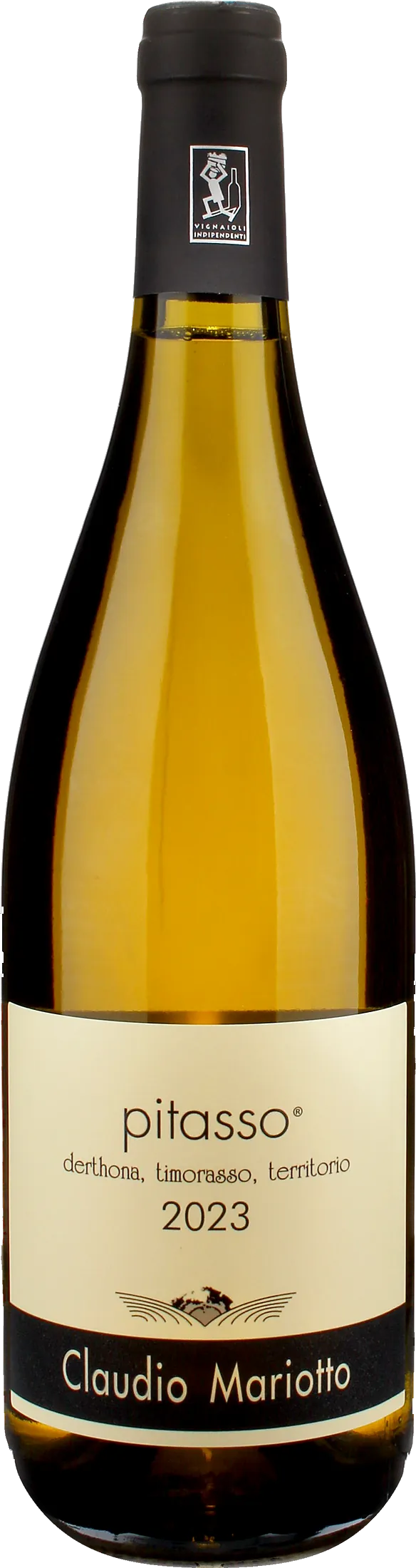
Colli Tortonesi Derthona Timorasso Pitasso 2023
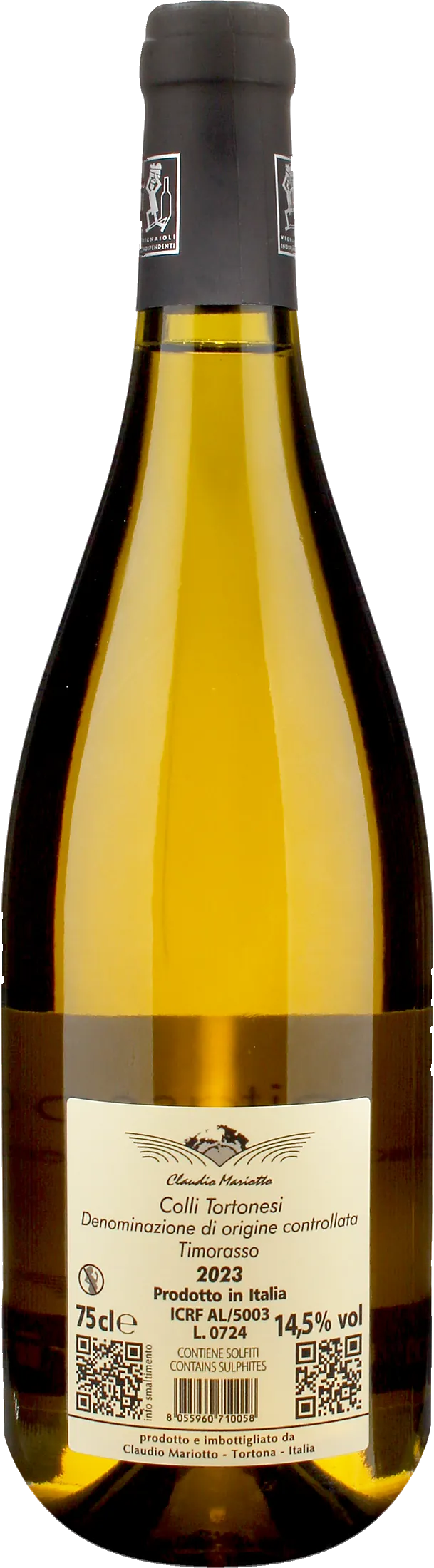
| Denomination | DOC Colli Tortonesi Timorasso |
|---|---|
| Size | 0,75 l |
| Alcohol content | 14.5% by volume |
| Area | Piedmont (Italy) |
| Grape varieties | 100% Timorasso |
| Aging | Ageing on the fine lees (noble lees) for at least 10 months. |
- Type and grape: Dry white DOC wine from 100% Timorasso grapes, 14.5% vol.
- Origin: Tortona Hills between Vho and Sarezzano, altitude between 250 and 300 metres
- Aromas: Notes of chamomile, rose, verbena, plum, citrus and liquorice.
- Vinification: Gentle pressing and ageing for 10 months on fine lees.
- Character and serving: Savoury taste with hints of flint; serve at 6-8 °C.
Description
The type of wine
Claudio Mariotto's Pitasso Derthona Colli Tortonesi is a still white wine from Piedmont with Controlled Designation of Origin made from Timorasso grapes, aged on fine lees. It expresses a silky structure, balanced by lively freshness and marked acidic tension. The olfactory profile combines chamomile and rose with notes of plum, citrus and liquorice. On the palate, it offers a savoury and enveloping sip, guided by a clear mineral imprint, with a long and persistent finish enriched by nuances of walnut, toasted almond and a hint of flint.
Where it comes from
This white wine is born in Piedmont, in the heart of the Colli Tortonesi, in the Derthona sub-zone. The vineyards stretch between Vho and Sarezzano at about 300 metres above sea level, with south-east exposure. The Apennine microclimate, mitigated by the marine influence, favours the growth of Guyot-trained vines. The roots sink into calcareous-clay soils, which are fundamental for giving the wine the vibrant freshness and marked savoury tension that provide an authentic interpretation of the territory.
How it is produced
The manual harvest protects the integrity of the Timorasso bunches. In the cellar, the process begins with soft pressing and settling, followed by fermentation at a controlled temperature to preserve the expressiveness of the aromas. The cycle is completed with a prolonged ageing on the fine lees for at least ten months. This technical choice enriches the wine with glyceric density and structural complexity, guaranteeing gustatory persistence and a remarkable evolutionary potential.
History and interesting facts
Founded in 1920, the Claudio Mariotto winery is a leading figure in the revival of Timorasso in the Tortona Hills. Thanks to the careful management of historic vineyards over forty years old located in Vho and Sarezzano, this skilled independent winemaker brings the Pitasso 2023 to life. The meticulous ageing for at least ten months on the noble lees enhances its bold minerality, ensuring an exceptional capacity to evolve over time, a quality awarded the prestigious 5 Bunches (Grappoli) by Bibenda.
Awards
-
2023
 5
5Italian Sommelier Foundation (FIS) guide This has been one of the most prestigious wine guides in Italy for over 10 years.
-
2023
 4
4Italian Sommelier Association (AIS) guide
Tasting notes

Perfume

Color

Taste
Serve at:
12 - 14 °C
Longevity:
05 - 10 years

- Start up year: 1920
- Oenologist: Claudio Mariotto
- Bottles produced: 150.000
- Hectares: 54
Our vineyards enjoy a favourable microclimate as they are located close to the Apennines overlooking the Po Valley and influenced by the proximity of the sea, which is only 60 km away as the crow flies. We define our method of cultivation as common sense agriculture, without the use of pesticides, with pruning and leafing that respects the vines.
Claudio Mariotto in the early 1990s, together with a few other local winegrowers, believed in an abandoned indigenous vine like Timorasso to produce a great Piedmontese white wine for ageing.
Thanks to his daily life in contact with the vineyard, Claudio decided to give value to his work by bottling the wine he produced. Read more


| Name | Claudio Mariotto Colli Tortonesi Derthona Timorasso Pitasso 2023 |
|---|---|
| Type | White green still |
| Denomination | Colli Tortonesi DOC |
| Vintage | 2023 |
| Size | 0,75 l |
| Alcohol content | 14.5% by volume |
| Grape varieties | 100% Timorasso |
| Country | Italy |
| Region | Piedmont |
| Vendor | Claudio Mariotto |
| Story | History and interesting facts Founded in 1920, the Claudio Mariotto winery is a leading figure in the revival of Timorasso in the Tortona Hills. Thanks to the careful management of historic vineyards over forty years old located in Vho and Sarezzano, this skilled independent winemaker brings the Pitasso 2023 to life. The meticulous ageing for at least ten months on the noble lees enhances its bold minerality, ensuring an exceptional capacity to evolve over time, a quality awarded the prestigious 5 Bunches (Grappoli) by Bibenda. |
| Origin | Vho and Sarezzano (province of Alessandria, Piedmont, Italy) |
| Soil composition | Calcareous-clayey |
| Cultivation system | Guyot |
| Plants per hectare | 4,000 plants per hectare |
| Yield per hectare | Approximately 5,000 kg per hectare |
| Harvest | Late September - early October |
| Fermentation temperature | At a controlled temperature |
| Production technique | Soft pressing, settling, temperature-controlled fermentation; ageing on fine lees (noble lees) for at least 10 months. |
| Wine making | Manual harvesting between late September and early October; soft pressing and settling; fermentation at a controlled temperature; ageing on the fine lees (noble lees) for at least 10 months. |
| Aging | Ageing on the fine lees (noble lees) for at least 10 months. |
| Allergens | Contains sulphites |