


Cianfagna
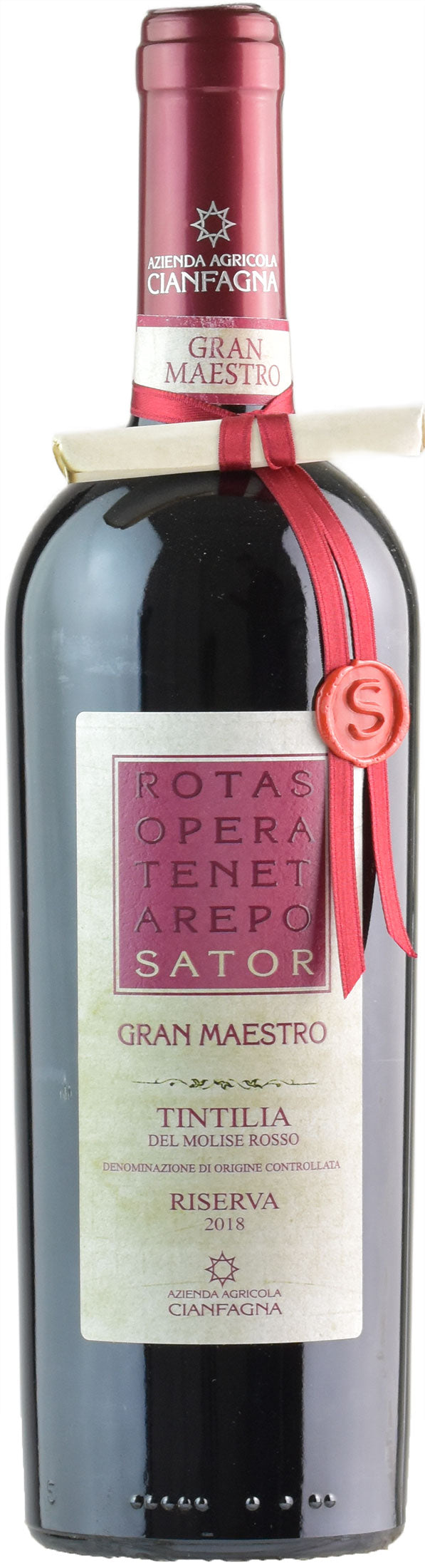
Sator Gran Maestro Tintilia Riserva 2018
| Denomination | DOC Tintilia del Molise Rosso |
|---|---|
| Size | 0,75 l |
| Alcohol content | 15.0% by volume |
| Area | Molise (Italy) |
| Grape varieties | 100% Tintilia |
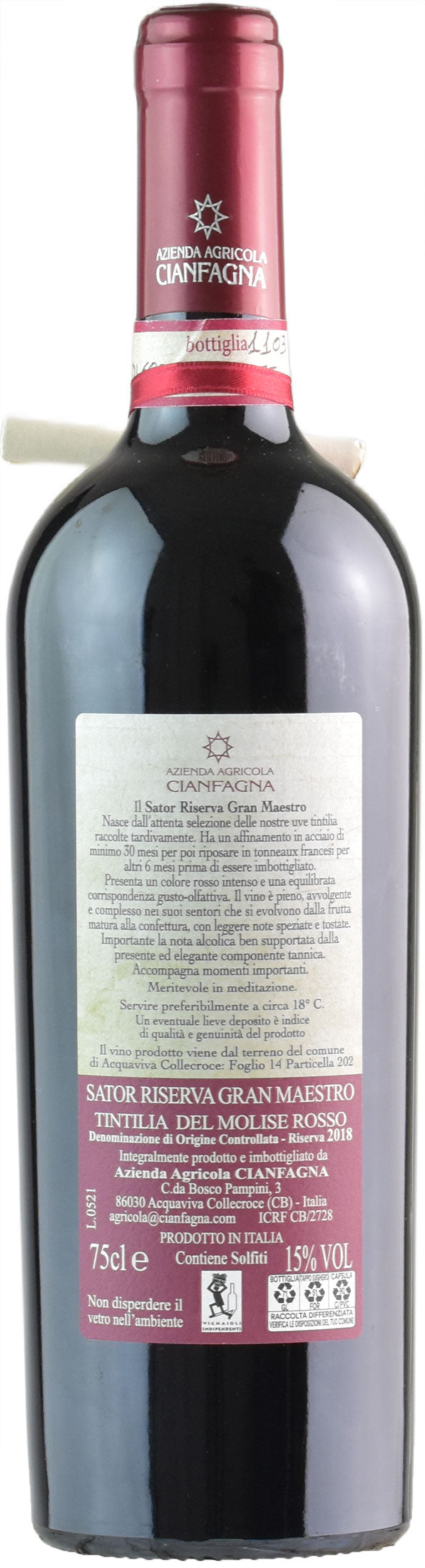
| Aging | Minimum ageing of 30 months in steel, then 6 months in French tonneaux before bottling; followed by at least 3 months of ageing in the bottle. |
- Grape variety and designation: 100% Tintilia, Tintilia del Molise Rosso Riserva DOC, vintage 2018
- Vinification: traditional with maceration on skins and stems; only free-run must used
- Ageing: at least 30 months in stainless steel, 6 months in French oak barrels, 3 months in bottle
- Aromatic profile: ripe fruit and jam, with spicy notes and light toasting
- Serving and pairings: decant for 1 hour at 18-20°C; excellent with meats and mature cheeses
Description
What kind of wine it is
Sator Gran Maestro Tintilia Riserva is a still red wine from Cianfagna, a pure expression of the Tintilia grape variety. Recognised under the Tintilia del Molise Riserva designation, it reveals a deep and intense colour. On the nose, aromas of ripe fruit and jam emerge, enriched by spicy and toasted notes. The palate is enveloping, with a balance guided by elegant tannins. Ideal as a meditation wine, it enhances mature cheeses, structured meats and cuts of pork. Decanting for an hour is recommended, serving at a temperature of 18-20 degrees.
Where it comes from
The grapes are grown in Molise, within a five-hectare estate where the soil has a partly clay and partly calcareous profile, essential for giving the wine its structural backbone. The vines are trained on trellises with spur pruning, using targeted interventions to ensure canopy balance. The natural resilience of the plants supports an agricultural approach based on organic and sustainable practices, excluding invasive treatments and resulting in a production attentive to the peculiarities of the territory.
How it is produced
The process begins in autumn with a manual harvest, leaving some bunches to wither on the vine for a late harvest. Fermentation continues with a long maceration in contact with skins and stalks, fundamental for varietal extraction. Only the free-run must then undergoes malolactic fermentation at a controlled temperature. Maturation requires at least thirty months in steel, followed by six months in French barrels and three in glass. The absence of final filtration preserves the wine's gustatory integrity intact.
History and Curiosities
Founded in 1860, Cianfagna winery celebrates its Molisan roots by producing single-varietal wines since 1999. The Sator Gran Maestro Tintilia Riserva is born from meticulous care in the vineyard, where some bunches are left to wither on the vine for a late harvest in November. This exceptional wine, produced in a limited edition of around 10,000 bottles, is aged for a long time in both steel and French tonneaux. The decision to use a completely unfiltered process preserves its integrity and authentic organoleptic characteristics, offering a rich and complex sip.
Tasting notes

Perfume

Color

Taste
Serve at:
18 - 20 °C
Longevity:
15 - 25 years
Decanting time:
1 hour

- Start up year: 1999
- Oenologist: Leonardo Seghetti
- Bottles produced: 10.000
- Hectares: 5
His goal has since been to valorize and innovate the family tradition by making difficult and courageous choices.
Selections looking for a quality wine, a pure, genuine, unique wine, the result of the transformation of sunflower grapes, healthy and passionate.
The meticulous control of all stages of production, from the vineyard to the bottle design, and the beautiful and evocative setting of the unspoiled Molise hills, suggests the harmony of the whole. Read more


| Name | Cianfagna Sator Gran Maestro Tintilia Riserva 2018 |
|---|---|
| Type | Red green still |
| Denomination | Tintilia del Molise DOC |
| Vintage | 2018 |
| Size | 0,75 l |
| Alcohol content | 15.0% by volume |
| Grape varieties | 100% Tintilia |
| Country | Italy |
| Region | Molise |
| Vendor | Cianfagna |
| Story | History and Curiosities Founded in 1860, Cianfagna winery celebrates its Molisan roots by producing single-varietal wines since 1999. The Sator Gran Maestro Tintilia Riserva is born from meticulous care in the vineyard, where some bunches are left to wither on the vine for a late harvest in November. This exceptional wine, produced in a limited edition of around 10,000 bottles, is aged for a long time in both steel and French tonneaux. The decision to use a completely unfiltered process preserves its integrity and authentic organoleptic characteristics, offering a rich and complex sip. |
| Origin | Molise |
| Soil composition | Partly clayey and partly calcareous |
| Harvest | First two weeks of October (with some bunches harvested late in November) |
| Production technique | Traditional red fermentation with maceration in contact with skins and stems; unfiltered |
| Wine making | Manual harvest during the first two weeks of October (with selection in the vineyard and some bunches left to wither on the vine for late harvest in November); crushing; traditional red fermentation with maceration in contact with skins and stems; extraction of only the free-run must; malolactic fermentation at controlled temperature; vinification for 18–24 months; minimum ageing of 30 months in stainless steel, then 6 months in French tonneaux; at least 3 months of bottle ageing; unfiltered. |
| Aging | Minimum ageing of 30 months in steel, then 6 months in French tonneaux before bottling; followed by at least 3 months of ageing in the bottle. |
| Dry extract | 35.0 gr/L |
| Year production | 10000 bottles |
| Allergens | Contains sulphites |