


Ciacci Piccolomini d'Aragona
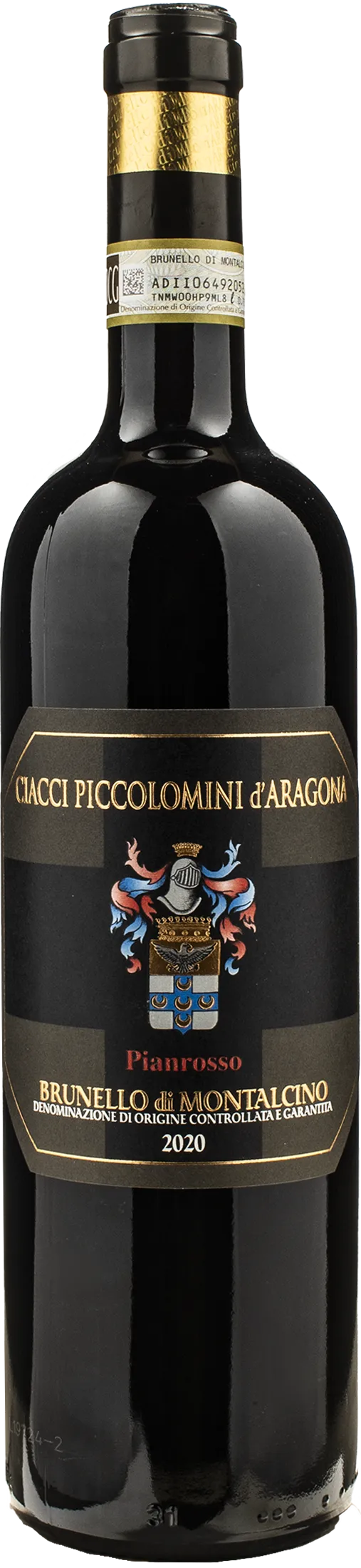
Brunello Montalcino Pianrosso 2020
| Denomination | DOCG Brunello di Montalcino |
|---|---|
| Size | 0,75 l |
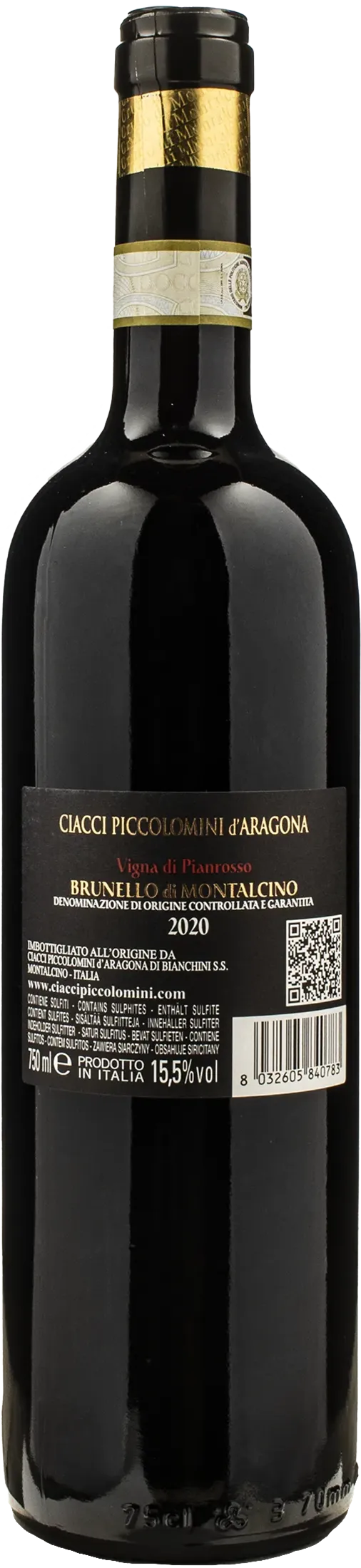
| Alcohol content | 15.5% by volume |
| Area | Tuscany (Italy) |
| Grape varieties | 100% Sangiovese |
| Aging | In Slavonian oak barrels from 7.5 to 62 hl for about 3 years, followed by bottle ageing for more than 8 months. |
- Grape variety and vintage: 100% Sangiovese, Brunello di Montalcino DOCG 2020 designation
- Pianrosso Vineyard: grapes from a single vineyard in Castelnuovo dell’Abate at 240-360 m
- Vinification: fermentation in steel and concrete, 36 months in Slavonian oak
- Tasting notes: ruby colour with garnet highlights, red fruit and spices, long finish
- Serving: at 18-20°C, decant for 1 hour. Ideal with roasts, game and cheeses
Description
What kind of wine it is
The Ciacci Piccolomini Brunello di Montalcino Pianrosso from Ciacci Piccolomini d’Aragona is made from carefully selected Sangiovese grapes. On the nose, it reveals a complex aromatic profile, with notes of ripe red berries, flowers and dark spices. The palate is warm and smooth, supported by a full-bodied and structured character. The pronounced tannins are balanced by vibrant freshness and a savoury component, leading to a long and persistent finish. This solid structure ensures remarkable ageing potential.
Where it comes from
Production takes place in Montalcino, in the Castelnuovo dell’Abate area, where the grapes come from the exclusive Pianrosso single vineyard. The vines grow between 240 and 360 metres above sea level on medium-textured soils, rich in marl and galestro of Eocene origin. This combination of altitude and geological composition of the soil results in a defined tannic structure in the glass, ensuring excellent structural balance and a sip deeply connected to the territory.
How it is produced
Fermentation takes place at a controlled temperature in stainless steel and vitrified cement tanks. Maturation lasts about three years in Slavonian oak barrels, essential steps for the integration and smoothness of the wine, followed by a long period of bottle ageing. Gastronomically ideal with roast red meats, game and mature cheeses, it reaches its optimal expression if served at the correct temperature. Decanting for an hour in large glasses allows its elegant and layered aromatic spectrum to fully unfold.
History and Curiosities
Linked to the historic properties of the Bishop's Palace, acquired in 1877, Brunello di Montalcino Pianrosso represents the pinnacle of quality for the Ciacci Piccolomini d’Aragona estate. Produced exclusively in the best vintages from Sangiovese grapes, it matures for three years in Slavonian oak barrels to develop elegant tannins and a complex bouquet. This iconic label, now meticulously managed by Paolo and Lucia Bianchini, boasts exceptional ageing potential and was awarded 94 points by Vinous in 2020.
Awards
-
2020
 4
4Italian Sommelier Foundation (FIS) guide This has been one of the most prestigious wine guides in Italy for over 10 years.
-
2020
 93
93/100
Decanter is a wine and lifestyle magazine, published monthly in around 90 countries. The magazine includes industry news, classic guides and advice on wine and spirits.
-
2020
 2
2This guide is highly respected and offers the most comprehensive review of Italian wines. It has a long tradition and is based on blind tastings carried out by over 100 experts.
-
2020
 98
98/100
James Suckling is an influential American wine critic and journalist who worked at Wine Spectator for 30 years. He left the magazine in 2010 to start his own website and guidebook (JamesSuckling.com). He specialises in Italian and Bordeaux wines.
-
2020
 93
93/100
The prestigious international wine guide from the renowned Robert Parker, the world's most experienced and trusted wine taster.
-
2020
 94
94/100
Vinous is the online guide from Antonio Galloni, one of the world's leading wine connoisseurs.
-
2020
 92
92/100
Wine spectator is the most influential wine guide on the internet.
Tasting notes

Perfume

Color

Taste
Serve at:
18 - 20 °C
Longevity:
10 - 15 years
Decanting time:
1 hour

- Start up year: 1985
- Oenologist: Paolo Vagaggini
- Bottles produced: 350.000
- Hectares: 55
In 1985, with the extinction of the family line, Giuseppe Bianchini took over the property. Giuseppe Bianchini, who had already worked in the estate for many years, applied a new and avant-garde production philosophy for those years, developing and increasing production, wine quality and opening up the export of our products to the world. Unfortunately, Giuseppe passed away in February 2004, leaving the task of continuing his work to his children Paolo and Lucia. Read more


| Name | Ciacci Piccolomini Brunello Montalcino Pianrosso 2020 |
|---|---|
| Type | Red still |
| Denomination | Brunello di Montalcino DOCG |
| Vintage | 2020 |
| Size | 0,75 l |
| Alcohol content | 15.5% by volume |
| Grape varieties | 100% Sangiovese |
| Country | Italy |
| Region | Tuscany |
| Vendor | Ciacci Piccolomini d'Aragona |
| Story | History and Curiosities Linked to the historic properties of the Bishop's Palace, acquired in 1877, Brunello di Montalcino Pianrosso represents the pinnacle of quality for the Ciacci Piccolomini d’Aragona estate. Produced exclusively in the best vintages from Sangiovese grapes, it matures for three years in Slavonian oak barrels to develop elegant tannins and a complex bouquet. This iconic label, now meticulously managed by Paolo and Lucia Bianchini, boasts exceptional ageing potential and was awarded 94 points by Vinous in 2020. |
| Origin | Montalcino (Siena), Toscana, Italia |
| Soil composition | Medium-textured soils and galestro of Eocene origin |
| Production technique | Fermentation in stainless steel containers and vitrified cement tanks at controlled temperature; ageing in Slavonian oak barrels |
| Wine making | Fermentation in stainless steel containers and vitrified cement tanks at a controlled temperature using cooling jackets and immersion plates. |
| Aging | In Slavonian oak barrels from 7.5 to 62 hl for about 3 years, followed by bottle ageing for more than 8 months. |
| Allergens | Contains sulphites |