


Chateau Gruaud Larose
Sarget de Gruaud Larose Saint Julien 2021
| Denomination | AOC Saint-Julien |
|---|---|
| Size | 0,75 l |
| Alcohol content | 12.5% by volume |
| Area | Bordeaux (France) |
| Grape varieties | 61% Cabernet Sauvignon, 29% Merlot, 7% Cabernet Franc, 3% Petit Verdot |
| Aging | 14 months in French oak barrels (15% new) |
- Name and alcohol content: Saint-Julien AOC 2021, Bordeaux; alcohol 12.5% vol
- Grape composition: Cabernet Sauvignon with Merlot, Cabernet Franc and Petit Verdot
- Vinification: maceration for 20-30 days; fermentation at 24-26°C with controlled extraction
- Ageing in wood: 14 months in French oak (15% new) to maintain freshness and finesse
- Tasting notes and pairings: blackberry and violet; smooth tannins; ideal with roasts and cheeses
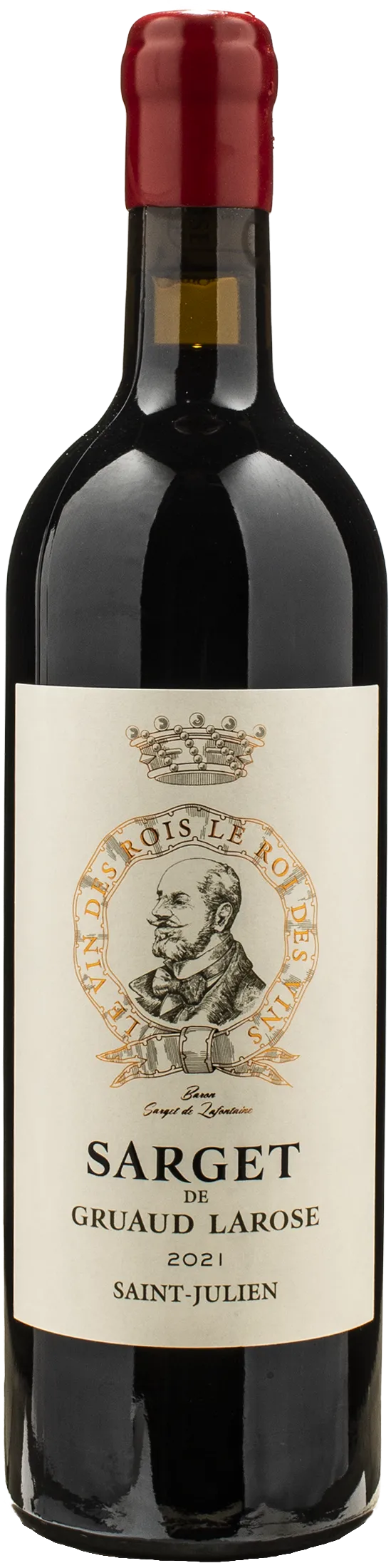
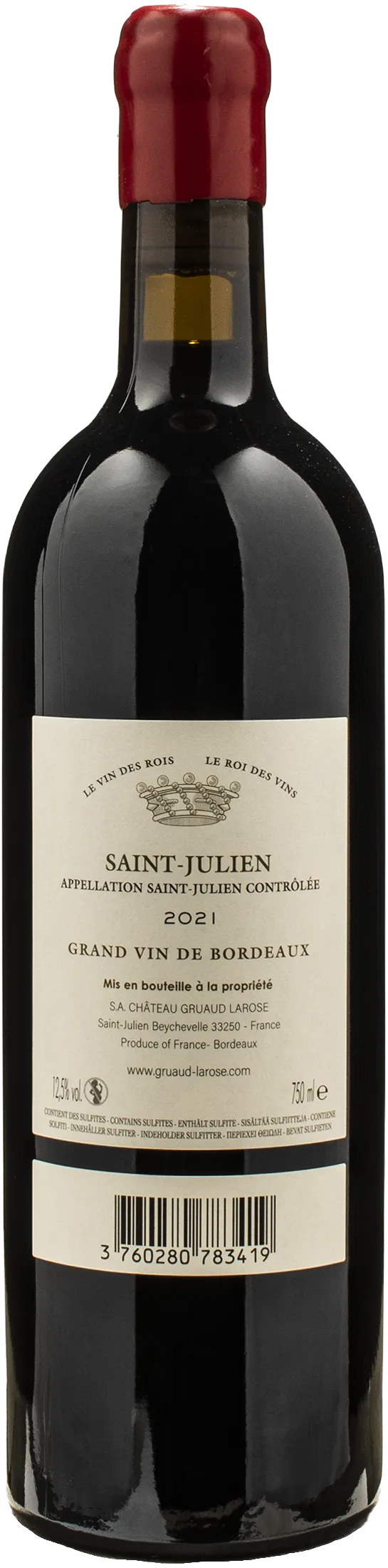
Description
What kind of wine it is
Sarget de Gruaud Larose is a red wine produced in Saint-Julien, in the Bordeaux region. Created from a meticulous blend of Cabernet Sauvignon, Merlot, Cabernet Franc and Petit Verdot, it expresses a classic and elegant character. On the nose, it develops aromas of red and black fruits, such as cherry, blackberry and blackcurrant, enriched by delicate floral notes of violet and hints of cedar, tobacco and spices. On the palate, it is taut, characterised by polished and finely defined tannins that ensure a harmonious drinking experience. The sip stands out for its juicy and fresh attack, culminating in a refined finish.
Where it comes from
This wine originates from the vineyards of the grand vin of the Chateau Gruaud Larose estate. The grapes come from vines specifically selected to favour immediacy and softness of the fruit. The soil consists of deep Garonne gravel, ancient deposits from the early Quaternary that guarantee ideal drainage. This precise geological formation defines one of the most prized terroirs of the entire area, capable of imparting pronounced gustatory tension and vibrant freshness. The high planting density optimally supports the structural balance and aromatic concentration of the bunches.
How it is produced
Vinification makes use of large wooden and concrete vats, encouraging strictly controlled extraction. The temperature-controlled maceration lasts between twenty and thirty days, allowing the must to remain in contact with the skins to select only the most elegant tannic component. Malolactic fermentation takes place alongside the alcoholic fermentation. The process concludes with ageing in French oak barrels for fourteen months. The moderate use of new wood helps to preserve the aromatic profile and the purity of the fruit, guiding the wine towards remarkable longevity.
History and Curiosities
The second wine of the illustrious Château Gruaud Larose, Sarget de Gruaud Larose 2021 embodies the refined elegance of Saint-Julien, born from the ancient and deep gravel soils of the Garonne. This vintage, characterised by a cooler climate, offers a vibrant purity, enhancing intense aromas of crisp red fruits, wild blackberry and violet. Thanks to meticulous vinification and 14 months of ageing in French oak, the tannins are exquisitely smooth, ensuring a harmonious sip and a formidable ageing potential until 2050.
Awards
-
2021
 92
92/100
Decanter is a wine and lifestyle magazine, published monthly in around 90 countries. The magazine includes industry news, classic guides and advice on wine and spirits.
-
2021
 89
89/100
The prestigious international wine guide from the renowned Robert Parker, the world's most experienced and trusted wine taster.
-
2021
 91
91/100
Vinous is the online guide from Antonio Galloni, one of the world's leading wine connoisseurs.
Tasting notes

Perfume

Color

Taste
Serve at:
16 - 18 °C
Longevity:
10 - 15 years
Decanting time:
1 hour




| Name | Chateau Gruaud Larose Sarget de Gruaud Larose Saint Julien 2021 |
|---|---|
| Type | Red still |
| Denomination | Saint-Julien AOC |
| Vintage | 2021 |
| Size | 0,75 l |
| Alcohol content | 12.5% by volume |
| Grape varieties | 61% Cabernet Sauvignon, 29% Merlot, 7% Cabernet Franc, 3% Petit Verdot |
| Country | France |
| Region | Bordeaux |
| Vendor | Chateau Gruaud Larose |
| Story | History and Curiosities The second wine of the illustrious Château Gruaud Larose, Sarget de Gruaud Larose 2021 embodies the refined elegance of Saint-Julien, born from the ancient and deep gravel soils of the Garonne. This vintage, characterised by a cooler climate, offers a vibrant purity, enhancing intense aromas of crisp red fruits, wild blackberry and violet. Thanks to meticulous vinification and 14 months of ageing in French oak, the tannins are exquisitely smooth, ensuring a harmonious sip and a formidable ageing potential until 2050. |
| Origin | Saint-Julien Beychevelle, Bordeaux, France |
| Soil composition | Deep Garonne gravel of the early Quaternary (over 600,000 years ago), well-draining soil |
| Plants per hectare | 8500 |
| Fermentation temperature | 24 - 26°C |
| Production technique | Maceration for 20-30 days; malolactic fermentation by co-inoculation; traditional vinification in large wooden vats and cement tanks with controlled extraction |
| Wine making | Maceration: 20-30 days at adapted temperatures; remains on the lees in the pomace during maceration after fermentation. Malolactic fermentation occurs together with alcoholic fermentation through co-inoculation; vinification takes place in a traditional cellar with large wooden vats and concrete tanks, with controlled extraction to retain only the finest tannins and preserve the delicate aromatic profile. |
| Aging | 14 months in French oak barrels (15% new) |
| Total acidity | 3.65 gr/L |
| Allergens | Contains sulphites |