


Gerardo Cesari
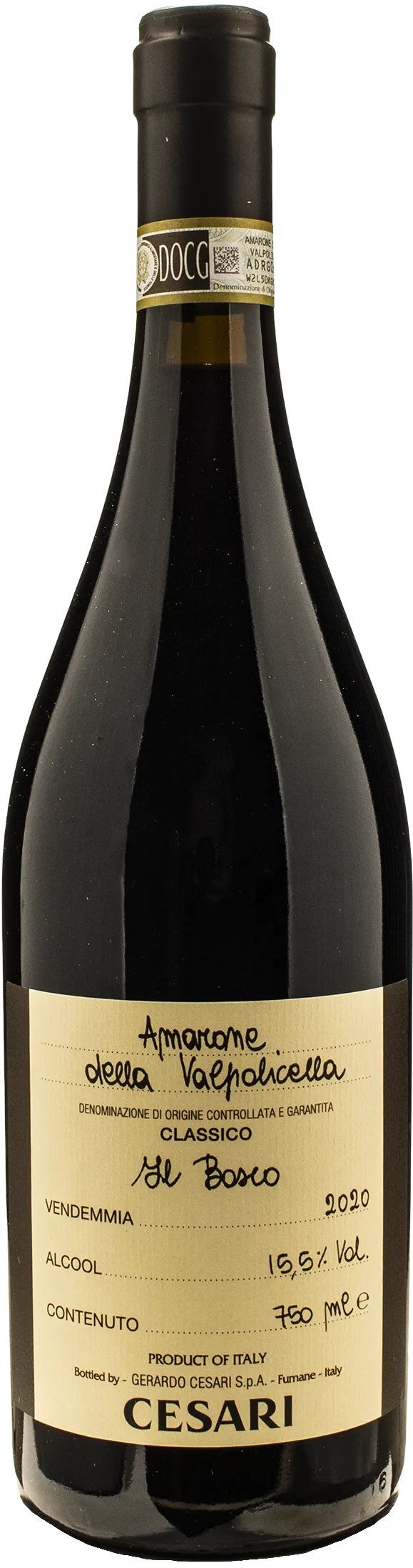
Amarone della Valpolicella Classico Il Bosco 2020
Other years:
2021| Denomination | DOCG Amarone della Valpolicella Classico |
|---|---|
| Size | 0,75 l |
| Alcohol content | 15.5% by volume |
| Area | Veneto (Italy) |
| Grape varieties | 80% Corvina, 20% Rondinella |
| Aging | Matured for 2 years in wood (French oak barriques and large Slavonian oak casks) and refined in bottle for 6–8 months |
| Other years | 2021 |
- Name and vintage: Amarone della Valpolicella Classico DOCG Il Bosco 2020, 0.75 L
- Grapes and origin: Corvina and Rondinella from vines over 20 years old, Il Bosco vineyard in Castelrotto (Verona)
- Drying process: grapes placed in ventilated drying rooms until the end of January to concentrate sugars and aromas
- Ageing: 2 years in oak between barriques and casks, followed by 6–8 months in bottle
- Tasting notes: hints of cherry, cocoa and spices; 15.5% vol. Ideal with meats and cheeses
Description
What kind of wine it is
The Amarone della Valpolicella Classico Il Bosco by Cesari is a red wine with Denomination of Controlled and Guaranteed Origin from Veneto, characterised by a structured and enveloping nature, the result of a careful blend of Corvina, Corvinone and Rondinella grapes. Enhanced by a lengthy drying process and two years of maturation in oak barrels, it reveals in the glass an aromatic profile defined by intense notes of cherry, blackberry, cocoa, sweet spices and bitter almond. On the palate, it displays a full body with a velvety texture, supported by soft tannins and an elegant sweet and sour touch that prolongs the finish with hints of wild berries. This intense profile makes it the ideal companion for red meats, elaborate roasts, game and mature cheeses.
Where it comes from
This Venetian red originates from the single Il Bosco vineyard, located in Castelrotto in the heart of the Valpolicella Classica. The grapes come from vines over twenty years old, grown on hills characterised by alluvial soils rich in clay and sand, elements that give the wine balance and remarkable aromatic depth. Careful yield management ensures high-quality bunches, allowing the territory to express itself clearly through the style of the Cesari winery.
How it is produced
The process begins with a careful selection of the bunches, placed in crates and left to rest in well-ventilated drying rooms. The long drying continues until the end of January, reducing the weight of the grapes to encourage sugar concentration. This is followed by cold maceration and an extended period on the skins, preceding slow fermentation. After malolactic fermentation, maturation takes place over two years between small French barrels and large Slavonian oak barrels, concluding with further refinement in the bottle.
History and Curiosities
Produced by the historic Cesari winery, active since 1936, this superb Amarone originates from the renowned Il Bosco di Castelrotto vineyard. The grapes, harvested from vines over twenty years old, undergo a slow drying process in well-ventilated drying rooms until the end of January, developing an extraordinary concentration of cherry and spice aromas. Two years of maturation in oak, followed by bottle ageing, give the wine an enveloping elegance, internationally recognised with the Tre Bicchieri Gambero Rosso award and an impressive 93 points from James Suckling.
Tasting notes

Perfume

Color

Taste
Serve at:
18 - 20 °C
Longevity:
10 - 15 years
Decanting time:
1 hour

- Start up year: 1936
- Oenologist: Michele Gamba
- Bottles produced: 3.000.000
- Hectares: 140
In the heart of Valpolicella, the Fumane winery, inaugurated in 2021, has a fruit cellar that holds over 55,000 crates of grapes, where slow resting enhances their quality.
Fermentation, bottling and ageing take place here in the exclusive Caveau Bosan, inaugurated in 2024, which preserves the historical heritage of Amarone Bosan.
Come and discover our tours, vertical tastings and guided visits for an authentic and engaging Cesari experience.
Our winery in Cavaion Veronese, inaugurated in 1997, is the heart of the ageing process for Ripasso and Amarone della Valpolicella wines.
Here, in the basement, the wines rest in the barrel cellar, cradled by oak barriques and tonneaux, developing their unique character. Inside the building, you will also find our Wineshop, where you can purchase our labels. Cesari wines are created to excite, enhancing the territory and making the classic contemporary, following a philosophy that accompanies every stage, from the vineyard to the bottle. Read more


| Name | Cesari Amarone della Valpolicella Classico Il Bosco 2020 |
|---|---|
| Type | Red still |
| Denomination | Amarone della Valpolicella DOCG |
| Vintage | 2020 |
| Size | 0,75 l |
| Alcohol content | 15.5% by volume |
| Grape varieties | 80% Corvina, 20% Rondinella |
| Country | Italy |
| Region | Veneto |
| Vendor | Gerardo Cesari |
| Story | History and Curiosities Produced by the historic Cesari winery, active since 1936, this superb Amarone originates from the renowned Il Bosco di Castelrotto vineyard. The grapes, harvested from vines over twenty years old, undergo a slow drying process in well-ventilated drying rooms until the end of January, developing an extraordinary concentration of cherry and spice aromas. Two years of maturation in oak, followed by bottle ageing, give the wine an enveloping elegance, internationally recognised with the Tre Bicchieri Gambero Rosso award and an impressive 93 points from James Suckling. |
| Origin | Vineyard "Il Bosco", Castelrotto district of San Pietro in Cariano (Verona), Veneto, Italy |
| Climate | Cool and rainy spring; very hot summer with two heatwaves |
| Soil composition | Alluvial soil rich in clay and sand |
| Harvest | During the harvest, only perfectly intact and dry bunches are selected, then placed in shallow crates in a single layer. They are left to wither in specially ventilated rooms, called 'fruttai', to avoid the risk of mould. The withering process lasts until the end of January; during these months, the bunches are constantly checked and removed if damaged. At the end of the withering, the grapes lose 30-40% of their weight while their sugar concentration increases, which is essential during the subsequent fermentation to ensure a significant alcohol content (around 15%). |
| Fermentation | Between January and February |
| Production technique | Drying of the grapes in well-ventilated drying rooms |
| Wine making | Strict selection of grape bunches; drying of the grapes in well-ventilated drying rooms in shallow crates until the end of January (loss of 30–40% of weight); crushing and long maceration in contact with the skins for 20–30 days; fermentation between January and February at low temperature with selected yeasts; malolactic fermentation in steel tanks; maturation for 2 years in wood (French barriques and large Slavonian oak casks) and bottle ageing for 6–8 months. |
| Aging | Matured for 2 years in wood (French oak barriques and large Slavonian oak casks) and refined in bottle for 6–8 months |
| Total acidity | 6.0 gr/L |
| Dry extract | 31.0 gr/L |
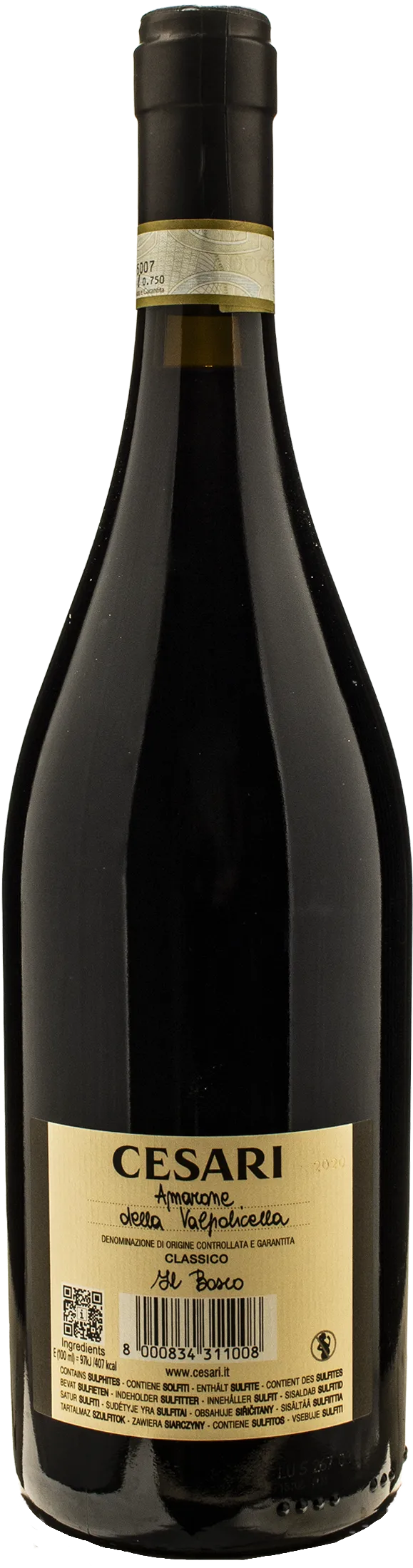
| Allergens | Contains sulphites |