


Castello di Radda
Chianti Classico Riserva 2021
| Denomination | DOCG Chianti Classico Riserva |
|---|---|
| Size | 0,75 l |
| Alcohol content | 14.5% by volume |
| Area | Tuscany (Italy) |
| Grape varieties | 100% Sangiovese |
| Aging | Aged in oak barrels for about 20 months with occasional racking; minimum bottle ageing of 12 months before release. |
- Name and grape: Chianti Classico DOCG Riserva, 100% Sangiovese from organic farming
- Aromas and flavour: notes of wild berries, spices and vanilla; persistent taste with a savoury finish
- Ageing: around 20 months in oak barrels and at least 12 months in bottle before sale
- Vinification: in steel, maceration for 3-4 weeks, partial malolactic fermentation in wood
- Pairings: serve at 18-20°C, decant for 1 hour, ideal with red meats and game
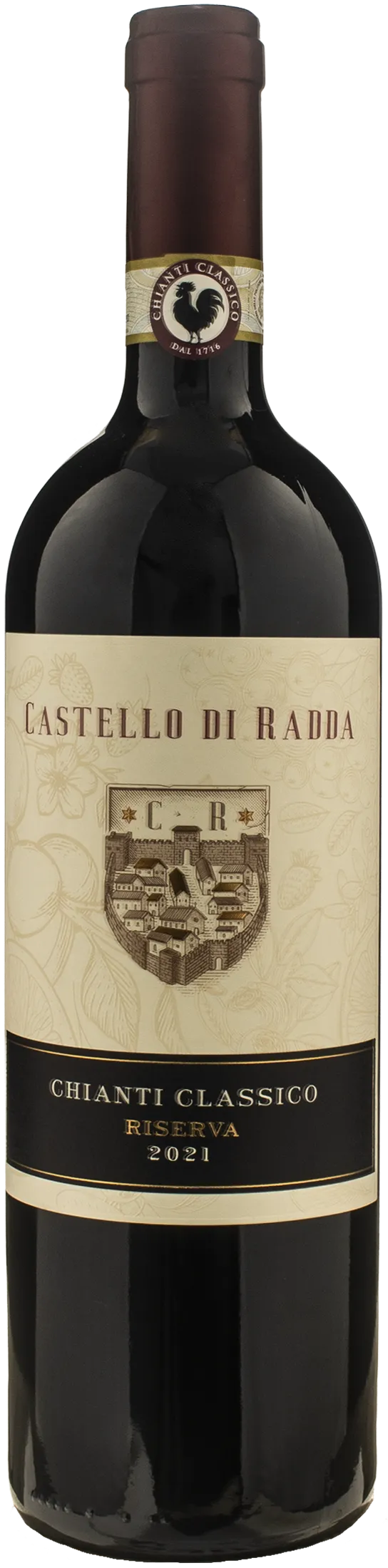
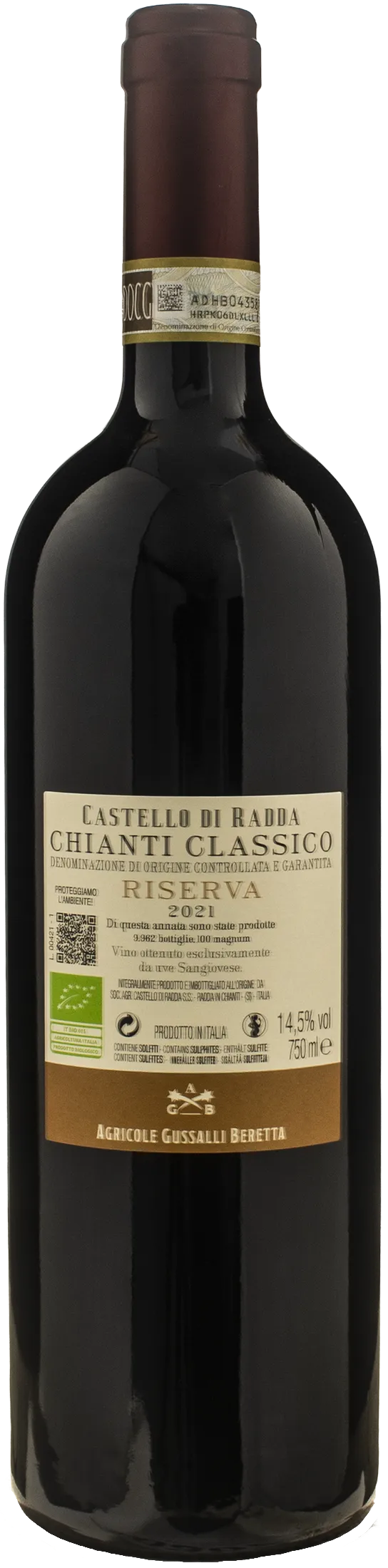
Description
What kind of wine it is
The Chianti Classico Riserva from Castello di Radda is an elegant organic Tuscan red wine, made from Sangiovese grapes. Characterised by a bright ruby red colour with garnet highlights, it releases intense aromas of wild berries, spices and vanilla. On the palate, it offers a long and balanced sip, supported by a pleasant freshness that leads to a savoury and persistent finish. Its complex structure makes it ideal for pairing with roast pork, game and mature cheeses.
Where it comes from
This Chianti Classico Riserva originates in the municipality of Radda in Chianti. The vineyards benefit from a south-east to south-west exposure, ensuring optimal ripening and a pronounced aromatic concentration. The vines grow on clay-limestone soils of medium texture, rich in stony skeleton. This strong geological identity imparts a distinct mineral vein to the wine, translating the characteristics of the Sienese territory into a clear flavour profile and great structural elegance.
How it is produced
Vinification begins with fermentation in steel, followed by maceration on the skins for several weeks to extract the best polyphenolic texture. Malolactic fermentation takes place partly in wood to enhance flavour complexity. The wine matures in oak barrels for about twenty months, acquiring elegant nuances through slow racking. The process ends with a long ageing in bottle, essential to harmoniously balance the entire organoleptic profile.
History and Curiosities
In the heart of the Sienese region, the Castello di Radda winery produces its Chianti Classico DOCG Riserva, celebrating authentic Tuscan tradition. Under the guidance of oenologist Maurizio Castelli, the estate enhances Sangiovese grapes by following strict organic practices. The 2021 vintage matures for 20 months in oak barrels and is refined for a further year in the bottle, achieving superior elegance. Excellence is attested by the 93 points from James Suckling, confirming the prestige of a wine that combines history and quality.
Awards
-
2021
 93
93/100
James Suckling is an influential American wine critic and journalist who worked at Wine Spectator for 30 years. He left the magazine in 2010 to start his own website and guidebook (JamesSuckling.com). He specialises in Italian and Bordeaux wines.
-
2021
 3
3One of the most prestigious wine guides in Italy.
-
2021
 3
3Italian Sommelier Association (AIS) guide
Tasting notes

Perfume

Color

Taste
Serve at:
18 - 20 °C
Longevity:
10 - 15 years
Decanting time:
1 hour

- Start up year: 2003
- Oenologist: Maurizio Castelli
- Bottles produced: 120.000
- Hectares: 40
The Beretta family bought the estate in 2003 to increase their interest in the wine-growing sector. They are already active with the family's historic company "Lo Sparviere", which produces the precious Franciacorta sparkling wines. The project took shape with the recovery, in qualitative terms, of the 45 hectares under vine and the construction of an extensive wine cellar built according to the design of architect Spartaco Mori. Read more


| Name | Castello di Radda Chianti Classico Riserva 2021 |
|---|---|
| Type | Red organic still |
| Denomination | Chianti Classico DOCG |
| Vintage | 2021 |
| Size | 0,75 l |
| Alcohol content | 14.5% by volume |
| Grape varieties | 100% Sangiovese |
| Country | Italy |
| Region | Tuscany |
| Vendor | Castello di Radda |
| Story | History and Curiosities In the heart of the Sienese region, the Castello di Radda winery produces its Chianti Classico DOCG Riserva, celebrating authentic Tuscan tradition. Under the guidance of oenologist Maurizio Castelli, the estate enhances Sangiovese grapes by following strict organic practices. The 2021 vintage matures for 20 months in oak barrels and is refined for a further year in the bottle, achieving superior elegance. Excellence is attested by the 93 points from James Suckling, confirming the prestige of a wine that combines history and quality. |
| Origin | Radda in Chianti (Siena) |
| Soil composition | Medium-textured clay-limestone soils with a significant presence of stones (skeleton) |
| Production technique | Alcoholic fermentation in stainless steel vats; maceration on the skins for 3–4 weeks; malolactic fermentation partly in wood (about 80% in new wood in tonneaux and barrels). |
| Wine making | Alcoholic fermentation in 50 hl stainless steel vats, with maceration on the skins for 3–4 weeks (up to a month) depending on the ripeness of the grapes; followed by malolactic fermentation partly in wood, of which around 80% is in new wood (5 hl tonneaux or 20 hl barrels). |
| Aging | Aged in oak barrels for about 20 months with occasional racking; minimum bottle ageing of 12 months before release. |
| Allergens | Contains sulphites |