


Castello di Radda
Chianti Classico 2023
| Denomination | DOCG Chianti Classico |
|---|---|
| Size | 0,75 l |
| Alcohol content | 14.0% by volume |
| Area | Tuscany (Italy) |
| Grape varieties | 90% Sangiovese |
| Aging | Partly in tonneaux and partly in 20 hl Slavonian oak barrels; final ageing in bottle for at least 6 months before release to the market |
- Organic Chianti Classico DOCG: still red wine 2023 from Radda in Chianti, 14% vol
- Tasting notes: ruby colour, hints of violet, harmonious flavour and ripe plum
- Vinification: maceration for 2–3 weeks and malolactic fermentation between steel and wood
- Ageing: in tonneaux and Slavonian oak barrels, plus 6 months in glass
- Awards 2023: 93/100 James Suckling, 91/100 Wine Spectator, 3 Vines AIS
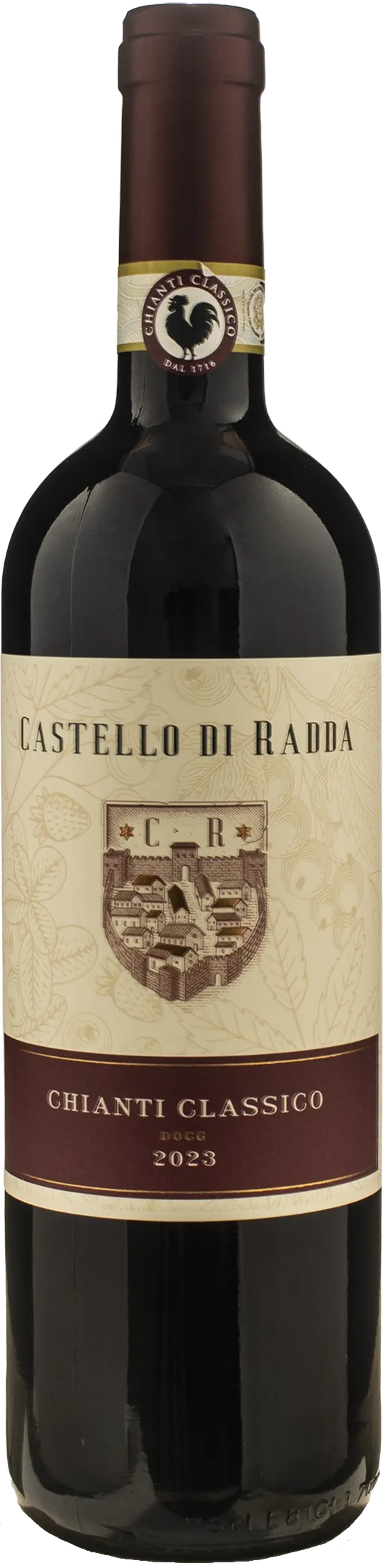
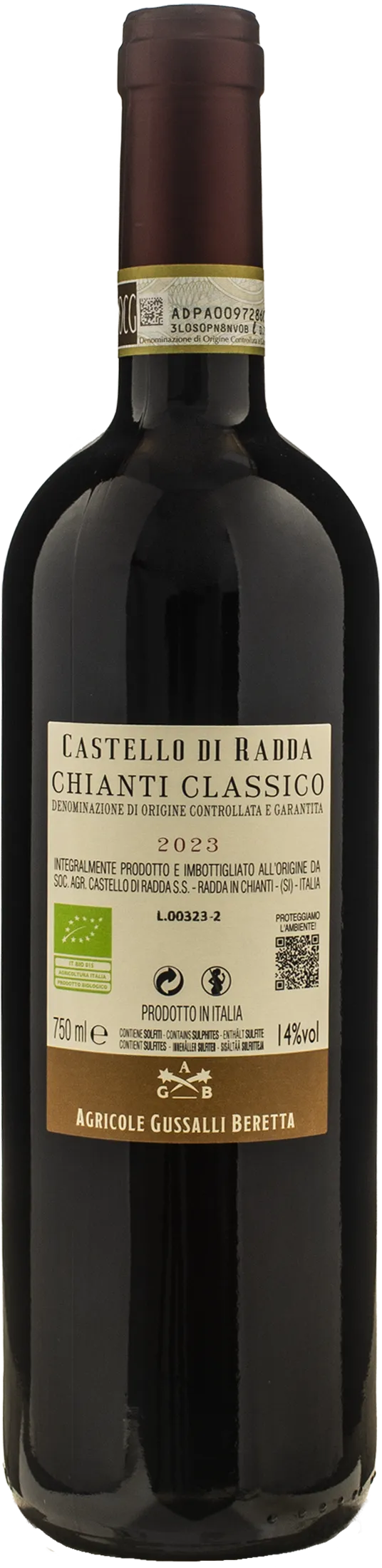
Description
What kind of wine it is
The Chianti Classico by Castello di Radda is a still organic red wine that expresses the authentic character of Sangiovese. Visually, it displays an intense ruby colour tending towards garnet, while on the nose it releases varietal aromas with delicate hints of violet. On the palate, it is harmonious and savoury, supported by a well-integrated tannic structure and a persistent finish of ripe plum. If allowed to breathe for about an hour before serving, this red pairs beautifully with roast guinea fowl, a traditional Tuscan beef stew and flavourful mature cheeses.
Where it comes from
This wine originates from the hills of Radda in Chianti, at around four hundred metres above sea level. The vineyards benefit from an ideal south-facing exposure, rooted in clay-limestone soil characterised by a good presence of siliceous stones. The area's microclimate is defined by significant temperature variations and moderate maximum temperatures. This environmental synergy allows the Sangiovese to ripen gradually, ensuring the wine has profound structural elegance and a faithful expressive link to its territory of origin.
How it is produced
After a rigorous manual harvest, the selected bunches ferment in stainless steel vats at a controlled temperature. Maceration on the skins for two or three weeks ensures optimal extraction of colour and aromas. Malolactic fermentation takes place in both steel and wood, serving as a prelude to ageing in tonneaux and Slavonian oak barrels. The winemaking process concludes with at least six months of bottle ageing, consolidating an aromatic complexity capable of evolving beautifully over time.
History and Curiosities
Founded in 2003 on the enchanting hills of Siena, Castello di Radda enhances the authentic Tuscan vocation through a organic and sustainable approach. The vineyards, carefully cultivated at an altitude of 400 metres on clay-limestone soils, produce a Chianti Classico DOCG based on Sangiovese with a distinctive profile. The iconic Black Rooster seal crowns a noble heritage dating back to 1716, highlighting the prestige of an exceptional vintage, capable of captivating the most refined palates and earning 93 points from James Suckling.
Awards
-
2023
 93
93/100
James Suckling is an influential American wine critic and journalist who worked at Wine Spectator for 30 years. He left the magazine in 2010 to start his own website and guidebook (JamesSuckling.com). He specialises in Italian and Bordeaux wines.
-
2023
 2
2One of the most prestigious wine guides in Italy.
-
2023
 3
3Italian Sommelier Association (AIS) guide
-
2023
 91
91/100
Wine spectator is the most influential wine guide on the internet.
Tasting notes

Perfume

Color

Taste
Serve at:
16 - 18 °C
Longevity:
05 - 10 years
Decanting time:
1 hour

- Start up year: 2003
- Oenologist: Maurizio Castelli
- Bottles produced: 120.000
- Hectares: 40
The Beretta family bought the estate in 2003 to increase their interest in the wine-growing sector. They are already active with the family's historic company "Lo Sparviere", which produces the precious Franciacorta sparkling wines. The project took shape with the recovery, in qualitative terms, of the 45 hectares under vine and the construction of an extensive wine cellar built according to the design of architect Spartaco Mori. Read more


| Name | Castello di Radda Chianti Classico 2023 |
|---|---|
| Type | Red organic still |
| Denomination | Chianti Classico DOCG |
| Vintage | 2023 |
| Size | 0,75 l |
| Alcohol content | 14.0% by volume |
| Grape varieties | 90% Sangiovese |
| Country | Italy |
| Region | Tuscany |
| Vendor | Castello di Radda |
| Story | History and Curiosities Founded in 2003 on the enchanting hills of Siena, Castello di Radda enhances the authentic Tuscan vocation through a organic and sustainable approach. The vineyards, carefully cultivated at an altitude of 400 metres on clay-limestone soils, produce a Chianti Classico DOCG based on Sangiovese with a distinctive profile. The iconic Black Rooster seal crowns a noble heritage dating back to 1716, highlighting the prestige of an exceptional vintage, capable of captivating the most refined palates and earning 93 points from James Suckling. |
| Origin | Radda in Chianti (Siena) |
| Climate | Strong temperature fluctuations and maximum temperatures that are never excessive, favouring the elegance of the wines |
| Soil composition | Clay-calcareous with a good presence of siliceous skeleton |
| Fermentation | 2–3 weeks |
| Production technique | Fermentation in temperature-controlled stainless steel vats with maceration on the skins for 2–3 weeks; malolactic fermentation in stainless steel and wood; ageing partly in tonneaux and partly in 20 hl Slavonian oak casks, then at least 6 months in bottle. |
| Wine making | Fermentation in temperature-controlled stainless steel vats of 50 hl and 100 hl; followed by maceration on the skins for 2–3 weeks; malolactic fermentation in stainless steel and wood. |
| Aging | Partly in tonneaux and partly in 20 hl Slavonian oak barrels; final ageing in bottle for at least 6 months before release to the market |
| Allergens | Contains sulphites |