


Castello di Monsanto
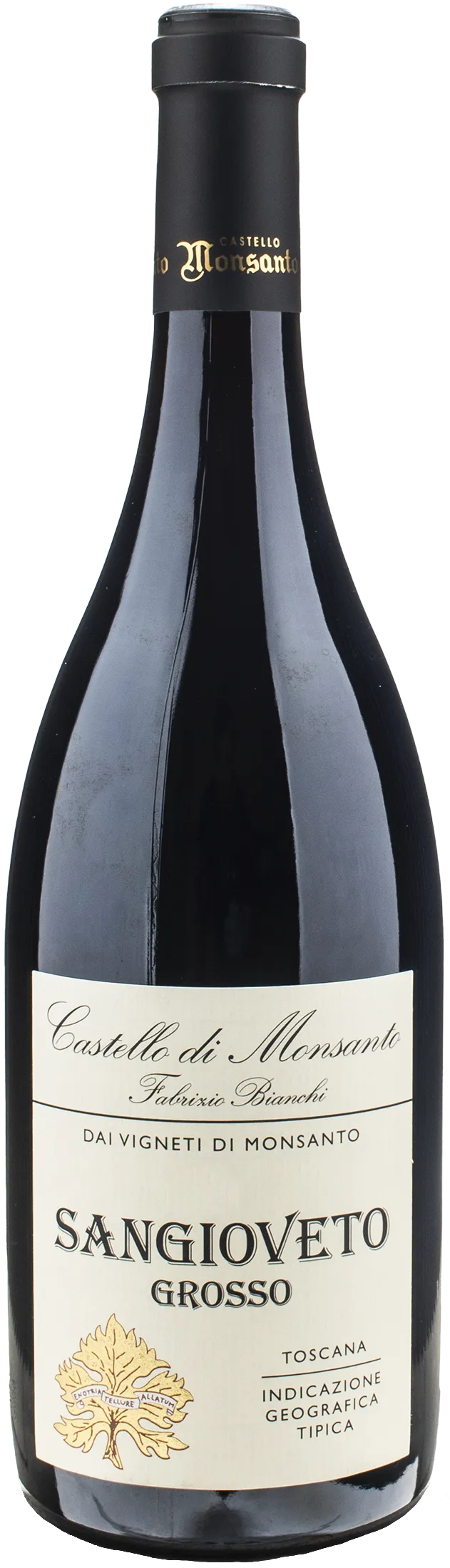
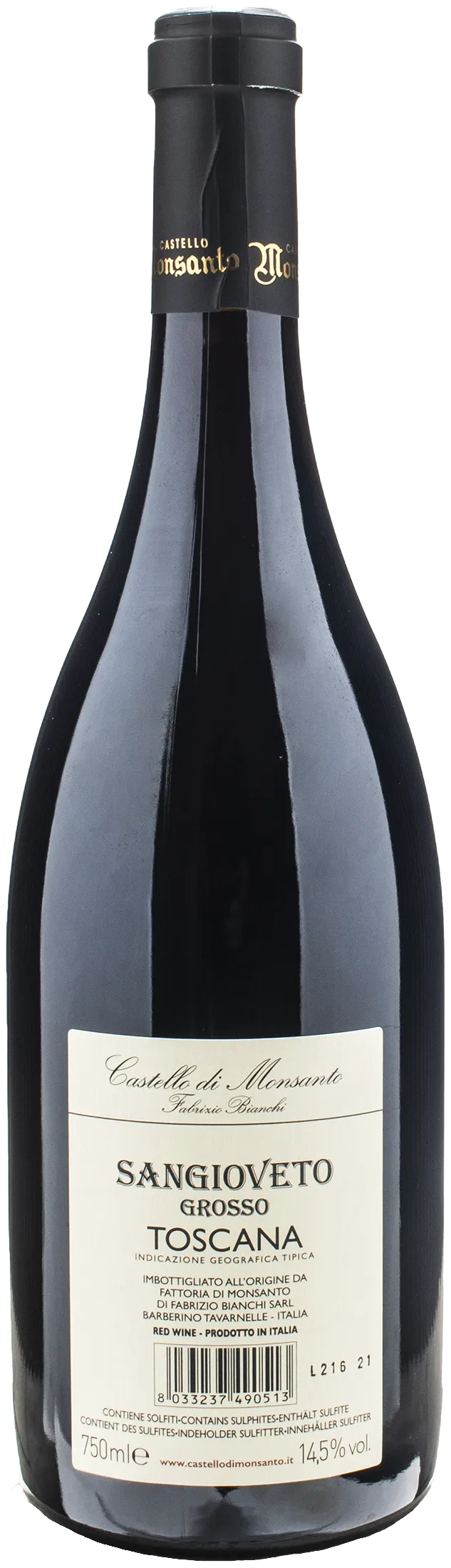
Fabrizio Bianchi Sangioveto Grosso 2018
| Denomination | IGT Toscana |
|---|---|
| Size | 0,75 l |
| Alcohol content | 14.5% by volume |
| Area | Tuscany (Italy) |
| Grape varieties | 100% Sangiovese |
| Aging | Aged in 500-litre French oak barrels, partly new and partly second fill, for about 18 months. |
- Identity: Toscana IGT 2018, 100% Sangiovese, 14.5% vol, 0.75 l bottle
- Vinification: in stainless steel at controlled temperature with délestage and pumping over for 20 days
- Ageing: 18 months in 500 l French oak barrels, partly new and partly second use
- Profile: notes of cherry in spirit, lavender, rosemary, liquorice, black pepper and eucalyptus
- Serving: serve at 16-18°C, decant for 1 hour; excellent with beef and mature cheeses
Description
What kind of wine it is
Castello di Monsanto Fabrizio Bianchi Sangioveto Grosso is a red wine with an intense garnet colour, an authentic expression of Sangiovese grapes. It reveals deep aromas of cherries in spirit, lavender, rosemary flowers and liquorice, finishing with fresh balsamic notes of eucalyptus. On the palate, it is generous and structured, characterised by well-integrated tannins and a vibrant savoury streak. A soft and harmonious sip, ideal for pairing with mature cheeses and game.
Where it comes from
This wine is produced in Barberino Val d’Elsa, in the province of Florence, at the Castello di Monsanto estate. The grapes come from the historic Scanni vineyard, cultivated with Sangiovese since 1968. The connection with Tuscany reflects an agricultural vision deeply rooted in the land, carried on by a family-run business founded in 1962. The result is a glass capable of offering remarkable longevity.
How it is produced
Vinification takes place in truncated-cone stainless steel vats at a controlled temperature, with a maceration of about twenty days marked by délestage and pumping over. Afterwards, the wine matures for eighteen months in French oak barrels, selected from new and second-use wood. This meticulous ageing shapes the tannic structure and ensures a precise aromatic profile, guaranteeing a persistent and savoury finish.
History and Curiosities
The Sangioveto Grosso “Fabrizio Bianchi” originates from the Scanni vineyard, planted exclusively with Sangiovese in 1968 at the Castello di Monsanto. The first vintage, produced in 1974, marked a break with the Chianti regulations of the time, giving this Toscana IGT a fascinating rebellious spirit, now encapsulated in the iconic Burgundy bottle. Aged in oak barrels, the wine combines silky tannins with exceptional longevity, celebrated by international critics with 94 points from James Suckling and 92 from Robert Parker.
Awards
-
2018
 94
94/100
James Suckling is an influential American wine critic and journalist who worked at Wine Spectator for 30 years. He left the magazine in 2010 to start his own website and guidebook (JamesSuckling.com). He specialises in Italian and Bordeaux wines.
-
2018
 92
92/100
The prestigious international wine guide from the renowned Robert Parker, the world's most experienced and trusted wine taster.
-
2018
 3
3One of the most prestigious wine guides in Italy.
-
2018
 90
90/100
Vinous is the online guide from Antonio Galloni, one of the world's leading wine connoisseurs.
Tasting notes

Perfume

Color

Taste
Serve at:
16 - 18 °C
Longevity:
10 - 15 years
Decanting time:
1 hour

- Start up year: 1962
- Oenologist: Andrea Giovannini
- Bottles produced: 420.000
- Hectares: 72
Wine in Tuscany was not yet ready for a revolution. Audacity, determination, and foresight were key to pursuing ideas that might have seemed obscure at the time, but later played a large part in the history of Chianti Classico. Today Laura, Fabrizio's daughter, continues what her father, thanks to her grandfather Aldo, started, by transforming longstanding tradition with pride and tenacity. Because the future passes right through here: from what was built yesterday for a better tomorrow. Read more


| Name | Castello di Monsanto Fabrizio Bianchi Sangioveto Grosso 2018 |
|---|---|
| Type | Red still |
| Denomination | Toscana IGT |
| Vintage | 2018 |
| Size | 0,75 l |
| Alcohol content | 14.5% by volume |
| Grape varieties | 100% Sangiovese |
| Country | Italy |
| Region | Tuscany |
| Vendor | Castello di Monsanto |
| Story | History and Curiosities The Sangioveto Grosso "Fabrizio Bianchi" originates from the Scanni vineyard, planted exclusively with Sangiovese in 1968 at the Castello di Monsanto. The first vintage, produced in 1974, marked a break with the Chianti regulations of the time, giving this Toscana IGT a fascinating rebellious spirit, now encapsulated in the iconic Burgundy bottle. Aged in oak barrels, the wine combines silky tannins with exceptional longevity, celebrated by international critics with 94 points from James Suckling and 92 from Robert Parker. |
| Origin | Barberino Val d'Elsa (FI) |
| Cultivation system | Guyot |
| Fermentation | Approximately 20 days |
| Production technique | Vinification in temperature-controlled truncated conical stainless steel vats with délestage (rack and return) and pumping over systems |
| Wine making | Fermentation in temperature-controlled, truncated conical stainless steel vats with délestage and pumping over for approximately 20 days; maturation in 500-litre French oak barrels, partly new and partly second use, for around 18 months. |
| Aging | Aged in 500-litre French oak barrels, partly new and partly second fill, for about 18 months. |
| Allergens | Contains sulphites |