


Castello di Monsanto
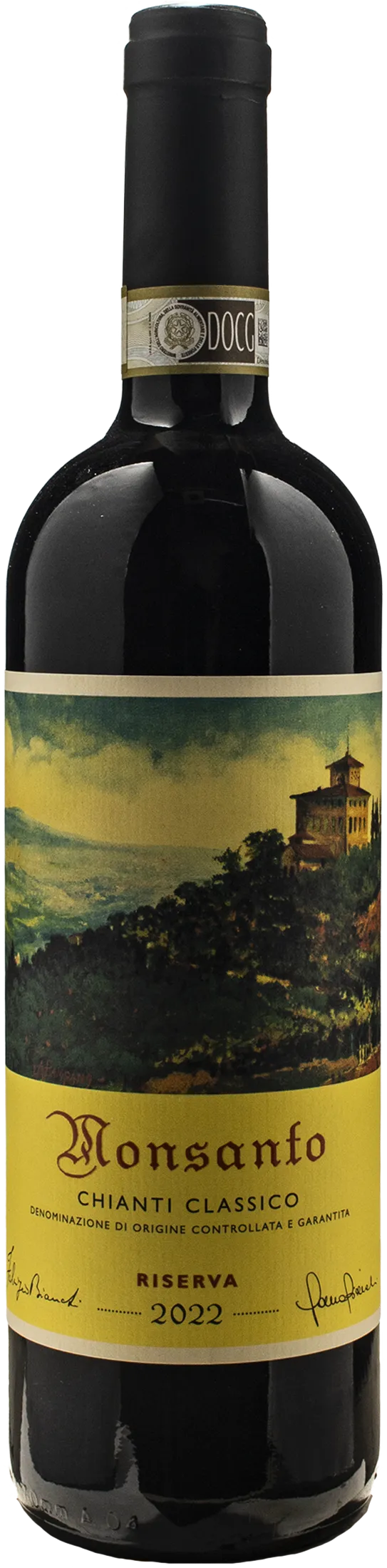
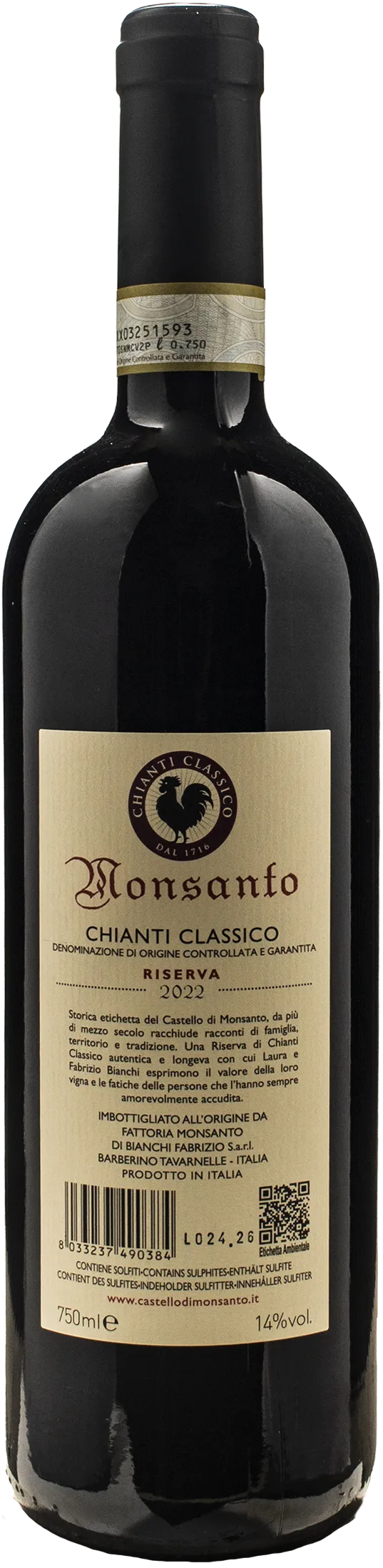
Chianti Classico Riserva 2022
| Denomination | DOCG Chianti Classico Riserva |
|---|---|
| Size | 0,75 l |
| Alcohol content | 14.0% by volume |
| Area | Tuscany (Italy) |
| Grape varieties | 90% Sangiovese, 5% Canaiolo Nero, 5% Colorino |
| Aging | Aged for approximately 18 months in oak barrels and barriques, followed by around 6 months in bottle. |
- Name: Chianti Classico DOCG Riserva, vintage 2022, Tuscany
- Grape blend: 90% Sangiovese with Canaiolo and Colorino for balance and vibrancy
- Aromatic profile: cherry, violet, wild berries and sweet spices
- Ageing: 18 months in oak barrels and tonneaux, followed by 6 months in bottle
- Tasting notes: savoury and bold, well-integrated tannins, spicy and persistent finish
Description
What kind of wine it is
The Chianti Classico Riserva from Castello di Monsanto is a renowned still red wine from Tuscany, a proud ambassador of its region of origin. The blend combines Sangiovese, Canaiolo and Colorino, revealing a ruby red colour with deep garnet hues. On the nose, aromas of cherry and violet emerge, fused with notes of bramble fruits and subtle hints of sweet spices. Aged in oak barrels, on the palate it is savoury and balanced, animated by a lively and energetic character, with well-integrated tannins that smoothly guide the tasting towards a spicy and persistent finish.
Where it comes from
This Chianti Classico is born among the hills of Barberino Val d’Elsa, in an environment characterised by a mild and sunny climate. The excellent exposure ensures the vines receive ideal warmth, while the hard, clay-rich soil, enriched with silt, preserves essential water reserves for nourishing the grapes. The interaction with the soils of Castello di Monsanto gives the grapes a pronounced gustatory tension, shaping a complex structure that reflects the combination of the severity of the Tuscan land and the sweetness of its slopes.
How it is produced
Vinification involves fermentation in truncated conical stainless steel vats at a controlled temperature, with a maceration of about twenty days facilitated by careful délestage and pumping over. Ageing continues for eighteen months in oak barrels and second-use tonneaux. This precious maturation in wood defines and polishes the wine’s profile, which completes its journey with a final rest of about six months. This process ensures excellent harmony and a marked evolutionary drive over time.
History and Curiosities
Born in 1962, the Castello di Monsanto Chianti Classico Riserva is the most produced label of the winery and one of the most historic in Italy. An ambassador of the denomination worldwide since the 1960s, this excellence encapsulates the glorious Tuscan tradition dating back to 1716. The superb expression of Sangiovese, awarded 94 points by James Suckling and 93 points by Vinous, elevates the memory of the traditional flask into a masterpiece of contemporary elegance with extraordinary ageing potential.
Awards
-
2022
 94
94/100
James Suckling is an influential American wine critic and journalist who worked at Wine Spectator for 30 years. He left the magazine in 2010 to start his own website and guidebook (JamesSuckling.com). He specialises in Italian and Bordeaux wines.
Tasting notes

Perfume

Color

Taste
Serve at:
16 - 18 °C
Longevity:
10 - 15 years
Decanting time:
1 hour

- Start up year: 1962
- Oenologist: Andrea Giovannini
- Bottles produced: 420.000
- Hectares: 72
Wine in Tuscany was not yet ready for a revolution. Audacity, determination, and foresight were key to pursuing ideas that might have seemed obscure at the time, but later played a large part in the history of Chianti Classico. Today Laura, Fabrizio's daughter, continues what her father, thanks to her grandfather Aldo, started, by transforming longstanding tradition with pride and tenacity. Because the future passes right through here: from what was built yesterday for a better tomorrow. Read more


| Name | Castello di Monsanto Chianti Classico Riserva 2022 |
|---|---|
| Type | Red still |
| Denomination | Chianti Classico DOCG |
| Vintage | 2022 |
| Size | 0,75 l |
| Alcohol content | 14.0% by volume |
| Grape varieties | 90% Sangiovese, 5% Canaiolo Nero, 5% Colorino |
| Country | Italy |
| Region | Tuscany |
| Vendor | Castello di Monsanto |
| Story | History and Curiosities Born in 1962, the Castello di Monsanto Chianti Classico Riserva is the most produced label of the winery and one of the most historic in Italy. An ambassador of the denomination worldwide since the 1960s, this excellence encapsulates the glorious Tuscan tradition dating back to 1716. The superb expression of Sangiovese, awarded 94 points by James Suckling and 93 points by Vinous, elevates the memory of the traditional flask into a masterpiece of contemporary elegance with extraordinary ageing potential. |
| Origin | Barberino Val d'Elsa (FI) |
| Climate | Mild and sunny |
| Soil composition | Hard soil, interspersed with clay and presence of silt |
| Cultivation system | Guyot and spurred cordon |
| Fermentation | Approximately 18–20 days |
| Production technique | Fermentation in temperature-controlled truncated conical stainless steel vats with délestage and pumping over (maceration 18–20 days); ageing in oak barrels and tonneaux followed by further ageing in bottle. |
| Wine making | Fermentation in temperature-controlled, truncated conical stainless steel vats with délestage and pumping over for approximately 18–20 days. |
| Aging | Aged for approximately 18 months in oak barrels and barriques, followed by around 6 months in bottle. |
| Allergens | Contains sulphites |