


Castello di Ama
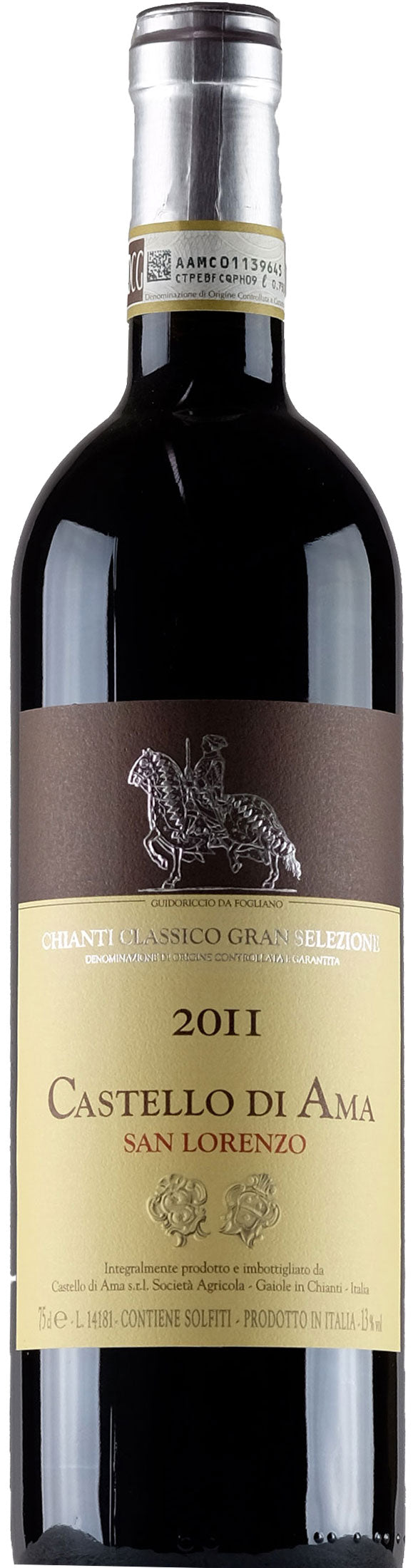
Chianti Classico Gran Selezione San Lorenzo 2011
| Denomination | DOCG Chianti Classico Riserva |
|---|---|
| Size | 0,75 l |
| Alcohol content | 13.0% by volume |
| Area | Tuscany (Italy) |
| Grape varieties | 80% Sangiovese, 10% Malvasia Nera, 10% Merlot |
| Aging | After blending, maturation in barriques for about 12 months (20% new and the rest used). |
| Other years | 2013 , 2015 , 2016 , 2018 , 2019 , 2020 , 2022 |
- Name: Chianti Classico Gran Selezione DOCG, 2011 vintage
- Grapes: 80% Sangiovese, 13% Merlot, 7% Malvasia Nera
- Vinification: fermentation with indigenous yeasts in stainless steel, maceration for 21–23 days
- Ageing: approximately 12 months in barriques, 20% new and the rest used
- Serving and pairings: decant for 1 hour at 18–20°C; ideal with pasta, meats, game and cheeses

Description
What kind of wine it is
Castello di Ama Chianti Classico Gran Selezione San Lorenzo is a red wine that faithfully represents its territory. Created from a blend of Sangiovese, Merlot and Malvasia Nera grapes, it reveals a bouquet of wild berries and spicy notes. On the palate, it offers a bright attack and an elegant, deep structure. Its refined taste makes it ideal for accompanying elaborate pasta dishes, meats, game and characterful cheeses.
Where it comes from
The grapes come from the Ama valley, located in Gaiole in Chianti, in the heart of Chianti Classico. The estate vineyards, facing east and south-east, benefit from a microclimate favourable to vegetative development. The clay-limestone soils of medium texture ensure proper drainage, while the marked temperature variations between day and night encourage sugar concentration and precisely define the wine's aromatic identity.
How it is produced
The manual harvest allows only intact bunches to be sent for pressing. The grapes are vinified separately, starting with Malvasia Nera and finishing with Sangiovese. Fermentation is triggered by indigenous yeasts in stainless steel tanks, with maceration enhanced by constant pumping over to encourage the extraction of polyphenolic components. After racking, the wine undergoes malolactic fermentation in wood. Finally, the different batches are blended and the final blend matures in barrels, partly new and partly used.
History and Curiosities
The Castello di Ama San Lorenzo 2011 draws inspiration from the evocative valley and the rural church of the same name located in Gaiole in Chianti. Produced exclusively from estate-grown grapes cultivated on prized clay-limestone soils, it boasts the prestigious Chianti Classico Gran Selezione DOCG designation. Awarded the Tre Bicchieri by Gambero Rosso and 95 points by James Suckling, this oenological masterpiece enchants with its elegant spicy bouquet, enriched by lively notes of wild berries, offering a deep, refined and truly prestigious sip.
Awards
-
2011
 3
3One of the most prestigious wine guides in Italy.
Tasting notes

Perfume

Color

Taste
Serve at:
18 - 20 °C
Longevity:
10 - 15 years
Decanting time:
1 hour

- Start up year: 1976
- Oenologist: Marco Pallanti
- Bottles produced: 320.000
- Hectares: 75
To date, Castello di Ama owns and manages about 75 hectares of vineyards and 40 hectares of olive groves, relying on the work of more than 60 people. The role of general manager and oenologist is held continuously by Marco Pallanti, who served, between 2006 and 2012, as President of the Chianti Classico Consortium, bringing the contribution of the creation of the 'Gran Selezione' category with the aim of highlighting the extraordinary quality and diversity of the region's wines. Read more


| Name | Castello di Ama Chianti Classico Gran Selezione San Lorenzo 2011 |
|---|---|
| Type | Red still |
| Denomination | Chianti Classico DOCG |
| Vintage | 2011 |
| Size | 0,75 l |
| Alcohol content | 13.0% by volume |
| Grape varieties | 80% Sangiovese, 10% Malvasia Nera, 10% Merlot |
| Country | Italy |
| Region | Tuscany |
| Vendor | Castello di Ama |
| Story | History and Curiosities The Castello di Ama San Lorenzo 2011 draws inspiration from the evocative valley and the rural church of the same name located in Gaiole in Chianti. Produced exclusively from estate-grown grapes cultivated on prized clay-limestone soils, it boasts the prestigious Chianti Classico Gran Selezione DOCG designation. Awarded the Tre Bicchieri by Gambero Rosso and 95 points by James Suckling, this oenological masterpiece enchants with its elegant spicy bouquet, enriched by lively notes of wild berries, offering a deep, refined and truly prestigious sip. |
| Origin | Ama, Gaiole in Chianti (Toscana, Italia) |
| Soil composition | Medium-textured clay-limestone soils |
| Harvest | Between the end of September and the beginning of October |
| Fermentation temperature | Circa 30–32 °C |
| Fermentation | Approximately 21-23 days |
| Production technique | Fermentation with indigenous yeasts in stainless steel tanks with maceration and pumping over; malolactic fermentation and ageing in barriques |
| Wine making | Manual harvest between late September and early October; crushing and destemming; fermentation started with indigenous yeasts in stainless steel tanks at around 30–32°C with maceration for 21–23 days and pump-overs several times a day; racking and malolactic fermentation in barriques; blending and ageing in barriques for about 12 months (20% new and the rest used). |
| Aging | After blending, maturation in barriques for about 12 months (20% new and the rest used). |
| Year production | 120000 bottles |
| Allergens | Contains sulphites |