


Castello di Albola
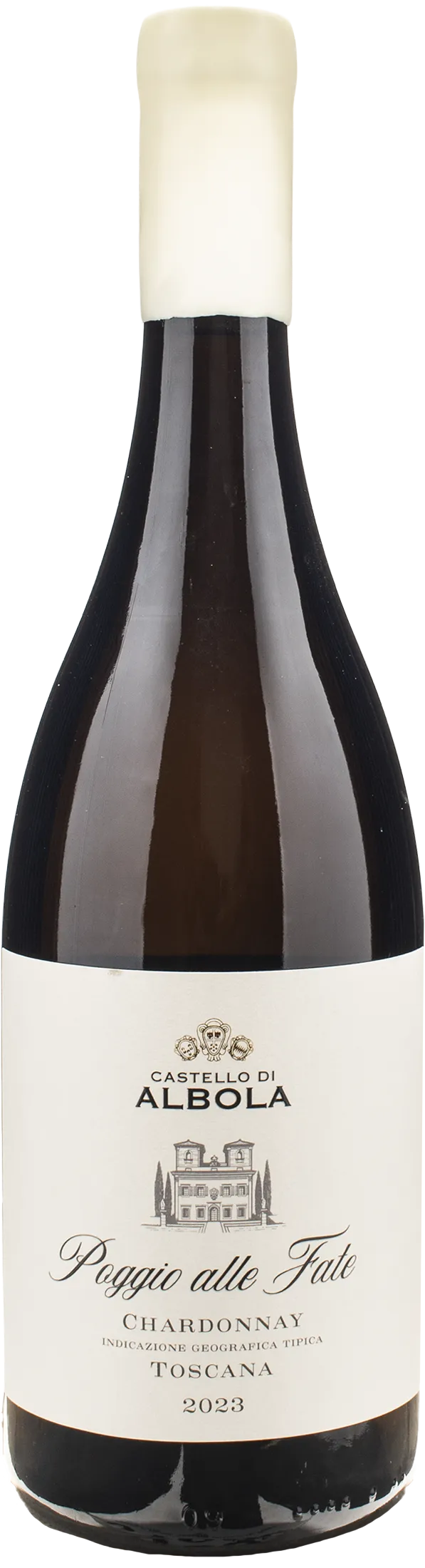
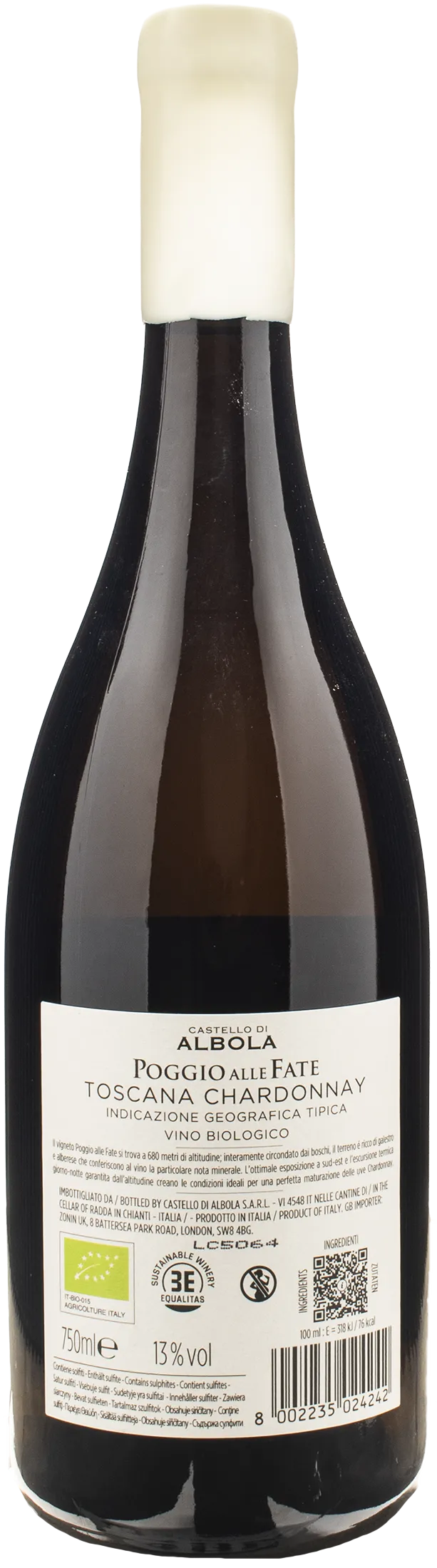
Toscana Chardonnay Poggio alle Fate 2023
| Denomination | IGT Toscana |
|---|---|
| Size | 0,75 l |
| Alcohol content | 13.0% by volume |
| Area | Tuscany (Italy) |
| Grape varieties | 100% Chardonnay |
| Aging | Halfway through alcoholic fermentation, the wine is transferred into 500-litre French oak tonneaux, where it completes alcoholic and malolactic fermentation; this is followed by ageing for approximately one year on the lees with weekly bâtonnage, then resting in the bottle for 8–12 months. |
- Classification: Tuscany IGT, 100% organic Chardonnay.
- Aromas: Notes of apple, citrus, pineapple, banana, aromatic herbs and minerals.
- Palate: Dry and savoury, with balanced acidity and a persistent finish.
- Terroir: Grapes grown at 680 metres on marl, galestro and red schist.
- Ageing: 1 year on the lees in tonneaux with bâtonnage and bottle ageing.
Description
Wine type
Poggio alle Fate from Castello di Albola is a dry white wine with a Tuscany IGT (Typical Geographical Indication) status, made from Chardonnay grapes grown in the heart of Chianti Classico. The bouquet is intense, characterised by notes of apple and citrus fruit that blend with hints of pineapple, banana and aromatic herbs. On the palate, it proves harmonious, supported by a distinctive freshness and a solid acidic structure. The skilful use of barrels gives it a clean finish with excellent persistence. It is the ideal pairing for crustaceans and seafood, salt-baked fish and white meats such as roast guinea fowl.
Provenance
The grapes are grown in a vineyard located at an altitude of 680 metres, among the highest rows of Radda in Chianti. The soil has a complex composition of marl, galestro and red clay schists, rich in minerals such as iron and manganese. The cool high-altitude climate ensures optimal ripening for the Chardonnay, enhancing its aromatic clarity and providing a strong savoury character. The Castello di Albola estate highlights the natural minerality expressed by the Tuscan landscape in this wine.
How it is produced
Production respects the principles of organic farming, with manual selection of the bunches. After cold storage to preserve the integrity of the aromas, the grapes undergo destemming and soft pressing. Fermentation, started in steel tanks, concludes in French oak barrels, where the malolactic fermentation also takes place entirely. The wine ages for about a year on the fine lees with weekly bâtonnage, followed by a period of rest to reach full gustatory harmony.
History and interesting facts
Located in the heart of Chianti Classico, Castello di Albola boasts origins dating back to the 12th century. The prestigious Poggio alle Fate Chardonnay combines historical tradition with a modern oenological vision. The grapes come from one of the highest slopes in Radda in Chianti, at an altitude of 680 metres, where a 3.2-hectare plot is managed according to the principles of organic farming and manual harvesting. An award winner at the Sommelier Wine Awards, this artisanal wine offers prolonged mineral freshness.
Awards
-
2023
 3
3One of the most prestigious wine guides in Italy.
-
2023
 3
3Italian Sommelier Association (AIS) guide
Tasting notes

Perfume

Color

Taste
Serve at:
10 - 12 °C
Longevity:
05 - 10 years
- Start up year: 1979
- Oenologist: Alessandro Gallo
- Bottles produced: 750.000
- Hectares: 125
This is demonstrated by the interest of the Samminiati who, at the beginning of the 17th century when the male line of the Acciaiuoli had become extinct, took possession of Pian d’Albola thanks to the marriage between Ascanio Samminiati and Caterina Acciaiuoli. When Samminiati died, the property one again passed through a marital alliance to the Pazzis, one of the most noble and ancient Florentine families, who in fact kept it until the middle of the 19th century.
For the next hundred years Pian d’Abola, which in the general census of Chianti in 1832 was declared as one of the very few self-sufficient estates anywhere in the area, passed through several hands until 1940, when it was acquired by Prince Giovanni Ginori Conti. Forty years later it became the property of the Zonin Family, which initiated its second Renaissance. Read more


| Name | Castello di Albola Toscana Chardonnay Poggio alle Fate 2023 |
|---|---|
| Type | White organic still |
| Denomination | Toscana IGT |
| Vintage | 2023 |
| Size | 0,75 l |
| Alcohol content | 13.0% by volume |
| Grape varieties | 100% Chardonnay |
| Country | Italy |
| Region | Tuscany |
| Vendor | Castello di Albola |
| Story | History and interesting facts Located in the heart of Chianti Classico, Castello di Albola boasts origins dating back to the 12th century. The prestigious Poggio alle Fate Chardonnay combines historical tradition with a modern oenological vision. The grapes come from one of the highest slopes in Radda in Chianti, at an altitude of 680 metres, where a 3.2-hectare plot is managed according to the principles of organic farming and manual harvesting. An award winner at the Sommelier Wine Awards, this artisanal wine offers prolonged mineral freshness. |
| Origin | Radda in Chianti, Chianti Classico |
| Climate | Cool high-altitude climate (vineyard at 680 m a.s.l.) |
| Soil composition | Galestro and red clay schists, rich in minerals such as iron and manganese. |
| Cultivation system | Double Guyot |
| Plants per hectare | Five thousand |
| Yield per hectare | 70 quintals per hectare |
| Harvest | Manual harvesting in the last ten days of September |
| Fermentation temperature | About 18°C |
| Production technique | Manual harvest; storage of the grapes in a cold room at 6°C for 48 hours; destemming and gentle pressing; fermentation in stainless steel at a controlled temperature (approx. 18°C) with transfer halfway through fermentation into 500 L French oak tonneaux to complete alcoholic and malolactic fermentation; ageing on the lees with weekly bâtonnage and subsequent resting in the bottle. |
| Wine making | After the harvest, the grapes are stored for 48 hours in a cold room at 6°C, then de-stemmed and subjected to soft pressing. The free-run must ferments in stainless steel at a controlled temperature (approximately 18°C) and, halfway through alcoholic fermentation, is transferred into 500-litre French oak tonneaux to complete the alcoholic fermentation and undergo malolactic fermentation. This is followed by ageing for approximately 1 year on the lees in tonneaux with weekly bâtonnage, and subsequent resting in the bottle for 8–12 months. |
| Aging | Halfway through alcoholic fermentation, the wine is transferred into 500-litre French oak tonneaux, where it completes alcoholic and malolactic fermentation; this is followed by ageing for approximately one year on the lees with weekly bâtonnage, then resting in the bottle for 8–12 months. |
| Residual sugar | 2.0 gr/L |
| Allergens | Contains sulphites |