


Castello della Sala (Antinori)
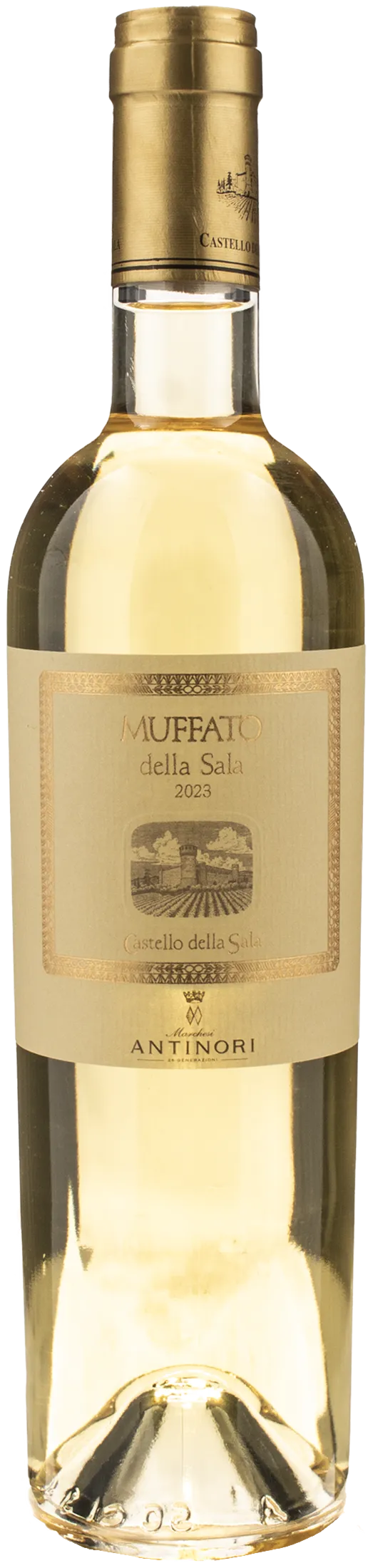
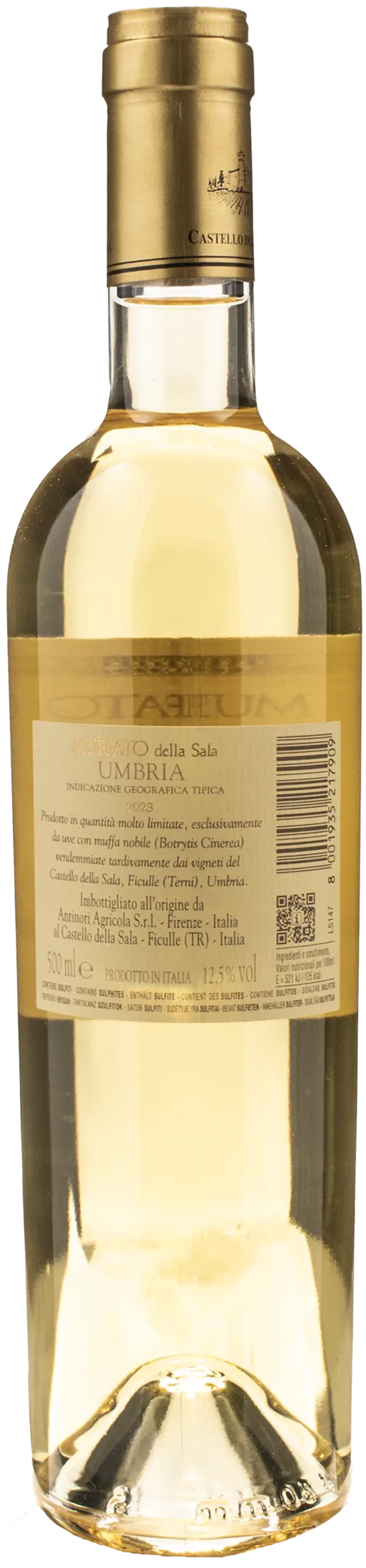
Muffato della Sala 0.5L 2023
Other years:
2024| Denomination | IGT Umbria |
|---|---|
| Size | 0,50 l |
| Alcohol content | 12.5% by volume |
| Area | Umbria (Italy) |
| Grape varieties | Grechetto, Riesling, Sauvignon, Semillon, Traminer Aromatico |
| Aging | Matured for about 6 months in French oak barriques (Alliers and Tronçais), then aged for about 2 years in stainless steel. |
| Other years | 2024 |
- Type: Sweet white dessert wine from noble rot, Umbria IGT, vintage 2023, 0.50 L bottle
- Grape varieties: Grechetto, Riesling, Sauvignon Blanc, Sémillon and Gewürztraminer
- Aromas: Notes of citrus, peach, dried apricot and saffron, intense bouquet
- Flavour: Smooth, well-balanced sweetness, slight marine savouriness and very long persistence
- Serving and pairings: Temperature 10-12 °C; 12.5% vol.; ideal with blue cheeses and dry pastries
Description
What kind of wine it is
Muffato della Sala from Castello della Sala is an enveloping sweet white wine, the result of a harmonious blend of Grechetto, Riesling, Sauvignon Blanc, Sémillon and Gewürztraminer grapes. Its distinctive character comes from the development of Botrytis cinerea, the precious noble rot that dehydrates the grapes, concentrating their sugars and aromas. On the nose, it offers deep citrus notes, hints of peach and dried apricot, combined with subtle touches of saffron. On the palate, it delivers a balanced sip, with a refined iodised savouriness that perfectly balances the sweetness, finishing with an exceptionally long persistence.
Where it comes from
The grapes are grown in the vineyards of Umbria, in the municipality of Ficulle, situated between 200 and 470 metres above sea level. The local microclimate boasts significant temperature variations and morning mists, essential conditions for the natural development of noble rot on the bunches. The clay soils, rich in marine fossils, impart a distinct mineral character to the wine. In this particularly suited area, the excellent sun exposure defines an unmistakable terroir, capable of imparting structure and impeccable balance of flavour.
How it is produced
The late harvest is carried out by hand between the end of October and the beginning of November, with repeated passes to pick only the grapes affected by noble rot. In the winery, the bunches undergo a rigorous selection on a conveyor belt, followed by gentle pressing without destemming. The must ferments in steel tanks for about 18 days. Maturation takes place for six months in fine French oak barrels. The process concludes with two years of ageing in stainless steel, a key stage to harmonise the sweetness and fix the broad aromatic profile.
History and Curiosities
Born in 1987 at the Castello della Sala of Antinori, this wine comes to life thanks to the action of noble rot. The Umbrian morning mists envelop the grapes during the late harvest, encouraging the development of Botrytis cinerea: a natural process that dehydrates the berries, concentrating their sugars and aromas, creating a delicate dessert wine of extraordinary richness. The excellence of its refined blend was recognised in 2023 with the highest awards from the Bibenda and Vitae AIS guides.
Awards
-
2023
 5
5Italian Sommelier Foundation (FIS) guide This has been one of the most prestigious wine guides in Italy for over 10 years.
-
2023
 4
4Italian Sommelier Association (AIS) guide
-
2023
 91
91/100
Wine spectator is the most influential wine guide on the internet.
Tasting notes
Perfume

Color
Taste
Serve at:
10 - 12 °C
Longevity:
05 - 10 years
- Start up year: 1940
- Oenologist: Massimiliano Pasquini
- Bottles produced: 866.586
- Hectares: 229
The estate’s 229 hectares (566 acres) of vineyards are located at an altitude of 220 - 470 meters above sea level (722-1542 feet) and are planted with traditional varieties such as Procanico and Grechetto but also with Chardonnay, Sauvignon Blanc, Sèmillon, Pinot Blanc, Viognier and a small quantity of Traminer and Riesling.
The region is exceptional for producing white varieties with one exception, Pinot Noir, that has found ideal conditions in this terroir to best express its full potential. The vines grow in clay and calcareous based soils, rich in fossil shells, and they are well exposed to the rising of the sun with an excellent difference of temperature between day and night. Read more


| Name | Castello della Sala Muffato della Sala 0.5L 2023 |
|---|---|
| Type | White dessert wine from grapes with noble rot sweet |
| Denomination | Umbria IGT |
| Vintage | 2023 |
| Size | 0,50 l |
| Alcohol content | 12.5% by volume |
| Grape varieties | Grechetto, Riesling, Sauvignon, Semillon, Traminer Aromatico |
| Country | Italy |
| Region | Umbria |
| Vendor | Castello della Sala (Antinori) |
| Story | History and Curiosities Born in 1987 at the Castello della Sala of Antinori, this wine comes to life thanks to the action of noble rot. The Umbrian morning mists envelop the grapes during the late harvest, encouraging the development of Botrytis cinerea: a natural process that dehydrates the berries, concentrating their sugars and aromas, creating a delicate dessert wine of extraordinary richness. The excellence of its refined blend was recognised in 2023 with the highest awards from the Bibenda and Vitae AIS guides. |
| Origin | Castello della Sala, Ficulle (Terni), Umbria, Italia |
| Climate | Forte escursione termica tra giorno e notte, con nebbie mattutine |
| Soil composition | Clay soils, rich in marine fossils |
| Harvest | Late October - early November |
| Fermentation temperature | Circa 17 °C |
| Fermentation | 18 days |
| Production technique | Produced with botrytised grapes (noble rot/Botrytis cinerea) from late harvest |
| Wine making | After being transferred to the winery, the grape bunches were further selected on a sorting belt; this was followed by gentle crushing without destemming. After pressing, the must fermented in stainless steel for 18 days at around 17°C; the wine then matured for about 6 months in French oak barriques (Allier and Tronçais) and was subsequently aged for about 2 years in stainless steel. |
| Aging | Matured for about 6 months in French oak barriques (Alliers and Tronçais), then aged for about 2 years in stainless steel. |
| Allergens | Contains sulphites |