


Castello del Terriccio
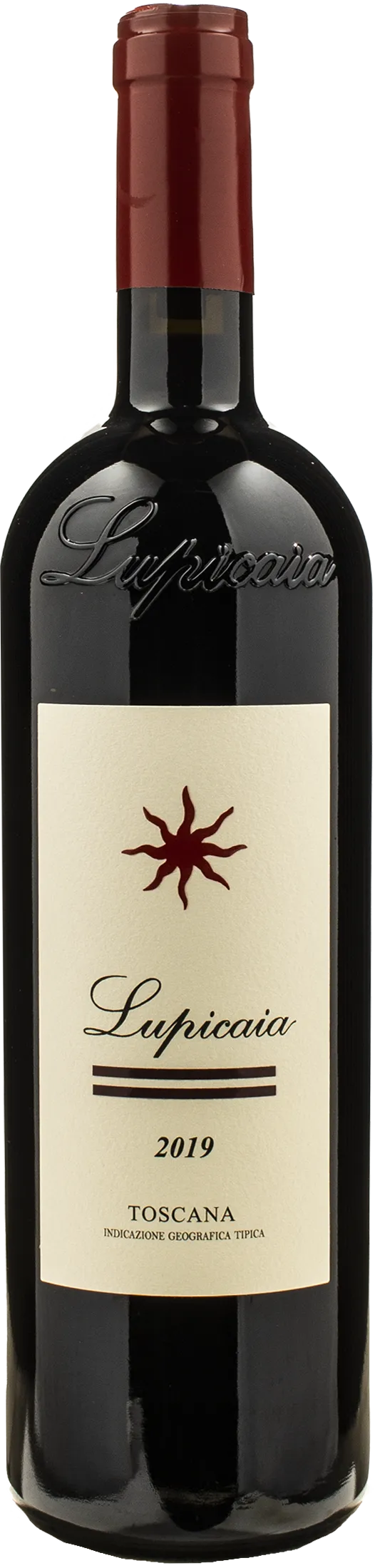
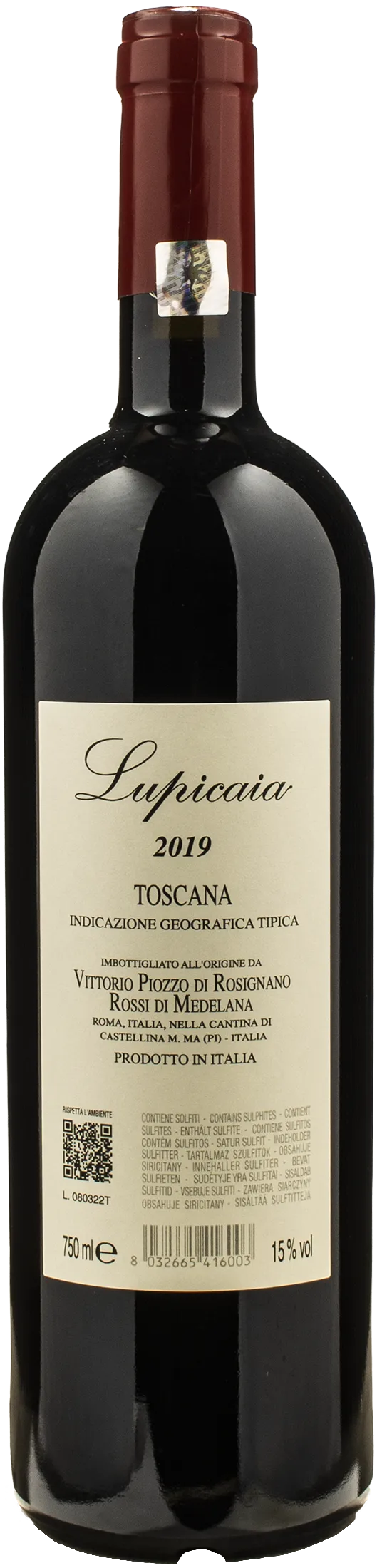
Rossi di Medelana Lupicaia 2019
| Denomination | IGT Toscana |
|---|---|
| Size | 0,75 l |
| Alcohol content | 15.0% by volume |
| Area | Tuscany (Italy) |
| Grape varieties | 85% Cabernet Sauvignon, 10% Merlot, 5% Petit Verdot |
| Aging | Overall ageing of 18 months in new Allier barriques |
- Blend and designation: Toscana IGT made from Cabernet Sauvignon, Merlot and Petit Verdot
- Ageing: 18 months in new Allier oak barriques for greater structure and spiciness
- Aromatic profile: blackcurrant, mineral and balsamic notes, light hints of fresh wood
- Recommended serving: decant for 1 hour and serve at 18–20 °C; alcohol content 15% vol
- Ideal pairings: game, grilled meats, mushrooms and mature cheeses
Description
What kind of wine it is
Lupicaia by Castello del Terriccio is a still red wine from Tuscany, created from a blend of Cabernet Sauvignon, Merlot and Petit Verdot. It displays an intense ruby red colour and an aromatic profile characterised by blackcurrant and mineral notes, enriched with balsamic accents and hints of fresh wood. On the palate, it is full-bodied and well-structured. Its solid texture makes it perfect for pairing with game and grilled meats, but it also pairs beautifully with mushrooms, mature cheeses or meat dishes with chocolate sauces. It is recommended to serve at 18–20 °C after one hour of decanting.
Where it comes from
This wine originates in the northern coastal Maremma, at the Castello del Terriccio estate. The vines grow at around 120 metres above sea level, with optimal exposure to the south and south-west. The limestone soil and the use of the spur-pruned cordon training system allow for very concentrated yields. The name Lupicaia recalls local history: it derives from the “balzello”, the precise spot in the woodland where wolves once emerged to attack their prey, making the area famous as the place of the wolf hunt.
How it is produced
Production begins in September with a manual harvest carried out separately for each grape variety, limiting the yield to just 900 grams per vine. In the winery, temperature-controlled fermentation takes place at 31 °C for a period of 16-20 days. The process concludes with 18 months of ageing in new Allier barrels, a crucial stage that defines the spicy notes and tannic structure, preparing the wine for a long evolution in the bottle before being released to the market.
History and Curiosities
The renowned Lupicaia 2019 is the masterpiece that established the Castello del Terriccio estate on the international stage. Born in the coastal Maremma under the expert guidance of oenologist Carlo Ferrini, this majestic Toscana IGT takes its name from the “balzello”, the exact spot where wolves were once hunted as they emerged from the scrubland. The result of extremely low yields to ensure absolute concentration, this exceptional wine offers an unforgettable tasting experience, recognised with prestigious 95 Parker points and 94 points from James Suckling.
Awards
-
2019
 5
5Italian Sommelier Foundation (FIS) guide This has been one of the most prestigious wine guides in Italy for over 10 years.
-
2019
 3
3This guide is highly respected and offers the most comprehensive review of Italian wines. It has a long tradition and is based on blind tastings carried out by over 100 experts.
-
2019
 94
94/100
James Suckling is an influential American wine critic and journalist who worked at Wine Spectator for 30 years. He left the magazine in 2010 to start his own website and guidebook (JamesSuckling.com). He specialises in Italian and Bordeaux wines.
-
2019
 96
96/100
One of the most prestigious wine guides in Italy.
-
2019
 95
95/100
The prestigious international wine guide from the renowned Robert Parker, the world's most experienced and trusted wine taster.
-
2019
 3
3One of the most prestigious wine guides in Italy.
-
2019
 4
4Italian Sommelier Association (AIS) guide
Tasting notes

Perfume

Color

Taste
Serve at:
18 - 20 °C
Longevity:
10 - 15 years
Decanting time:
1 hour
- Start up year: 1921
- Oenologist: Carlo Ferrini
- Bottles produced: 200.000
- Hectares: 50
The estate traces its roots back to the Etruscan era, when its strategic seaside location proved to be an ideal place from which to keep watch for pirates heading toward the coast. The ruins of the Terriccio castle, still visible, date to this era. The estate's real history, however, begins in the 13th century, when the Pope acquired it on behalf of the noble Gaetani family, who controlled it for 500 years, creating a successful farm and building the farmhouses and cellar that still stand today. In the late 1700s, the Gaetanis sold the estate to a Polish prince, who in turn sold it to the family of the present owner (Dr. Gian Annibale Rossi di Medelana Serafini Ferri) in 1921. In 1979, Serafini Ferri suffered a serious horseback riding accident that left him in a wheelchair, and he began to focus on the estate's potential as a winery. High quality winemaking began in the late 1980s andd early 1990s, when varieties like Sangiovese, Cabernet Sauvignon, Merlot, Chardonnay and Sauvignon Blanc were planted with great success.
The dense, powerful reds and tantalizing whites made here have found favor in the international wine community and are praised for being pure reflections of their terroir. They are often described with words like "superlative", "tremendous", "splendid" and "luscious". Castello Terriccio's most iconic wine is the renowned super Tuscan Lupicaia, grown in limestone soil in an area once known as the wolves' favorite hunting ground. This Cabernet Sauvignon blend melds lusciously rich fruit with spicy balsamic notes. Also wonderful is the Castello del Terriccio, a complex wine with a striking ruby tone, herb-like aromas that blend with spicy notes of liquorice and cinnamon, and great depth. The estate's white wines are known for being unabashedly expressive, clean creations. Harvest for all wines is done by hand across the estate's 50 hectares of vineyards. Yields are kept low (no more than 900g per vine) to ensure concentrated fruit and better-structured wines. Read more


| Name | Castello del Terriccio Lupicaia 2019 |
|---|---|
| Type | Red still |
| Denomination | Toscana IGT |
| Vintage | 2019 |
| Size | 0,75 l |
| Alcohol content | 15.0% by volume |
| Grape varieties | 85% Cabernet Sauvignon, 10% Merlot, 5% Petit Verdot |
| Country | Italy |
| Region | Tuscany |
| Vendor | Castello del Terriccio |
| Story | History and Curiosities The renowned Lupicaia 2019 is the masterpiece that established the Castello del Terriccio estate on the international stage. Born in the coastal Maremma under the expert guidance of oenologist Carlo Ferrini, this majestic Toscana IGT takes its name from the "balzello", the exact spot where wolves were once hunted as they emerged from the scrubland. The result of extremely low yields to ensure absolute concentration, this exceptional wine offers an unforgettable tasting experience, recognised with prestigious 95 Parker points and 94 points from James Suckling. |
| Origin | Coastal Maremma of northern Tuscany |
| Climate | Altitude: 120 m a.s.l., south/south-west exposure |
| Soil composition | Calcareous soil |
| Cultivation system | Spurred cordon |
| Plants per hectare | 3600-4200 |
| Yield per hectare | Maximum 3,240–3,780 kg/ha (≈32.4–37.8 quintals/ha) |
| Harvest | September |
| Fermentation temperature | Approximately 31 °C at a controlled temperature |
| Fermentation | 16 days for Merlot and Petit Verdot; 20 days for Cabernet Sauvignon |
| Production technique | Manual harvest; temperature-controlled fermentation; overall ageing of 18 months in new Allier barriques; bottling |
| Wine making | Manual harvest; fermentation at controlled temperature (around 31°C) for 16 days (Merlot and Petit Verdot) and 20 days (Cabernet Sauvignon); total ageing of 18 months in new Allier barriques; bottling. |
| Aging | Overall ageing of 18 months in new Allier barriques |
| Total acidity | 5.2 gr/L |
| Year production | 200000 bottles |
| Allergens | Contains sulphites |