


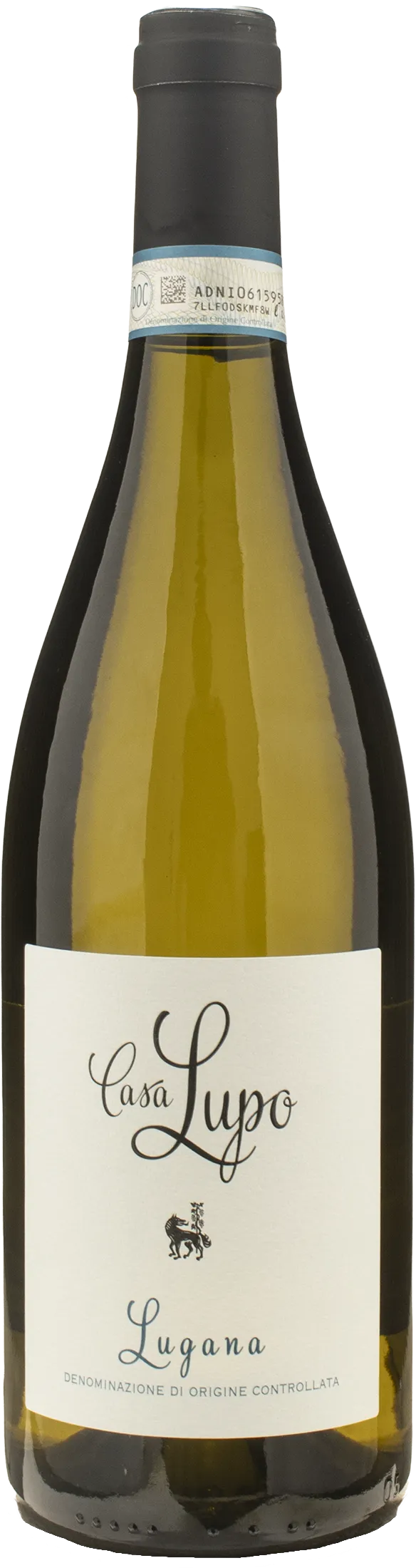
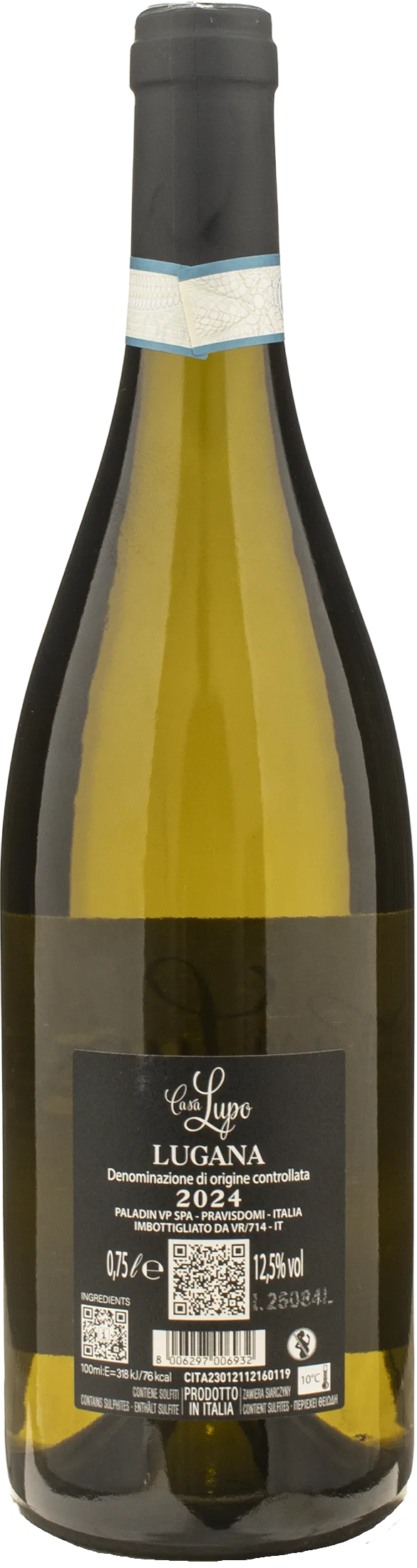
Casa Lupo
Lugana 2024
| Denomination | DOC Lugana |
|---|---|
| Size | 0,75 l |
| Alcohol content | 12.5% by volume |
| Area | Veneto (Italy) |
| Grape varieties | 100% Trebbiano |
| Aging | Ageing in steel containers for several months with bâtonnage on fine lees; after a few years of bottle maturation, it develops almond notes. |
- Grape variety: Lugana DOC from pure Turbiana, also known as Trebbiano di Lugana
- Aromas and appearance: hints of pineapple, melon and citrus fruits; straw yellow colour with golden highlights
- Taste: dry, fresh and balanced; develops almond notes with ageing
- Vinification technique: gentle pressing, cold maceration and 12-day fermentation
- Pairings: ideal with fish, shellfish and sushi. Serve at 8-10 °C. JS: 88/100
Description
What kind of wine it is
Casa Lupo Lugana is a dry, still white wine made from Turbiana grapes, also known as Trebbiano di Lugana. This expression of the lakeside territory appears in the glass with a straw yellow colour, illuminated by elegant golden highlights. The delicate aromatic bouquet reveals inviting notes of exotic fruit, such as pineapple and melon, intertwined with lively citrus nuances. On the palate, it offers a dry and fresh sip, enveloped by a balanced softness that makes the drinking experience full and harmonious. Over time, the flavour profile evolves, revealing a refined note of almond.
Where it comes from
The vines for this wine grow between Veneto and Lombardy, overlooking the shores of Lake Garda. The vineyards are situated at an average altitude of eighty metres, taking root deeply in calcareous and clay soils. This terroir benefits from a Mediterranean climate, tempered by the constant lake breezes. Such conditions allow the Turbiana variety to reach perfect ripeness, expressing a vibrant territorial character. The result is a glass that skilfully combines great gustatory tension with a marked ability to evolve over time.
How it is produced
The bunches are harvested in September, once full phenolic ripeness is achieved. Vinification begins with a gentle pressing and a brief cold maceration on the skins, an essential step to extract the primary aromas. This is followed by fermentation at a controlled temperature for about twelve days. Maturation takes place entirely in steel tanks for several months, accompanied by constant bâtonnage on the fine lees. This technique enriches the structure of the wine, giving it a pleasant roundness and ensuring the longevity of the wine for years to come.
History and Curiosities
Born on Lake Garda, Casa Lupo Lugana DOC is an outstanding white wine made from Turbiana grapes. Grown on calcareous and clay soils, it offers hints of exotic fruit and citrus, with a fresh and balanced sip. Its ageing potential of 3-5 years allows the fruit to develop into refined notes of almond. An oenological masterpiece, awarded by James Suckling.
Awards
-
2024
 88
88/100
James Suckling is an influential American wine critic and journalist who worked at Wine Spectator for 30 years. He left the magazine in 2010 to start his own website and guidebook (JamesSuckling.com). He specialises in Italian and Bordeaux wines.
Tasting notes
Perfume

Color

Taste
Serve at:
08 - 10 °C
Longevity:
03 - 05 years
Here, Paladin has established an intense collaboration with the winegrowers of Valpolicella, combining their local expertise with the methods and skills of its own agronomists and oenologists. Casa Lupo embodies the pride and importance of Valpolicella, offering three excellent products on the market: Ripasso della Valpolicella, Amarone della Valpolicella, and Amarone della Valpolicella Riserva. Read more



| Name | Casa Lupo Lugana 2024 |
|---|---|
| Type | White still |
| Denomination | Lugana DOC |
| Vintage | 2024 |
| Size | 0,75 l |
| Alcohol content | 12.5% by volume |
| Grape varieties | 100% Trebbiano |
| Country | Italy |
| Region | Veneto |
| Vendor | Casa Lupo |
| Story | History and Curiosities Born on Lake Garda, Casa Lupo Lugana DOC is an outstanding white wine made from Turbiana grapes. Grown on calcareous and clay soils, it offers hints of exotic fruit and citrus, with a fresh and balanced sip. Its ageing potential of 3-5 years allows the fruit to develop into refined notes of almond. An oenological masterpiece, awarded by James Suckling. |
| Origin | Between Veneto and Lombardy, overlooking Lake Garda |
| Climate | Mediterranean climate |
| Soil composition | Calcareous and clay soils |
| Harvest | September |
| Fermentation | About 12 days |
| Production technique | Soft pressing; short cold maceration in contact with the skins; temperature-controlled alcoholic fermentation for about 12 days; ageing in steel tanks for a few months with bâtonnage on the fine lees |
| Wine making | After gentle pressing, a brief cold maceration with the skins begins to extract the primary aromas; alcoholic fermentation at a controlled temperature for about 12 days; maturation in steel tanks for several months with bâtonnage of the fine lees to provide roundness and longevity. |
| Aging | Ageing in steel containers for several months with bâtonnage on fine lees; after a few years of bottle maturation, it develops almond notes. |
| Allergens | Contains sulphites |