


Carranco
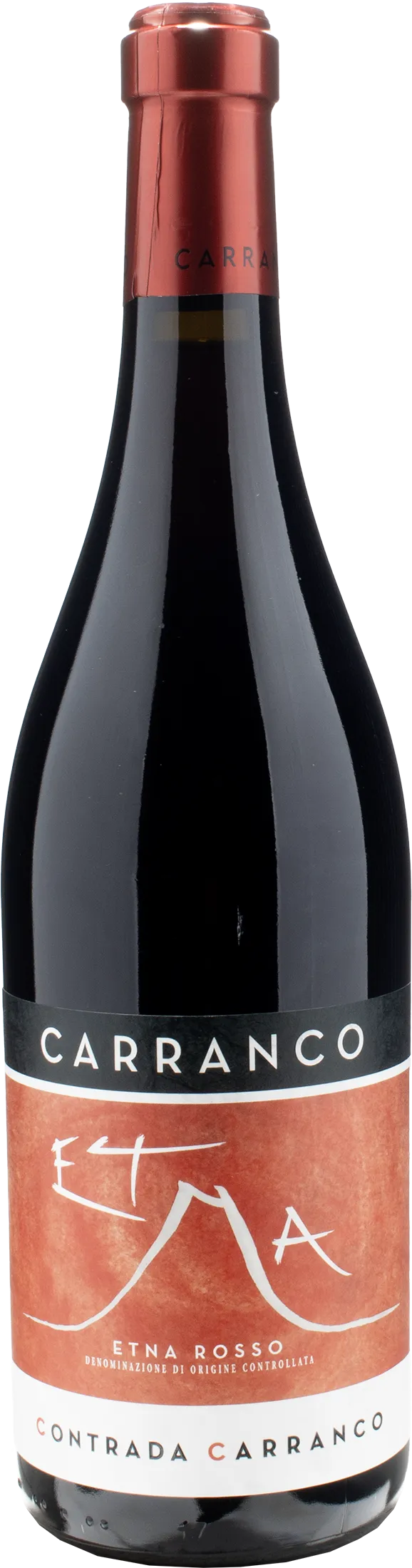
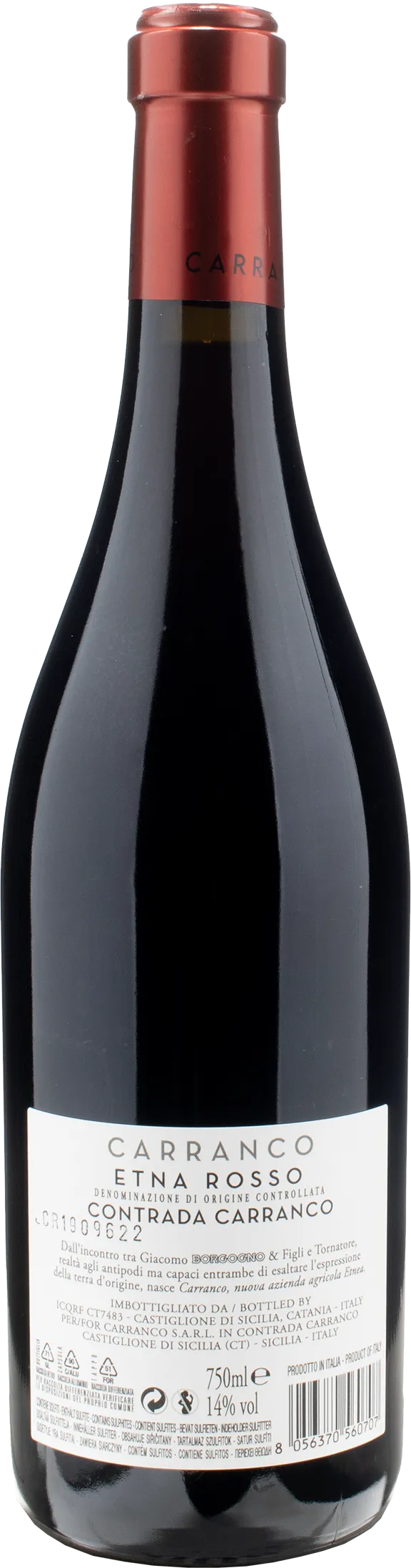
Etna Rosso Contrada Carranco 2019
| Denomination | DOC Etna Rosso |
|---|---|
| Size | 0,75 l |
| Alcohol content | 14.0% by volume |
| Area | Sicily (Italy) |
| Grape varieties | 95% Nerello Mascalese, 5% Nerello Cappuccio |
| Aging | Post-fermentation maceration for about 25 days on the skins with submerged cap; ageing in large French oak barrels for 12 months before bottling. |
- Grape varieties and vintage: 95% Nerello Mascalese, 5% Nerello Cappuccio, harvested in 2019
- Region: Northern slope of Etna at 500m, terraced vineyards on basaltic volcanic soil
- Vinification: Fermentation in cement at 24–26°C, 25 days maceration with submerged cap
- Ageing: 12 months in large French oak barrels, ageing potential of 10–15 years
- Profile and serving: Notes of black cherry, strawberry and spices. Vibrant tannins. Serve at 16–18°C
Description
What kind of wine it is
Etna Rosso Contrada Carranco is a still red wine produced by Carranco. Made from a harmonious blend of Nerello Mascalese and Nerello Cappuccio, it displays a ruby colour with elegant garnet highlights. The bouquet reveals aromas of ripe red fruit, including morello cherries and strawberries, enriched by complex spicy notes, mocha and tobacco. On the palate, it showcases a pronounced structure, supported by persistent acidity and vibrant tannins. This wine pairs excellently with flavourful dishes, kid goat meat or elaborate fish recipes, especially if allowed to decant for about an hour.
Where it comes from
The grapes grow in the area of Castiglione di Sicilia, on the northern slope of Mount Etna. The vineyards are situated at five hundred metres above sea level, set on small volcanic terraces rich in basalt rocks. In this environment, the vines are cultivated using the traditional alberello training system. The pronounced volcanic nature of the soil and the local climate impart a unique character to the grapes, delivering the typical territorial minerality that enhances the expression of the native varieties.
How it is produced
In mid-October, the grapes are carefully destemmed and crushed to start fermentation in cement vats at a controlled temperature. Afterwards, the wine undergoes a post-fermentation maceration with the cap submerged for twenty-five days, a crucial phase for extracting anthocyanins and tannins. Ageing continues in large French oak barrels for twelve months. Every step is designed to respect the integrity and identity of Nerello Mascalese and Nerello Cappuccio.
History and Curiosities
Launched in 2017, the project enhances the northern slope of Mount Etna, in Castiglione di Sicilia. Etna Rosso Contrada Carranco is born among basalt rocks, where vines trained as alberello on terraces sink their roots into the volcanic soil. Under the guidance of oenologist Vincenzo Bambina, the 2019 vintage combines the native Nerello Mascalese and Nerello Cappuccio grape varieties, resulting in a wine that expresses the power and unmistakable Etnean minerality.
Awards
-
2019
 4
4Italian Sommelier Foundation (FIS) guide This has been one of the most prestigious wine guides in Italy for over 10 years.
-
2019
 92
92/100
James Suckling is an influential American wine critic and journalist who worked at Wine Spectator for 30 years. He left the magazine in 2010 to start his own website and guidebook (JamesSuckling.com). He specialises in Italian and Bordeaux wines.
-
2019
 93
93/100
The prestigious international wine guide from the renowned Robert Parker, the world's most experienced and trusted wine taster.
Tasting notes

Perfume

Color

Taste
Serve at:
16 - 18 °C
Longevity:
10 - 15 years
Decanting time:
1 hour

- Start up year: 2017
- Oenologist: Vincenzo Bambina
- Bottles produced: 35.000
- Hectares: 7
Carranco was born from the meeting of Borgogno and Tornatore, a blend of history, experience, and authentic Ethnean roots.
The vineyards are located on the volcano's northern flank, and only traditional methods of vinification are used. It only grows native vines, primarily Nerello Mescalese, Nerello Cappuccio, and Carricante, which are the purest expressions of Etna, and it is from the volcanic soils that they draw the power, strength, and explosiveness of each eruption. Read more


| Name | Carranco Etna Rosso Contrada Carranco 2019 |
|---|---|
| Type | Red still |
| Denomination | Etna DOC |
| Vintage | 2019 |
| Size | 0,75 l |
| Alcohol content | 14.0% by volume |
| Grape varieties | 95% Nerello Mascalese, 5% Nerello Cappuccio |
| Country | Italy |
| Region | Sicily |
| Vendor | Carranco |
| Story | History and Curiosities Launched in 2017, the project enhances the northern slope of Mount Etna, in Castiglione di Sicilia. Etna Rosso Contrada Carranco is born among basalt rocks, where vines trained as alberello on terraces sink their roots into the volcanic soil. Under the guidance of oenologist Vincenzo Bambina, the 2019 vintage combines the native Nerello Mascalese and Nerello Cappuccio grape varieties, resulting in a wine that expresses the power and unmistakable Etnean minerality. |
| Origin | Castiglione di Sicilia, Contrada Carranco (northern slope of Mount Etna), province of Catania, Sicily, Italy |
| Soil composition | Volcanic (basalt rocks) |
| Cultivation system | Alberello |
| Harvest | Mid-October |
| Fermentation temperature | 24–26 °C |
| Production technique | Destemming and crushing; fermentation in concrete tanks at a controlled temperature (24–26 °C); post-fermentation maceration on the skins with submerged cap for 25 days; ageing in large French oak barrels for 12 months |
| Wine making | After the harvest, the grapes are destemmed and crushed; fermentation then takes place in cement tanks at a controlled temperature (24-26 °C) followed by a post-fermentation maceration of about 25 days on the skins with a submerged cap; the wine is then aged in large French oak barrels for 12 months before bottling. |
| Aging | Post-fermentation maceration for about 25 days on the skins with submerged cap; ageing in large French oak barrels for 12 months before bottling. |
| Year production | 35000 bottles |
| Allergens | Contains sulphites |