


Ca di Rajo
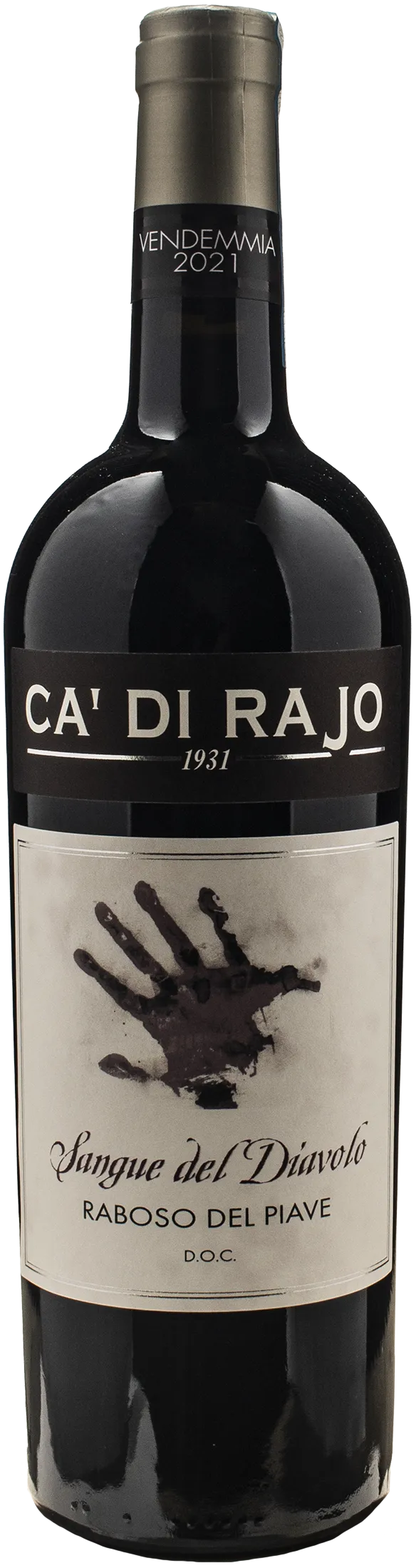
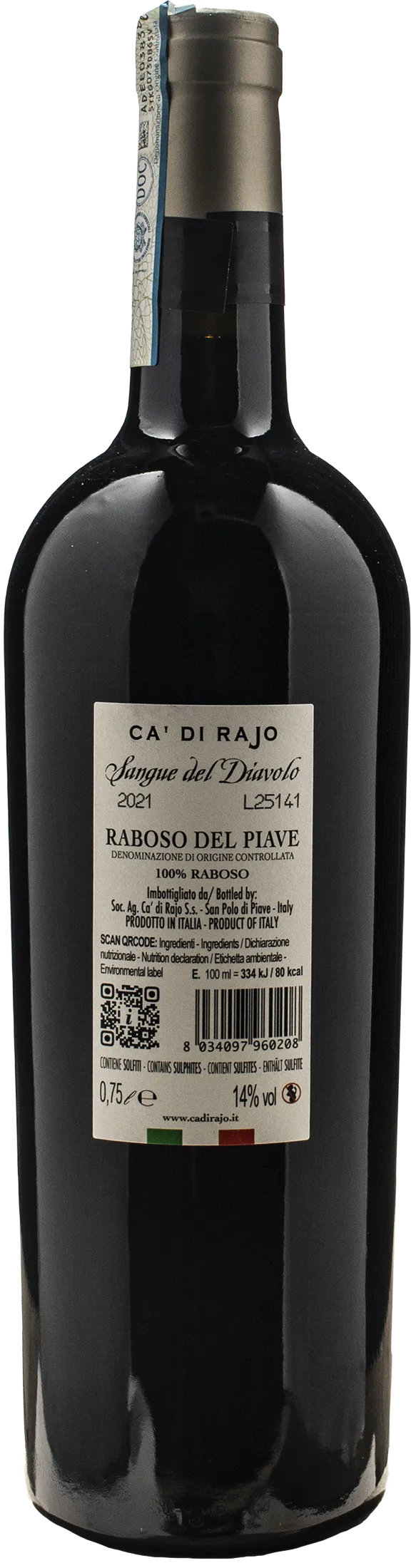
Raboso Piave Sangue del Diavolo 2021
| Denomination | DOC Piave Raboso |
|---|---|
| Size | 0,75 l |
| Alcohol content | 14.0% by volume |
| Area | Veneto (Italy) |
| Grape varieties | 100% Raboso Piave |
| Aging | 24 months in 12 hl wooden barrels for grapes over-ripened on the vine, 12 months in barriques for dried grapes in the drying room. |
- Grape variety and designation: Raboso Piave DOC 2021, still red wine from Veneto, 14% vol
- Traditional drying: Overripe grapes dried on racks with controlled conditions
- Vinification: Maceration for 20–25 days in wooden vats at a temperature of 24–26 °C
- Aromas: Notes of cherry and plum, spices, vanilla, tobacco, leather and pepper
- Taste and pairings: Pronounced tannins, lively acidity; ideal with game and cheeses
Description
What kind of wine it is
Sangue del Diavolo by Ca’ di Rajo is a still red wine that embodies the essence of Raboso Piave grapes from the Veneto region. A true expression of the Raboso del Piave area, it stands out for its complex aromatic profile where notes of cherry, morello cherry and wild blackberry intertwine with spicy hints of cinnamon, vanilla and pepper, enriched by nuances of tobacco and leather. On the palate, it displays a solid structure, supported by powerful tannins and a lively acidity that adds depth. Produced through traditional drying and ageing in barrels, it offers a long and savoury finish, with a pleasantly dry character that highlights its great gastronomic vocation.
Where it comes from
The grapes originate from the Treviso area, specifically in Rai di San Polo di Piave, where the vines are cultivated using the traditional Sylvoz and Bellussi systems. The soils, characterised by a clay and sandy matrix with gravel deposits, promote an extraordinary phenolic concentration in the bunches. The optimal exposure and low yields allow the Raboso to develop a solid gustatory structure. This strong territorial imprint is reflected in a pronounced acidity, a fundamental element to ensure the wine’s excellent longevity and ability to evolve over time.
How it is produced
The manual harvest at the end of October involves a careful blend of grapes left to overripen on the vine and bunches subjected to drying on racks in rooms with controlled ventilation. Fermentation takes place with maceration on the skins in wooden vats, followed by malolactic fermentation. The wine matures for a period of twenty-four months in wood: the portion from overripened grapes rests in barrels, while the dried selection ages in oak casks. This technical synergy gives the glass a dense, enveloping and balanced structure.
History and Curiosities
Sangue del Diavolo features an elegant black label enhanced by the distinctive artistic imprint of a dark red hand. Its production is linked to history through the ancient practice of drying grapes on racks. The wine has also won numerous international awards, including silver medals at Mundus Vini, the Concours Mondial de Bruxelles and the USA Wine Ratings, as well as 90 points in Luca Maroni's Yearbook.
Awards
-
2021
 3
3One of the most prestigious wine guides in Italy.
Tasting notes

Perfume

Color

Taste
Serve at:
16 - 18 °C
Longevity:
05 - 10 years
Decanting time:
1 hour

- Start up year: 2005
- Oenologist: Paolo Brugnera
- Bottles produced: 2.000.000
- Hectares: 90
The company uses the most innovative winemaking technologies, however, its modern facility and young team are located in a fascinating historical context, in an estate located within a medieval village. Symbols of the glorious past of the countryside that extends from Conegliano to Oderzo, the Chiesetta del Carmine, the neighboring Casa Convento and the Tower of Rai from the 14th century, stand next to a modern designed winery.
Ca' di Rajo has the great pleasure of communicating the awarding of diplomas by 5star wines to three of its best-loved wines, namely: 90 points to Valdobbiadene prosecco Superiore DOCG Extra Dry, 90 points to Iconema Tai Piave DOC and 93 points to Torchiato di Fregona. Read more


| Name | Ca di Rajo Raboso Piave Sangue del Diavolo 2021 |
|---|---|
| Type | Red still |
| Denomination | Piave DOC |
| Vintage | 2021 |
| Size | 0,75 l |
| Alcohol content | 14.0% by volume |
| Grape varieties | 100% Raboso Piave |
| Country | Italy |
| Region | Veneto |
| Vendor | Ca di Rajo |
| Story | History and Curiosities Sangue del Diavolo features an elegant black label enhanced by the distinctive artistic imprint of a dark red hand. Its production is linked to history through the ancient practice of drying grapes on racks. The wine has also won numerous international awards, including silver medals at Mundus Vini, the Concours Mondial de Bruxelles and the USA Wine Ratings, as well as 90 points in Luca Maroni's Yearbook. |
| Origin | Rai di San Polo di Piave (Treviso), Veneto, Italia |
| Climate | Altitude: 30 m a.s.l. Exposure: South-North. |
| Soil composition | Clayey, sandy, occasionally also gravelly. |
| Cultivation system | Double inverted Sylvoz and Bellussi |
| Plants per hectare | 3000 plants per hectare |
| Yield per hectare | 70–80 quintals per hectare |
| Harvest | End of October |
| Fermentation temperature | 24–26 °C |
| Fermentation | 20-25 days |
| Production technique | Traditional appassimento (drying of the grapes on racks in a temperature, humidity and ventilation controlled environment) |
| Wine making | Manual harvest at the end of October; blend of overripe grapes on the vine and bunches subjected to traditional drying on racks in controlled ventilation environments. Maceration for 20–25 days in 35 hl wooden vats at 24–26 °C, followed by malolactic fermentation after racking with selected bacteria. Ageing in wooden casks (for the overripe portion) and in oak barriques (for the dried portion). |
| Aging | 24 months in 12 hl wooden barrels for grapes over-ripened on the vine, 12 months in barriques for dried grapes in the drying room. |
| Total acidity | 6.8 gr/L |
| PH | 3.3 |
| Residual sugar | 6.0 gr/L |
| Dry extract | 32.0 gr/L |
| Allergens | Contains sulphites |