


Bric Cenciurio
Barolo Coste di Rose Riserva 2017
| Denomination | DOCG Barolo Riserva |
|---|---|
| Size | 0,75 l |
| Alcohol content | 14.5% by volume |
| Area | Piedmont (Italy) |
| Grape varieties | 100% Nebbiolo |
| Aging | Long traditional ageing: first in large barrels, then in steel, finally in bottles laid on their sides. |
- Origin and vintage: Barolo DOCG Riserva 2017 from the Coste di Rose cru in Piedmont
- Grape variety: 100% Nebbiolo, a still red wine of remarkable structure and aromatic complexity
- Ageing: prolonged and traditional maturation in large oak casks, stainless steel, and laid-down bottle
- Serving and pairings: decant for 1 hour; ideal with roasts, game, and mature cheeses
- Data and awards: 14.5% vol, 0.75 l; rated 93/100 by James Suckling, 4 bunches Bibenda
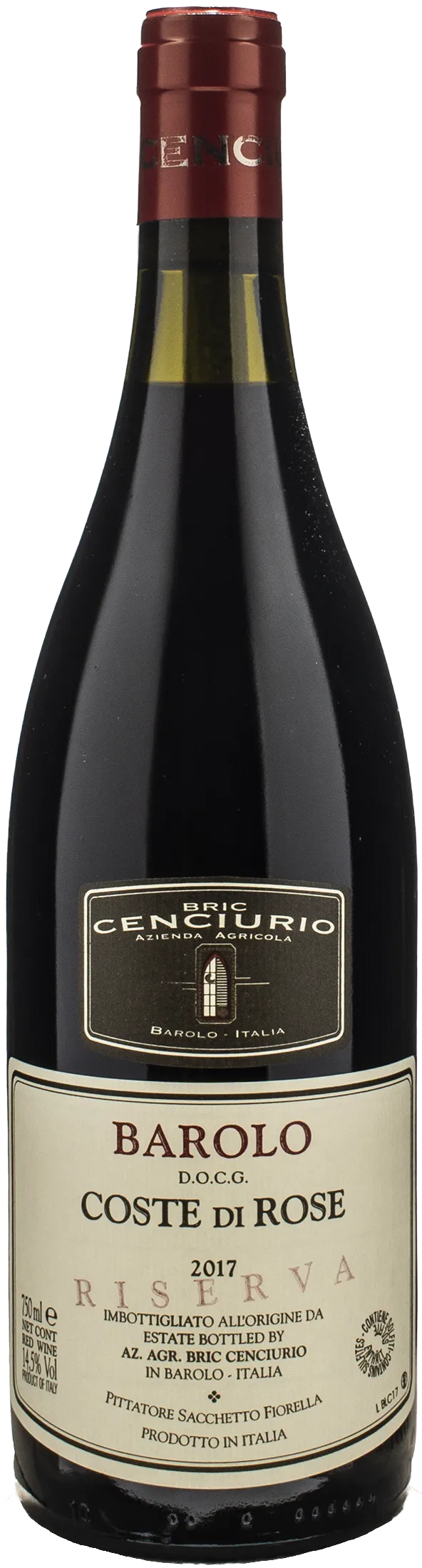
Description
What kind of wine it is
The Bric Cencurio Barolo Coste di Rose Riserva is a red wine made from Nebbiolo grapes, a classic expression of Barolo. In the glass, it reveals a structured profile, with a deep palate that encourages slow evolution. Its pronounced aromatic complexity is complemented by a well-integrated tannic texture, making it the ideal pairing for roasts, game and mature cheeses.
Where it comes from
The grapes come from the Coste di Rose cru, located in the heart of the Barolo production area in Piedmont. These vineyards give the grapes a strong character, consistent with the identity of the Riserva type. The Bric Cenciurio winery combines viticulture with the protection of the surrounding woodland areas, aiming to preserve local biodiversity and maintain a balanced microclimate for the optimal development of the vine.
How it is produced
Production is based on strictly manual vineyard work, respecting the plant's natural cycles. After vinification, the wine undergoes ageing that begins in large barrels, continues with a period in steel, and finishes in the bottle. This careful maturation process consolidates the structure, increases complexity and ensures an ideal balance between freshness and depth.
History and Curiosities
Originating from the Coste di Rose cru in Piedmont, the Barolo DOCG Riserva from Bric Cenciurio showcases the full potential of Nebbiolo. This wine is a true “thoroughbred” that requires time to reveal its innate elegance, perfected by a long traditional ageing process in large barrels, steel, and bottle. The 2017 vintage offers masterful complexity, awarded 93 points by James Suckling, and is able to perfectly balance lively freshness with extraordinary depth.
Tasting notes

Color

Taste
Serve at:
18 - 20 °C
Longevity:
10 - 15 years
Decanting time:
1 hour

- Start up year: 1996
- Oenologist: Alessandro Pittatore
- Bottles produced: 70.000
- Hectares: 15
Starting from here, in 1990 Franco Pittatore and his brother-in-law Carlo Sacchetto decided to merge their properties in Barolo and Roero, to give life to their dream: producing traditional high-quality wines. A dream, but also a solid project, carried out today by Franco's sons, Alessandro and Alberto, in their estate vineyards in Barolo, Novello, Castellinaldo, and Magliano Alfieri.
Their commitment to keeping alive the good agricultural practices learned from their ancestors, further improved by their oenological studies and continuous research, translates into good practices aimed to safeguard the natural cycles of the land.
Strictly manual labor, carried out with the same care and attention in each vineyard, a part of the land set aside to natural forest, thus renouncing to increase the production in favor of maintaining great biodiversity and an ideal microclimate, are the concrete signs of a commitment that continues in the cellar, with the maximum respect for the grapes and their natural times. Read more


| Name | Bric Cencurio Barolo Coste di Rose Riserva 2017 |
|---|---|
| Type | Red still |
| Denomination | Barolo DOCG |
| Vintage | 2017 |
| Size | 0,75 l |
| Alcohol content | 14.5% by volume |
| Grape varieties | 100% Nebbiolo |
| Country | Italy |
| Region | Piedmont |
| Vendor | Bric Cenciurio |
| Story | History and Curiosities Originating from the Coste di Rose cru in Piedmont, the Barolo DOCG Riserva from Bric Cenciurio showcases the full potential of Nebbiolo. This wine is a true "thoroughbred" that requires time to reveal its innate elegance, perfected by a long traditional ageing process in large barrels, steel, and bottle. The 2017 vintage offers masterful complexity, awarded 93 points by James Suckling, and is able to perfectly balance lively freshness with extraordinary depth. |
| Origin | Coste di Rose, Barolo, Piemonte, Italia |
| Production technique | Long traditional ageing: first in large casks, then in steel, finally in horizontally stored bottles |
| Wine making | Long traditional ageing: first in large barrels, then in stainless steel, and finally in bottles laid on their sides. |
| Aging | Long traditional ageing: first in large barrels, then in steel, finally in bottles laid on their sides. |
| Allergens | Contains sulphites |