


Bortolomiol
Prosecco Treviso Miol Brut Millesimato 2025
| Denomination | DOC Prosecco Treviso Spumante Brut |
|---|---|
| Size | 0,75 l |
| Alcohol content | 11.0% by volume |
| Area | Veneto (Italy) |
| Grape varieties | 100% Glera |
| Aging | Secondary fermentation: at least 30 days. Maturation: from 1 to 2 months. |
- Origin: Prosecco DOC Treviso 2025, 100% Glera, Veneto, 0.75 l
- Charmat Method: secondary fermentation for at least 30 days, maturation for 1-2 months
- Aromas: fruity and slightly unripe notes, apple, tropical hints, thyme and oregano
- Taste and perlage: fine and persistent bubbles, soft yet decisive sip, clean finish
- Pairings: 6–8 °C, ideal as an aperitif, with seafood starters and herb risottos
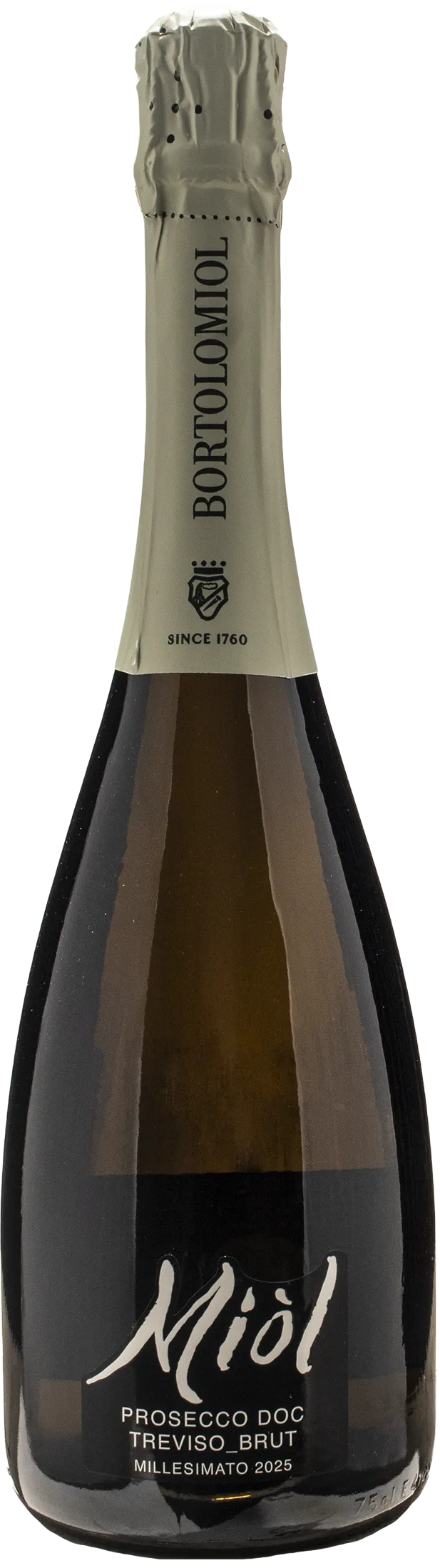
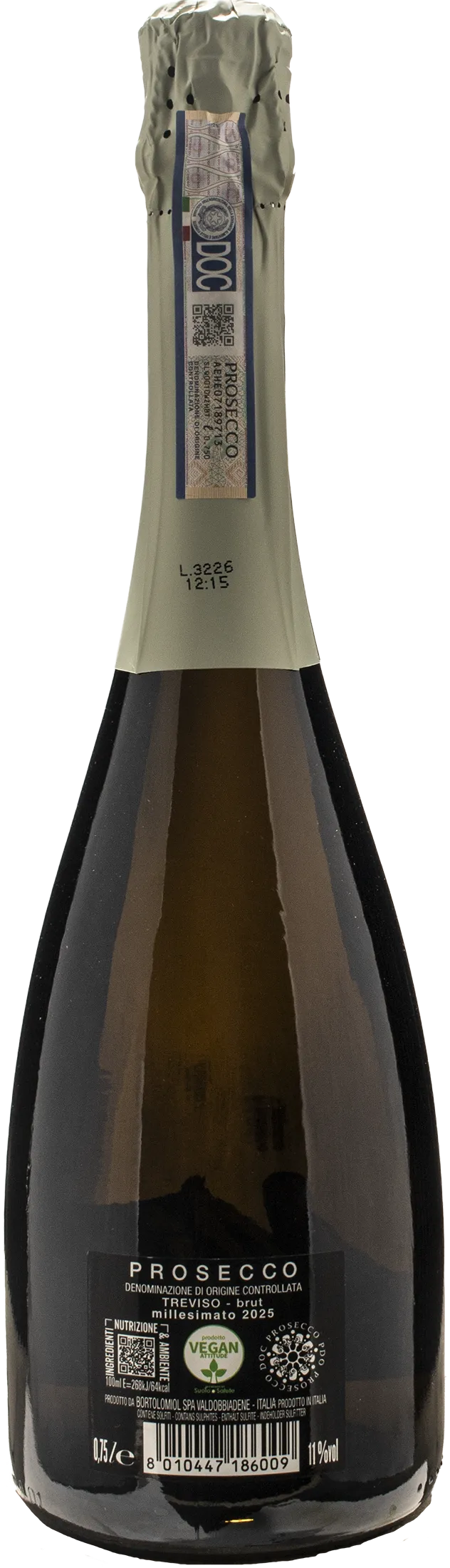
Description
What kind of wine it is
The Miòl Prosecco Treviso Brut sparkling wine from Bortolomiol expresses the authentic soul of Glera grapes. It appears a pale straw yellow with greenish highlights, enhanced by a fine and persistent perlage. On the nose, it reveals a fruity bouquet with hints of apple and tropical notes, accompanied by subtle herbal nuances of thyme and oregano. On the palate, it is soft yet bold, with good body and a clean finish. It is a versatile aperitif, ideal for any convivial occasion.
Where it comes from
This sparkling wine originates in Veneto, among the vineyards of Treviso that surround the historic city of Treviso. The land gives the grapes a fragrant profile, enhancing their natural character. The vines are cultivated using the Sylvoz trellis system, a technique that ensures balanced plant growth and optimal ripening of the Glera bunches. Bortolomiol signs this label, offering an expression of Prosecco Treviso deeply rooted in its territorial heritage.
How it is produced
Production begins in September with the harvest and the gentle pressing of the Glera grapes. The must ferments at a controlled temperature with selected yeasts, preserving the integrity of the varietal aromas. The secondary fermentation takes place using the Charmat Method for at least thirty days, creating a delicate mousse, followed by a brief maturation. Vegan certified, Miòl Prosecco Treviso Brut is perfect paired with seafood starters, fusion cuisine, and traditional Venetian first courses such as herb risottos, or with medium-aged cheeses.
History and Curiosities
The Miòl Prosecco Treviso Brut Millesimato 2025 celebrates the tradition of the Bortolomiol family, who have been producing sparkling wines since 1760, making history in the world of Prosecco. This cosmopolitan line originates from the vineyards surrounding the walled city of Treviso and is designed to engage with the environment through a palette of colours inspired by nature: the blue of the sky, the green of nature, and the ecru of the earth.
Tasting notes

Perlage

Perfume

Color

Taste
Serve at:
06 - 08 °C
Longevity:
03 - 05 years

- Start up year: 1949
- Oenologist: Emanuele Serafin
- Bottles produced: 2.300.000
- Hectares: 5
This is the legacy left by Giuliano to his wife Ottavia and their daughters Maria Elena, Elvira, Luisa and Giuliana, who with a "natural" instinct have not only maintained what their father built up but have also taken on new challenges to ensure the revolution does not come to an end.
Bortolomiol is a strong and tight-knit family made up entirely of women: the mother, the soul and linchpin of this company, and the sisters, the beating heart, who guide and support the family business in the continual challenges to achieve quality, efficiency and effectiveness with an outlook that is always competitive. Read more


| Name | Bortolomiol Prosecco Treviso Miol Brut Millesimato 2025 |
|---|---|
| Type | White green charmat method sparkling wine brut |
| Denomination | Prosecco DOC |
| Vintage | 2025 |
| Size | 0,75 l |
| Alcohol content | 11.0% by volume |
| Grape varieties | 100% Glera |
| Country | Italy |
| Region | Veneto |
| Vendor | Bortolomiol |
| Story | History and Curiosities The Miòl Prosecco Treviso Brut Millesimato 2025 celebrates the tradition of the Bortolomiol family, who have been producing sparkling wines since 1760, making history in the world of Prosecco. This cosmopolitan line originates from the vineyards surrounding the walled city of Treviso and is designed to engage with the environment through a palette of colours inspired by nature: the blue of the sky, the green of nature, and the ecru of the earth. |
| Origin | Veneto, province of Treviso (vineyards around the city of Treviso) |
| Cultivation system | Sylvoz espalier |
| Yield per hectare | 18000 kg |
| Harvest | Usually from 10 September to 20 September |
| Fermentation | At least 30 days |
| Production technique | Charmat method |
| Wine making | Vinification in white through gentle pressing. Fermentation of the must at controlled temperature with selected yeasts. Secondary fermentation according to the Charmat Method for at least 30 days, followed by ageing for 1–2 months. |
| Aging | Secondary fermentation: at least 30 days. Maturation: from 1 to 2 months. |
| Total acidity | 5.5 gr/L |
| Residual sugar | 8.0 gr/L |
| Allergens | Contains sulphites |