


Bolla
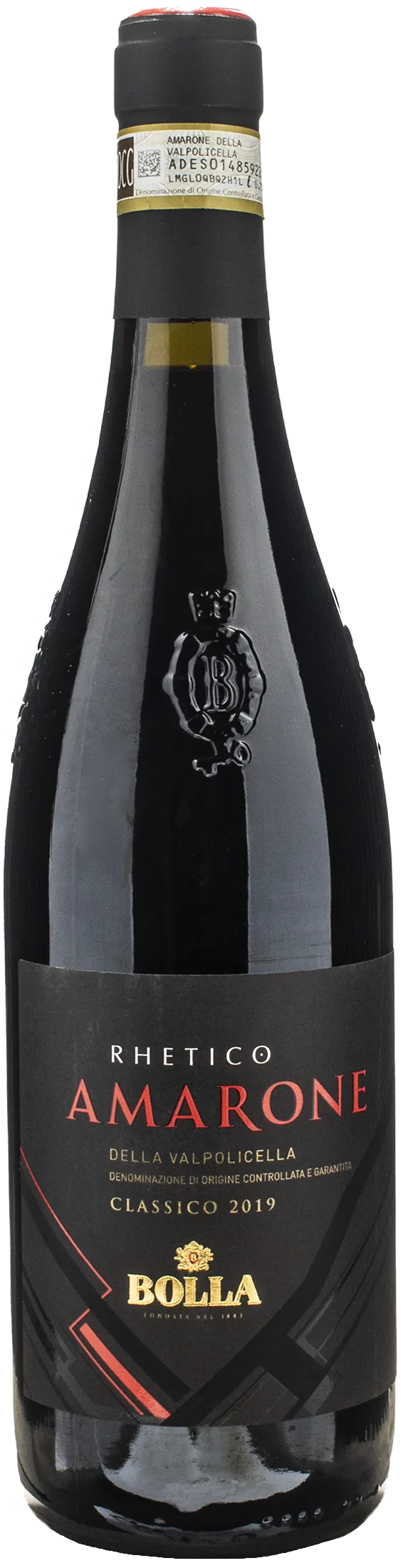
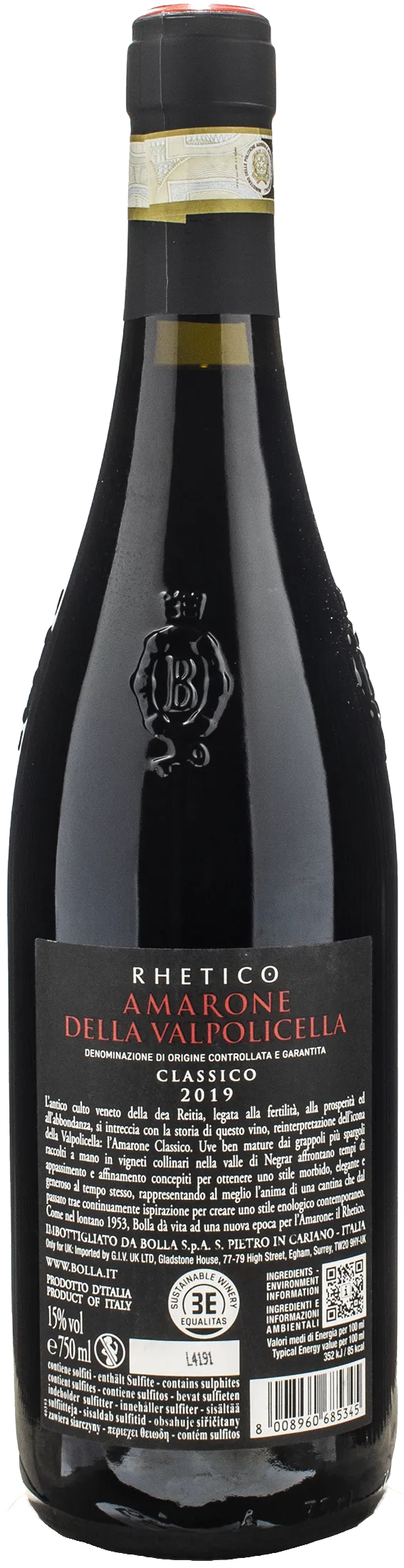
Amarone della Valpolicella Classico Rhetico 2019
| Denomination | DOCG Amarone della Valpolicella Classico |
|---|---|
| Size | 0,75 l |
| Alcohol content | 15.0% by volume |
| Area | Veneto (Italy) |
| Grape varieties | 85% Corvina, 15% Rondinella |
| Aging | Partial maturation in cement tanks and wood (9–12 months in large 4,000-litre oak casks and 12–18 months in small American and French oak barriques), then up to 12 months of bottle ageing before release; up to 36 months in oak in total. |
- Name: Amarone della Valpolicella Classico DOCG, 2019 harvest
- Grape variety: 85% Corvina, 15% Rondinella; still red wine, 15% alcohol
- Drying process: grapes dried for 120 days with controlled temperature and ventilation
- Aromas: ripe cherry, vanilla and chocolate; notes of raisin and sweet spices
- Pairings: roasts, game, lamb and mature cheeses; decant for 1 hour
Description
What kind of wine it is
Rhetico Amarone della Valpolicella Classico, with controlled and guaranteed designation of origin by Bolla, is a structured and intense red wine from Veneto, created from a blend of Corvina, Corvinone, Rondinella and other local varieties. This elegant wine boasts velvety tannins and a complex aromatic profile, the result of grape drying and lengthy ageing in oak barrels. Overall, it stands out as an elegant, smooth and concentrated wine, characterised by a long and persistent finish.
Where it comes from
The grapes originate from the historic area of Valpolicella Classico, specifically from the vineyards of Torbe di Negrar, in Veneto. The Bolla winery has been dedicated to this unique terroir for over a century. Expert management and deep knowledge of the land make it a historic benchmark for the production of wines from dried grapes, enhancing the purity of local grape varieties.
How it is produced
After the best bunches are hand-picked, a meticulous drying process of about 120 days begins in controlled environments, aimed at concentrating the aromas. The winemaking involves cold maceration of the skins, followed by fermentation at controlled temperature and complete malolactic fermentation. Ageing follows a carefully balanced path between cement vats, large oak barrels and small French and American oak barrels, which impart structure and elegance before the prolonged maturation in bottle.
History and Curiosities
The Amarone della Valpolicella Classico DOCG Rhetico embodies the expertise of Bolla, a historic winery founded in 1883. This prestigious red pays tribute to the ancient Venetian goddess Reitia, a symbol of abundance. Signed by oenologist Christian Zulian, the wine is an expression of the Bolla family, regarded as pioneers in the production of Amarone.
Tasting notes

Perfume

Color

Taste
Serve at:
18 - 20 °C
Longevity:
10 - 15 years
Decanting time:
1 hour

- Start up year: 1883
- Oenologist: Christian Zulian
- Bottles produced: 9.000.000
- Hectares: 185
"Proud of the past; passionate about the future" is the Bolla family motto, summing up respect for tradition and drive for innovation, essential requisites for maintaining quality over time, in line with consumer demand. Meanwhile, the world of filmmaking also contributed to the success of Bolla wines in the Dolce Vita years.
Between 2006 and 2009, Gruppo Italiano Vini acquired the winery, continuing production of Bolla wines and becoming a distributor of the brand all over the world. Today Gruppo Italiano Vini holds dear the original values and philosophy of the Bolla family, expressing concepts such as quality and excellence that make Bolla a winery with a great present and a great soul. Read more


| Name | Bolla Amarone della Valpolicella Classico Rhetico 2019 |
|---|---|
| Type | Red green still |
| Denomination | Amarone della Valpolicella DOCG |
| Vintage | 2019 |
| Size | 0,75 l |
| Alcohol content | 15.0% by volume |
| Grape varieties | 85% Corvina, 15% Rondinella |
| Country | Italy |
| Region | Veneto |
| Vendor | Bolla |
| Story | History and Curiosities The Amarone della Valpolicella Classico DOCG Rhetico embodies the expertise of Bolla, a historic winery founded in 1883. This prestigious red pays tribute to the ancient Venetian goddess Reitia, a symbol of abundance. Signed by oenologist Christian Zulian, the wine is an expression of the Bolla family, regarded as pioneers in the production of Amarone. |
| Origin | Torbe di Negrar, Valpolicella, Veneto, Italia |
| Fermentation | About 3 weeks |
| Production technique | Drying of the grapes in a temperature and ventilation-controlled environment for approximately 120 days |
| Wine making | Hand-harvested and selected grapes; drying in a controlled temperature and ventilated environment for about 120 days to concentrate sugars and aromas; cold pre-fermentation maceration of the skins; fermentation for about 3 weeks with carefully controlled temperature and maceration times; complete malolactic fermentation; partial ageing in cement tanks and in wood (9–12 months in large 4,000-litre casks and 12–18 months in small American and French oak barriques), then up to 12 months of bottle ageing before release. |
| Aging | Partial maturation in cement tanks and wood (9–12 months in large 4,000-litre oak casks and 12–18 months in small American and French oak barriques), then up to 12 months of bottle ageing before release; up to 36 months in oak in total. |
| Allergens | Contains sulphites |