


Tenuta Bocca di Lupo
Locone Cabernet Castel del Monte 2022
| Denomination | DOC Castel del Monte Cabernet |
|---|---|
| Size | 0,75 l |
| Alcohol content | 14.5% by volume |
| Area | Apulia (Italy) |
| Grape varieties | Cabernet Franc, Cabernet Sauvignon |
| Aging | At the end of the alcoholic fermentation, the wine was transferred to oak barriques where malolactic fermentation took place, followed by subsequent ageing. |
- Name and vintage: Castel del Monte DOC, still organic red wine, 2022
- Grape variety: blend of Cabernet Sauvignon and Cabernet Franc, 14.5% vol
- Aromas: hints of raspberry and wild berries, notes of rosemary, mint, cocoa and liquorice
- Vinification: fermentation at 26–28 °C, 10 days maceration, ageing in oak barrels
- Serving and pairings: decant for 1 hour at 16-18 °C, ideal with ragù, meats and cheeses
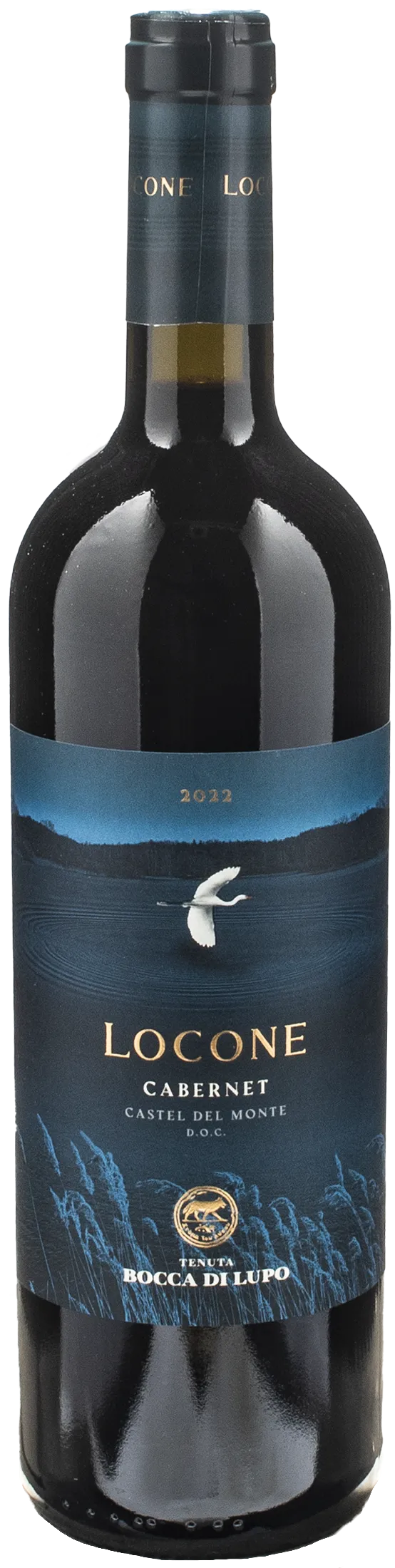
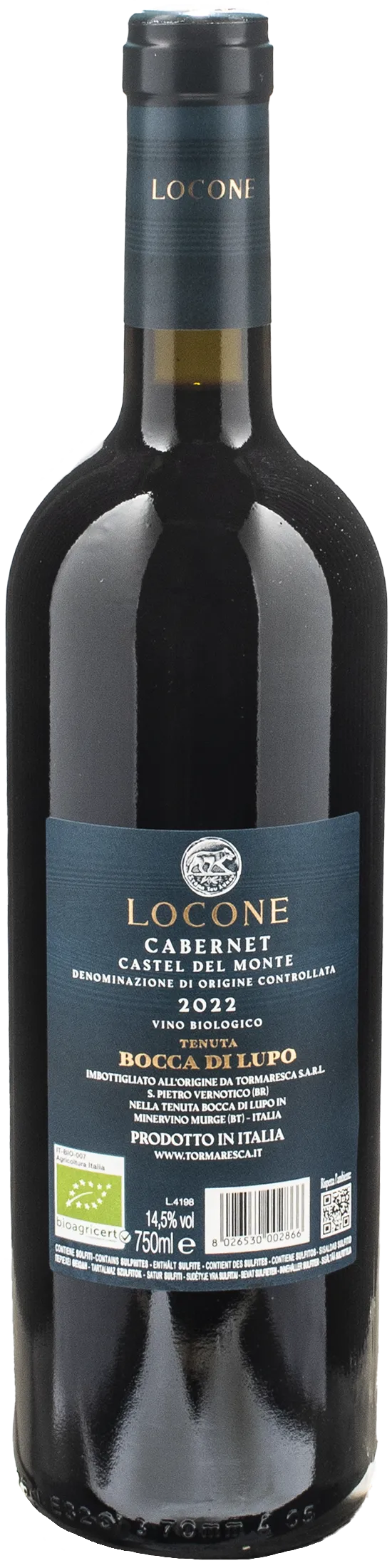
Description
What kind of wine it is
Locone Cabernet from Tenuta Bocca di Lupo is an organic red wine produced in the Castel del Monte area. This wine is created from a harmonious blend of Cabernet Sauvignon and Cabernet Franc. On the nose, it stands out for its aromas of raspberry and wild berries, which blend with fresh notes of rosemary and mint, with hints of bitter cocoa and liquorice. On the palate, it is soft and graceful, with a structure supported by enveloping and silky tannins that lead to a pleasantly persistent finish.
Where it comes from
This wine originates from the territory of Minervino Murge, in the Alta Murgia area of Apulia, at around 250 metres above sea level. The vine roots delve into calcareous and poor soils of karst origin, optimal agronomic conditions to enhance the aromatic concentration of the grapes. The name pays homage to the nearby Lake Locone, an artificial reservoir that enriches the landscape and positively influences the local microclimate. From this unique ecosystem comes a red wine with a purple colour and violet reflections, characterised by a deep territorial imprint and a marked freshness on the palate.
How it is produced
The grapes, freshly harvested, are destemmed and gently crushed. Fermentation at a controlled temperature takes place with a maceration of about ten days, during which punching down and brief pump-overs are carried out to ensure measured and balanced extraction. Afterwards, the wine is transferred to oak barrels to complete malolactic fermentation and the ageing period. The result is a clean and defined organoleptic profile, enhancing the purity of the fruit accompanied by balsamic notes and a fine and continuous tannic texture.
History and Curiosities
The Locone Cabernet Castel del Monte DOC takes its name from the artificial reservoir of the same name in Minervino Murge, a striking basin that has become a vital ecosystem for the Alta Murgia. This oasis of biodiversity enhances the vocation of the karst area and its typical calcareous and poor soils, giving the wine an unmistakable territorial character. Tenuta Bocca di Lupo celebrates the perfect balance between man and nature by dedicating its fine organic red to this lake, capable of expressing all the richness of an extraordinary Apulian landscape.
Tasting notes

Perlage

Perfume

Color

Taste
Serve at:
16 - 18 °C
Longevity:
10 - 15 years
Decanting time:
1 hour



| Name | Bocca di Lupo Locone Cabernet Castel del Monte 2022 |
|---|---|
| Type | Red organic still |
| Denomination | Castel del Monte DOC |
| Vintage | 2022 |
| Size | 0,75 l |
| Alcohol content | 14.5% by volume |
| Grape varieties | Cabernet Franc, Cabernet Sauvignon |
| Country | Italy |
| Region | Apulia |
| Vendor | Tenuta Bocca di Lupo |
| Story | History and Curiosities The Locone Cabernet Castel del Monte DOC takes its name from the artificial reservoir of the same name in Minervino Murge, a striking basin that has become a vital ecosystem for the Alta Murgia. This oasis of biodiversity enhances the vocation of the karst area and its typical calcareous and poor soils, giving the wine an unmistakable territorial character. Tenuta Bocca di Lupo celebrates the perfect balance between man and nature by dedicating its fine organic red to this lake, capable of expressing all the richness of an extraordinary Apulian landscape. |
| Origin | Minervino Murge (Castel del Monte DOC), Puglia, Italia |
| Soil composition | Calcareous and poor soils |
| Fermentation temperature | 26–28 °C |
| Fermentation | About ten days |
| Production technique | Gentle destemming and crushing; temperature-controlled alcoholic fermentation (26–28 °C) with maceration through punching down and short pump-overs for about 10 days; malolactic fermentation and ageing in oak barriques. |
| Wine making | Upon arrival at the winery, the grapes were destemmed, gently crushed and transferred to fermentation vats, where alcoholic fermentation took place at a controlled temperature of 26-28°C. Maceration was carried out with alternating punch-downs and brief pump-overs for about ten days; at the end, the wine was transferred to oak barriques where malolactic fermentation and subsequent ageing took place. |
| Aging | At the end of the alcoholic fermentation, the wine was transferred to oak barriques where malolactic fermentation took place, followed by subsequent ageing. |
| Allergens | Contains sulphites |